Comparative Negligence Laws in New Jersey
Getting into a car accident is disorienting enough, but then you're hit with the confusing question of who's actually at fault, especially when it feels like multiple parties might bear some responsibility. If you're involved in a collision in New Jersey, navigating these complex waters means truly understanding comparative negligence laws, which can dramatically impact your ability to recover compensation for your injuries and damages. This guide will walk you through exactly how New Jersey's unique system works, helping you understand your rights and the potential challenges ahead when seeking compensation.
Understanding Comparative Negligence: A General Overview
It's a common misconception that in a car accident, one person is always 100% to blame and the other is 0%. The reality is often far more nuanced, and sometimes, more than one driver contributes to a collision. That's where the concept of comparative negligence comes in. It's essentially a legal doctrine that allows accident victims to recover damages even if they were partially at fault for the incident. This approach acknowledges that accidents aren't always black and white, and responsibility can be shared.
However, not all states handle shared fault the same way. Some states use what's called pure comparative negligence, where you can recover damages no matter how much you were at fault, though your compensation will be reduced by your percentage of blame. Others, a dwindling few, still adhere to contributory negligence, a much harsher rule where even 1% fault can completely bar you from recovering anything. New Jersey, like many states, falls into a middle ground, adopting a modified form of comparative negligence that sets a specific threshold. For a broader understanding of how these different systems work, you might want to read our detailed explanation of Comparative vs Contributory Negligence Explained.
The Basic Idea of Shared Responsibility
Imagine a situation on a busy street in Newark where you're making a left turn, and another driver speeds through a yellow light, resulting in a collision. While they were clearly speeding, perhaps you started your turn a moment too soon, or didn't check your blind spot as thoroughly as you could have. In such a scenario, a jury or an insurance adjuster might determine that while the other driver was primarily at fault, you also contributed to the accident. This isn't about blaming the victim; it's about acknowledging the complex chain of events that often leads to accidents.
The legal system recognizes that in the chaos of the road, various actions and inactions can lead to unfortunate outcomes. Assigning a percentage of fault, say 70% to the speeding driver and 30% to you, provides a framework for distributing accountability. This percentage becomes crucial because it directly influences the amount of compensation you can ultimately receive. It's a system designed to ensure fairness, rather than leaving victims with no recourse simply because they weren't entirely blameless.
Distinguishing Pure vs. Modified Systems
The differences between pure and modified comparative negligence are significant for anyone involved in an accident claim. In a pure comparative negligence state, if you're deemed 90% at fault for an accident and your total damages are $100,000, you could still recover $10,000 (10% of your damages). While it might not seem like much, it's still some form of recovery. This approach emphasizes that every degree of fault, no matter how small or large, is accounted for.
Modified comparative negligence, on the other hand, introduces a "bar" to recovery. There are two common types: the 50% bar and the 51% bar. In a 50% bar state, if you are found to be 50% or more at fault, you cannot recover any damages. If you're 49% at fault, you can recover 51% of your damages. The 51% bar states are slightly more lenient, allowing you to recover as long as your fault is not greater than the combined fault of all other parties involved (i.e., you can be up to 50% at fault and still recover). New Jersey specifically utilizes the 51% modified comparative negligence rule, which we'll delve into next. This distinction can literally make or break your claim, determining whether you walk away with vital compensation or nothing at all.
New Jersey's Modified Comparative Negligence Rule
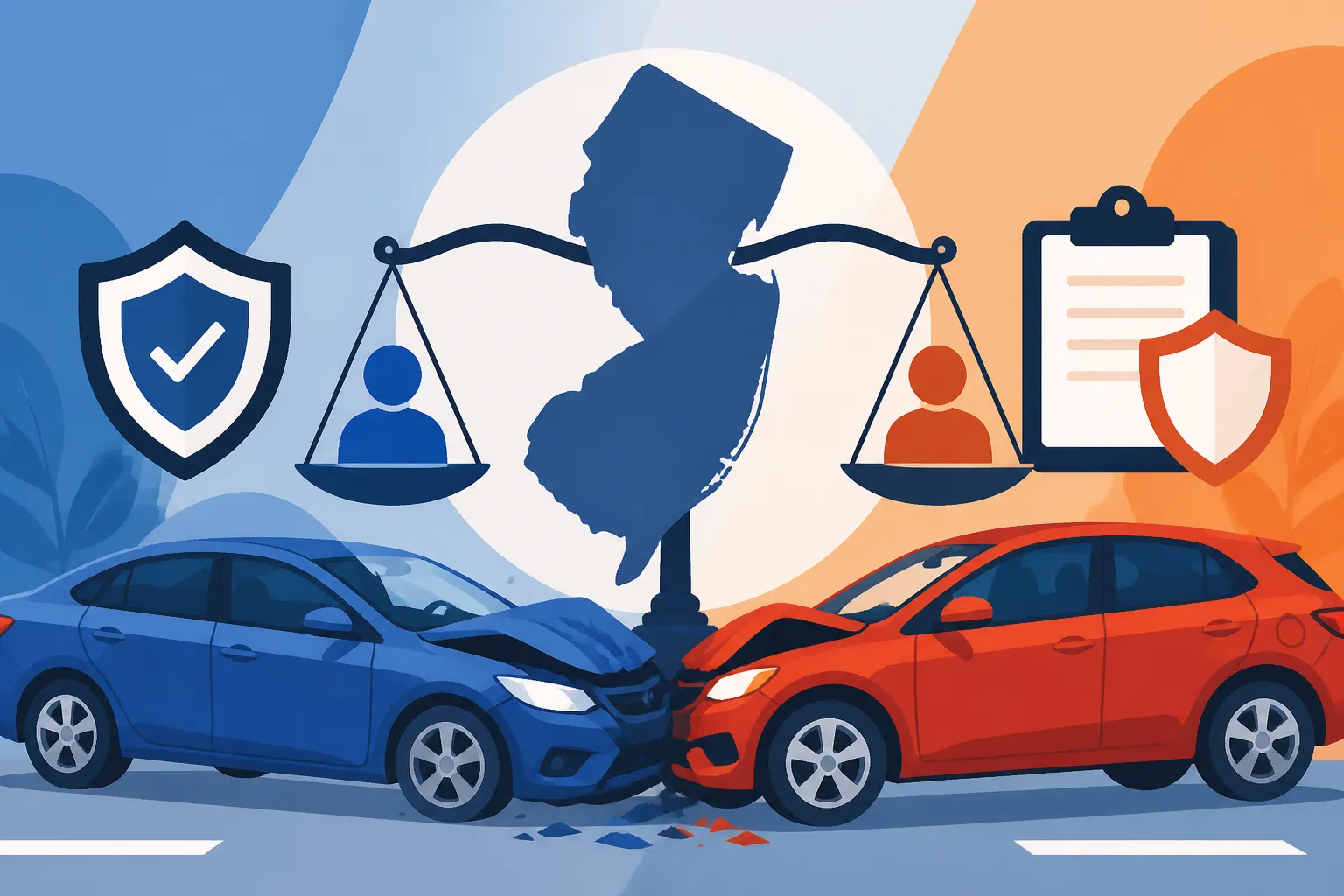
New Jersey operates under a specific version of modified comparative negligence, often referred to as the "51% bar" rule. This is a critical piece of information for anyone involved in a car accident within the Garden State. What it means in practice is that you can still recover damages for your injuries and losses even if you contributed to the accident, as long as your percentage of fault is not greater than the fault of the person(s) you are suing. In simpler terms, if you are 50% at fault or less, you can recover. If you are found to be 51% or more at fault, you generally cannot recover any compensation from the other party.
This rule is a balancing act, aiming to compensate victims while also ensuring that those primarily responsible for an accident bear the financial consequences. It's not about absolving drivers of all responsibility, but rather providing a framework for equitable recovery. Understanding this threshold is vital because it directly influences how you approach your claim and how insurance companies or courts will evaluate your case. For a deeper dive into the mechanics of this specific rule, consider exploring Modified Comparative Negligence (50% vs 51% Bar).
The 51% Bar Explained
Let's break down the 51% bar with a couple of hypothetical New Jersey scenarios. Imagine you're driving on Route 1 in Edison, and another driver makes an illegal U-turn, causing a collision. A thorough investigation, perhaps involving a police report and witness statements, might determine the other driver was 80% at fault for the illegal maneuver. However, it's also found that you were traveling 5 mph over the speed limit, contributing 20% to the severity of the crash. In this situation, since your fault (20%) is not greater than the other driver's fault (80%), you would still be able to recover 80% of your total damages.
Now, consider a different scenario: you're pulling out of a parking spot at the Freehold Raceway Mall, and you fail to see an approaching car, resulting in a side-swipe. The other driver might have been slightly distracted, perhaps glancing at their phone for a second, but their primary fault is minimal. If it's determined you were 60% at fault for failing to yield, and the other driver was 40% at fault for distraction, you would hit the 51% bar. Because your fault (60%) is greater than the other driver's (40%), New Jersey law would likely prevent you from recovering any damages from them. This strict line emphasizes the importance of understanding and proving fault percentages in any accident claim.
How No-Fault Rules Interact with Fault
New Jersey is also what's known as a "no-fault" state for car insurance. This adds another layer of complexity to understanding how fault impacts your claim. In a no-fault state, your initial medical expenses and lost wages after an accident are typically paid by your own insurance company, regardless of who was at fault. This is usually covered under your Personal Injury Protection (PIP) coverage. This system is designed to streamline the process for minor injuries and ensure prompt medical treatment without waiting for fault to be determined.
However, New Jersey's no-fault system doesn't eliminate fault entirely, especially for more serious accidents. While your PIP covers initial medical bills, if your injuries are significant enough to meet a certain "verbal threshold" (e.g., permanent injury, significant disfigurement, death), you can step outside the no-fault system and pursue a "tort" claim against the at-fault driver for non-economic damages like pain and suffering. When you pursue such a tort claim, that's when New Jersey's 51% modified comparative negligence rule comes into play. If you're seeking compensation beyond your own PIP benefits, your percentage of fault becomes critically important in determining what you can recover. For more on how this dual system operates, check out our guide on What Is a No-Fault State? (And Which States Are No-Fault).
How Your Percentage of Fault Affects Your Claim in New Jersey
When you're involved in an accident, the big question on everyone's mind, beyond "is everyone okay?", is "who's going to pay for this?" In New Jersey, once fault percentages are established, they directly dictate how much compensation you can expect to receive. This isn't just about property damage; it extends to medical bills, lost wages, and even pain and suffering. The fundamental principle is that your total potential compensation will be reduced by your assigned percentage of fault. So, if your total damages are $50,000 and you are found 20% at fault, you would only be eligible to receive $40,000.
This reduction can have a significant impact on your financial recovery, especially if you're facing substantial medical expenses or a lengthy period away from work. It highlights why proving the other driver's fault, and minimizing your own, is such a crucial part of the claims process. Insurance companies, true to their nature, will actively seek to assign a higher percentage of fault to you, as it directly reduces their payout. For a detailed look at how these calculations affect your overall recovery, our article on How Comparative Fault Reduces Your Settlement provides a great resource.
Economic vs. Non-Economic Damages Under Shared Fault
It's important to differentiate between the types of damages you might claim and how comparative negligence applies to each. Economic damages are those with a clear monetary value, such as:
- Medical expenses (doctor visits, surgeries, medications, rehabilitation)
- Lost wages (income lost due to inability to work after the accident)
- Property damage (cost to repair or replace your vehicle)
- Future medical care and lost earning capacity
Non-economic damages are more subjective and harder to quantify, but are equally real. These include:
- Pain and suffering (physical pain, emotional distress, mental anguish)
- Loss of enjoyment of life
- Disfigurement
Under New Jersey's 51% rule, if you are eligible to recover, both your economic and non-economic damages will be reduced by your percentage of fault. For example, if your medical bills are $15,000 and your pain and suffering is valued at $30,000 (total $45,000), and you are found 25% at fault, you would receive 75% of that total, which is $33,750. This holistic reduction means that every aspect of your claim is impacted by the fault determination.
Here's a simplified table illustrating how fault impacts a hypothetical $100,000 total damage claim in New Jersey:
| Your Percentage of Fault | Other Driver's Percentage of Fault | Your Recoverable Damages (from $100,000) | Outcome in New Jersey |
|---|---|---|---|
| 0% | 100% | $100,000 | Full Recovery |
| 10% | 90% | $90,000 | Recoverable (Reduced) |
| 25% | 75% | $75,000 | Recoverable (Reduced) |
| 50% | 50% | $50,000 | Recoverable (Reduced) |
| 51% | 49% | $0 | No Recovery |
| 75% | 25% | $0 | No Recovery |
This table clearly shows the critical threshold. Even a slight difference in fault assignment, such as moving from 50% to 51%, can completely alter the outcome of your claim.
Protecting Your Claim When You're Partly to Blame
It's natural to feel frustrated and even discouraged if you know you might bear some responsibility for an accident. However, in New Jersey, being partially at fault does not automatically mean your claim is dead in the water. The key is to protect your interests and present your case effectively. One of the most important things you can do is gather as much evidence as possible at the scene. This includes photographs, witness contact information, and detailed notes about what happened. A police report, while not always the final word, can be incredibly helpful in documenting the initial assessment of the incident. Learn more about how to effectively prove the other driver's fault with our guide on How to Prove the Other Driver Was at Fault.
Furthermore, it's crucial to seek medical attention promptly, even if you feel fine, as some injuries like whiplash or concussions can have Delayed Injury Symptoms After a Car Accident. Documenting all your medical treatments and expenses is vital. When dealing with insurance adjusters, remember that their goal is often to minimize payouts. Avoid admitting fault or giving recorded statements without legal advice. Consulting with a car accident lawyer who understands New Jersey's comparative negligence laws can provide immense protection. They can help investigate the accident, negotiate with insurance companies, and argue effectively to minimize your assigned fault and maximize your recoverable compensation.
Navigating an Accident Claim Under New Jersey's Laws
Dealing with the aftermath of a car accident is stressful enough without having to decipher complex legal terminology and insurance policies. The process of filing a claim and seeking compensation in New Jersey, especially with its specific comparative negligence and no-fault rules, can feel overwhelming. Many people wonder, "Do I really need a lawyer?" or "What steps should I take immediately after the crash?" The answers depend heavily on the specifics of your situation, but arming yourself with knowledge and taking the right actions from the start can make a world of difference.
It's a common frustration that while you're trying to recover, you're simultaneously fighting a battle with insurance companies who are often more concerned with their bottom line than your well-being. This guide aims to demystify some of that process, offering clear, actionable steps to help you navigate your claim effectively within New Jersey's legal framework. From the moment the accident occurs to the final settlement or court decision, every step is crucial in preserving your rights and maximizing your potential recovery.
Initial Steps After a Collision
Immediately after a car accident in New Jersey, your first priority should always be safety and health. Move to a safe location if possible, check for injuries, and call 911 if anyone is hurt or if there's significant property damage. Even if it seems like a minor fender bender, it's generally a good idea to involve the police so an official report can be filed. This police report can be incredibly valuable later on, as it provides an objective account of the scene, witness statements, and initial fault assessment. Our comprehensive guide on What to Do After a Car Accident: Step-by-Step (2027) offers a detailed checklist for these immediate post-accident actions.
Beyond safety, documenting the scene is paramount. Use your phone to take photos of vehicle damage, road conditions, traffic signs, skid marks, and any visible injuries. Exchange information with all involved parties, including names, contact details, insurance information, and license plate numbers. If there are any witnesses, get their contact information as well. Remember, in New Jersey, how fault is determined will depend heavily on the evidence collected, so don't leave anything to chance. These immediate actions lay the groundwork for any future claim, whether it's through your own PIP coverage or a tort claim against the other driver.
The Importance of Evidence and Legal Counsel
As we've discussed, New Jersey's 51% modified comparative negligence rule means that every percentage of fault matters. This makes evidence collection incredibly important. The more thoroughly you document the scene and your injuries, the stronger your position will be when arguing against an insurance company that tries to shift blame onto you. This includes not only physical evidence from the scene but also detailed medical records documenting all your treatment and the impact of your injuries on your daily life.
Given the complexities of comparative negligence and the no-fault system, seeking legal counsel from an experienced New Jersey car accident lawyer is often the most strategic move. A lawyer can help you understand your rights, navigate the intricacies of New Jersey law, and deal with aggressive insurance adjusters who might try to get you to admit fault or accept a lowball settlement. They can conduct their own investigation, gather expert testimony, and build a strong case to minimize your assigned fault and ensure you receive fair compensation. For many, having a legal expert on their side levels the playing field against large insurance corporations. If you're wondering whether your situation warrants professional legal help, you might find answers in our article, Do You Need a Lawyer for a Car Accident? (2026).
Disclaimer
Please remember that this article provides general informational guidance based on New Jersey's comparative negligence laws and should not be considered legal advice. Every car accident case is unique, and the information presented here may not apply to your specific situation. We strongly recommend consulting with a qualified New Jersey personal injury attorney for advice tailored to your individual circumstances.