How Long Do You Have to File a Car Accident Claim in Louisiana?
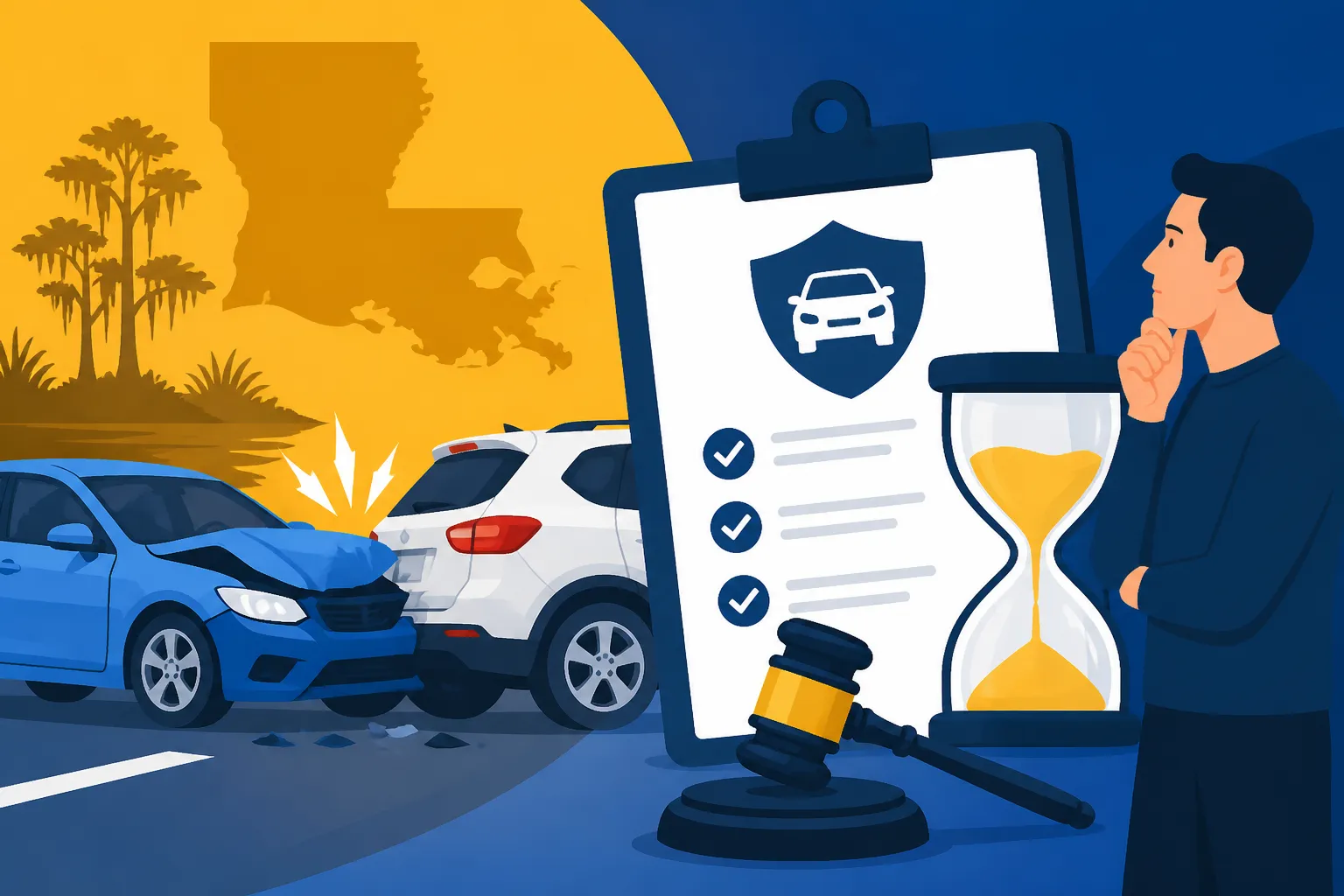
Navigating the aftermath of a car accident is already a confusing and stressful experience, filled with worry about vehicle repairs, medical appointments, and endless paperwork. But one of the most pressing concerns many people in Louisiana face is a quiet, ticking clock: how long do you actually have to file a claim? Missing this crucial deadline can mean losing your right to seek compensation for your injuries and damages entirely. This guide is here to unravel the complexities of Louisiana's car accident claim deadlines, offering clear, comprehensive insights to help you protect your rights and understand the process.
Understanding Louisiana's Statute of Limitations for Car Accidents
When you're involved in a car accident in the Pelican State, one of the most critical pieces of information you need to understand is the "statute of limitations." This isn't just some legal jargon; it's a hard-and-fast rule that dictates the maximum amount of time you have to initiate legal proceedings after an incident. In Louisiana, this deadline is notoriously strict, and failing to adhere to it can have devastating consequences for your ability to recover financially.
The Critical One-Year Deadline
For most personal injury and property damage claims arising from a car accident in Louisiana, the statute of limitations is one year. This means you have exactly one year from the date of the accident to file a lawsuit in civil court. This isn't a suggestion; it's a legal requirement outlined in Louisiana Civil Code Article 3492. It's an incredibly short window compared to many other states, which often grant two, three, or even more years. Imagine, you've just been in a serious rear-end collision on I-10 near Baton Rouge. You're dealing with whiplash, your car is totaled, and life feels upside down. You have to handle all of this, and potentially initiate a lawsuit, within 365 days. The clock starts ticking the moment the accident occurs. This period applies equally to both the bodily injuries you sustained and any damage done to your vehicle or other property.
This one-year period is often what catches people off guard. They might be focused on recovery, dealing with insurance adjusters, or simply trying to get their life back to normal, and before they know it, months have flown by. It’s not uncommon for individuals to assume they have more time, especially if they’re still undergoing medical treatment or their vehicle repair saga is dragging on. However, the legal system doesn't wait for your recovery process to conclude; it demands action within that specific timeframe.
Why This Deadline Matters So Much
The one-year statute of limitations isn't just a minor hurdle; it's a gatekeeper. If you fail to file your lawsuit before this deadline expires, you generally lose your legal right to pursue compensation from the at-fault driver, their insurance company, or any other responsible parties. This means that even if you have undeniable evidence that the other driver was completely at fault, and you suffered severe injuries and extensive damages, a court will almost certainly dismiss your case simply because it wasn't filed on time. It's a harsh reality, but it's the law.
Think of it this way: once that one-year mark passes, the legal system views your claim as "stale." Evidence might be harder to find, witnesses' memories fade, and the entire process becomes less reliable. The statute of limitations is designed to bring finality to legal disputes and prevent claims from lingering indefinitely. For you, the accident victim, this means immense pressure to act swiftly. It’s why understanding What to Do After a Car Accident: Step-by-Step (2027) is so important from day one. You can't afford to procrastinate or hope that the insurance company will just settle everything without a formal claim being filed in court.
Specific Scenarios and Exceptions to the Rule
While the one-year rule is the general standard, the law can sometimes be more nuanced, presenting exceptions or special conditions. It's vital to be aware of these, as they can sometimes extend, or more commonly, drastically shorten the window you have to act.
Claims Involving Minors
One significant exception to the standard one-year rule involves claims made on behalf of minors. If a child under the age of 18 is injured in a car accident, the one-year statute of limitations generally does not begin to run until the child turns 18 years old. This legal principle is known as "tolling." So, if a 10-year-old is injured in an accident, they would theoretically have until their 19th birthday to file a lawsuit. However, this doesn't mean you should wait. Parents or legal guardians can, and often should, file a lawsuit on behalf of the minor much earlier to ensure evidence is preserved and medical care is properly documented.
While the minor themselves has this extended period, it's crucial for the responsible adults to manage the process diligently. Delaying until the child is an adult can make it incredibly difficult to gather crucial evidence, track down witnesses, or accurately reconstruct the accident scene years later. It's always best practice to seek legal guidance promptly, regardless of the victim's age, to understand the immediate steps needed to protect the child's future interests.
Claims Against Government Entities
This is where things can get particularly tricky and the deadlines can become much shorter. If the at-fault driver or a party responsible for road conditions (like a municipality or the State of Louisiana Department of Transportation and Development) is a government entity, the rules change dramatically. Claims against state or local government bodies in Louisiana typically require a written notice of intent to sue to be filed within a far shorter timeframe, often as little as six months, before a lawsuit can even be initiated. For instance, if you were hit by a city vehicle in New Orleans or your accident was caused by a poorly maintained road in Shreveport, you likely have a compressed window to inform the specific government agency of your intent to pursue a claim.
Failing to provide this preliminary notice within the required time can completely bar your ability to sue that government entity, even if you attempt to file the actual lawsuit within the typical one-year period. These rules are stringent and vary depending on the specific governmental body involved. This complexity highlights why it's so important to quickly identify all potentially responsible parties, especially if there's any public sector involvement. Discovering that a city employee was driving the other car months after the accident can be a crushing blow if you've already missed the notice deadline.
Discovery Rule and Delayed Injuries
In some rare instances, Louisiana law recognizes a "discovery rule," which can slightly alter when the one-year clock begins ticking. This rule applies in situations where an injury or its connection to the accident wasn't immediately apparent or reasonably discoverable at the time of the crash. For example, if you were in a minor fender bender in Lafayette and felt fine, but months later developed severe chronic back pain that doctors conclusively link to that specific accident, the clock might, in theory, begin running from the date you discovered or should have discovered the injury and its cause, rather than the accident date. However, proving this can be incredibly challenging.
Insurance companies are highly skeptical of delayed injury claims and will often argue that you should have known about your injury sooner. They might suggest you neglected your health or that a new incident caused your condition. This is why immediate medical attention after an accident, even if you feel fine, is paramount. Documenting Delayed Injury Symptoms After a Car Accident with a medical professional is crucial for any potential future claim. While the discovery rule offers a theoretical safety net, it's not something to rely on lightly, and it's always safer to assume the one-year clock starts from the date of the accident.
Types of Claims and Their Respective Deadlines
Understanding that different types of claims might have varying timelines is essential, although in Louisiana, the one-year rule is broadly applied across the most common accident-related claims.
Personal Injury Claims
For any bodily harm you sustain in a car accident, whether it's a minor bruise, a broken bone, or a debilitating spinal injury, the deadline to file a personal injury lawsuit is one year from the date of the crash. This includes claims for medical expenses, lost wages, pain and suffering, emotional distress, and any other non-economic damages directly resulting from your injuries. If you've suffered common car accident injuries, such as whiplash or a concussion, or more severe conditions like a herniated disc, the timeline for seeking compensation for these is strictly the same.
The clock doesn't stop just because you're undergoing extensive physical therapy or waiting for a complex surgical procedure at Ochsner Medical Center in New Orleans. It continues to tick. This is why many people find themselves in a race against time, needing to gather all necessary medical records, consultations, and expert opinions within that single year. It's a critical period where proactive engagement with medical providers and potentially a legal team becomes indispensable to build a strong case.
Property Damage Claims
Similarly, for damage to your vehicle or any other personal property involved in the accident, the one-year statute of limitations also applies. This means you have a year from the accident date to file a lawsuit to recover the costs of repairs, the diminished value of your car, or the fair market value if your vehicle was totaled. While many property damage claims are handled directly through insurance without needing a lawsuit, the looming one-year deadline is a powerful motivator for insurance companies to resolve these issues promptly.
If you're in a dispute with an insurance company over the value of your totaled vehicle, or they're denying coverage for your property damage, you must remember this deadline. If negotiations stall or you simply can't reach a satisfactory agreement, filing a lawsuit before the one-year mark preserves your right to let a court decide the matter. Ignoring this deadline means you could be stuck paying for your own repairs, even if the other driver was clearly at fault.
Wrongful Death Claims
Tragically, some car accidents result in fatalities. In Louisiana, if a loved one passes away due to injuries sustained in a car accident, the family members or the deceased's estate generally have one year from the date of death to file a wrongful death lawsuit. While the cause of action arises from the same accident, the "date of death" is the key trigger for this specific type of claim's statute of limitations. This is a subtle but important distinction; if someone lingers for a few months after an accident before succumbing to their injuries, the one-year clock for a wrongful death claim would start from their date of passing, not the original accident date.
These claims are often complex, involving not only the immediate loss but also potential future lost income, funeral expenses, and the immense emotional suffering of surviving family members. The grieving process alone can consume months, making it incredibly challenging to think about legal deadlines. However, just like personal injury and property damage claims, it is crucial to act within that one-year window to ensure the family can seek the justice and compensation they deserve for their profound loss.
What Happens If You Miss the Deadline?
Let's not sugarcoat it: missing the statute of limitations deadline in Louisiana is a severe setback, often a fatal one, for your car accident claim. It's the point of no return for pursuing compensation through the courts.
Your Legal Rights Are Extinguished
If you fail to file a lawsuit within that one-year period, your legal right to sue the at-fault party is generally extinguished. This means that a court will likely refuse to hear your case, no matter how strong your evidence or how severe your injuries. It doesn't matter if the other driver admitted fault at the scene of the accident on Causeway Boulevard in Metairie, or if your medical bills are astronomical. Once that clock runs out, your ability to compel compensation through the judicial system vanishes.
This can be incredibly frustrating for accident victims who may have been unaware of the strict deadline or were simply too overwhelmed by their recovery to focus on legal action. The insurance company for the at-fault driver will certainly be aware of this deadline and will often use it as leverage. If they know you're approaching the one-year mark without a lawsuit filed, they may become less willing to negotiate fairly, knowing that your legal options are dwindling.
Insurance Company Tactics
Insurance companies are not in the business of simply handing out money; they are businesses focused on minimizing their payouts. They are acutely aware of the statute of limitations. If you've been talking to an adjuster for several months, they might seem friendly and cooperative, but as that one-year mark approaches, their demeanor can change. They know that if you don't file a lawsuit, their obligation to pay for your damages via a settlement becomes voluntary, not legally enforceable. They may offer a lowball settlement offer right before the deadline, hoping you'll accept it out of fear of losing everything.
This is a common tactic to pressure claimants. They might delay correspondence, ask for more documents, or simply drag their feet until time is almost up. Understanding these dynamics is key to effectively dealing with insurance adjusters after a car accident. You need to be proactive and informed, rather than reactive and surprised, especially as the one-year deadline looms.
Steps to Take After an Accident to Protect Your Claim
Given Louisiana's strict one-year statute of limitations, being proactive immediately after a car accident is not just good advice, it's absolutely essential. Every step you take (or don't take) in the days and weeks following a crash can significantly impact your ability to file a successful claim.
Seek Medical Attention Promptly
The very first thing you should do after any car accident, even if you feel fine, is to seek medical attention. Go to an urgent care clinic, an emergency room, or your primary care physician. Many significant injuries, like whiplash or a concussion, have delayed symptoms and may not manifest until hours or even days later. A medical professional can diagnose these issues and, crucially, create a record linking your injuries to the accident. This documentation is invaluable for proving your injuries in a car accident claim later on. Without it, the insurance company might argue that your injuries weren't caused by the accident but by something else entirely, or that they weren't severe enough to warrant compensation. Remember, Why You Should See a Doctor After a Car Accident is not just about your health, but your claim's health too.
Gather Evidence and Document Everything
From the moment the accident occurs, you should be a diligent documentarian. If safe to do so, take photos and videos of the accident scene, vehicle damage, road conditions, and any visible injuries. Collect contact information from witnesses and the other driver. Get a copy of the police report, which can be critical for determining Who Is at Fault in a Car Accident? Complete Guide (2027). Keep a detailed journal of your symptoms, medical appointments, and how your injuries are impacting your daily life. Save all receipts related to medical care, prescriptions, and any out-of-pocket expenses. This comprehensive record-keeping will be the backbone of your claim, providing concrete evidence to support your version of events and the extent of your damages. The more detailed and organized your documentation, the stronger your position will be when you How to File a Car Accident Insurance Claim.
Consult with a Legal Professional
Given the complexities of Louisiana's one-year statute of limitations, and the various exceptions and nuances involved, one of the most proactive and protective steps you can take is to consult with an experienced car accident lawyer as soon as possible after the incident. They can assess your specific situation, help you understand all applicable deadlines, and guide you through the intricate process of filing a claim. A lawyer can handle communications with insurance companies, investigate the accident, gather evidence, and ensure that all necessary legal documents are filed within the required timeframe. They can also explain How Insurance Companies Determine Who Is at Fault and protect you from common tactics used to minimize payouts. Don't wait until the last minute, or even close to the one-year mark, to seek legal advice; the sooner you engage a professional, the more time they have to build a robust case on your behalf. Understanding When to Hire a Car Accident Lawyer is truly a cornerstone of protecting your rights.
Summary of Louisiana Car Accident Claim Deadlines
To help you keep track of these crucial timelines, here's a quick overview of the key deadlines you'll encounter when dealing with a car accident claim in Louisiana. Remember, these are general guidelines, and your specific situation may have unique factors.
| Claim Type | General Deadline (from date of accident/death) | Specific Legal Statute | Key Considerations |
|---|---|---|---|
| Personal Injury Claims | 1 Year | La. Civ. Code Art. 3492 | Covers medical bills, pain & suffering, lost wages. Strict enforcement. |
| Property Damage Claims | 1 Year | La. Civ. Code Art. 3492 | Covers vehicle repair, total loss, diminished value. Applies to lawsuits, not just insurance claims. |
| Wrongful Death Claims | 1 Year (from date of death) | La. Civ. Code Art. 2315.1, 3492 | Applies to claims for loss of loved one. Distinct from personal injury claim timeline if death is delayed. |
| Minor's Personal Injury | 1 Year (from 18th birthday) | La. Civ. Code Art. 3492 | Statute of limitations is "tolled" until the minor reaches age 18. Parents can file earlier. |
| Claims vs. Gov't Entity | Often 6 Months (for notice of intent to sue) | La. R.S. 13:5106 (varies by entity) | Much shorter deadlines! Requires formal written notice before filing lawsuit. Research specific agency rules. |
This table should reinforce the critical importance of Louisiana's one-year rule for the majority of car accident claims. The window is brief, and proactive measures are your best defense against losing your right to compensation.
Disclaimer
Please remember that this article provides general information and insights into Louisiana's car accident claim process and statutes of limitations. It is not intended as legal advice. Every car accident case is unique, and the information provided here may not apply to your specific situation. For personalized legal advice regarding your car accident claim in Louisiana, you should consult with a qualified attorney.