What Happens If You’re Partially at Fault?
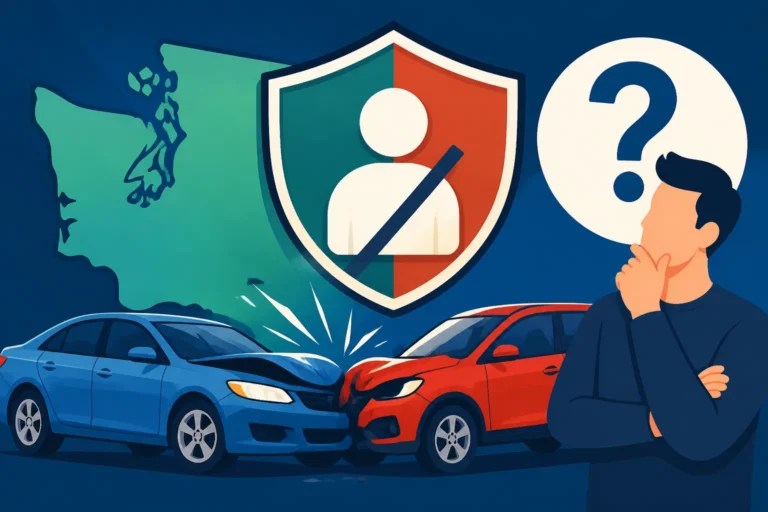
Getting into a car accident is stressful enough, but discovering you might be partially at fault can feel like a punch to the gut. The confusion, the worry about insurance rates, and the fear of not getting the compensation you need for your injuries and vehicle damage are entirely valid concerns. This comprehensive guide will walk you through exactly what happens when you're found partially responsible for a car accident, how it impacts your claim, and what steps you can take to protect yourself.
Understanding Partial Fault in Car Accidents
It's easy to imagine car accidents as clear-cut cases of one driver being entirely to blame and the other being a completely innocent victim. But in the messy reality of everyday driving, things are rarely that simple. Often, multiple factors contribute to a collision, and the actions of more than one driver play a role. That's where the concept of "partial fault" comes into play, and it's something many drivers face.
The Reality of Shared Responsibility
Think about a common scenario: you're making a left turn at an intersection, thinking you have enough time, but misjudge the speed of an oncoming car. The oncoming car might have been going slightly over the speed limit, or perhaps its driver was distracted for a moment. Suddenly, you're involved in a collision. While your left turn against traffic would likely make you primarily responsible, the other driver's actions (speed, distraction) might also be considered contributing factors. In such cases, legal systems and insurance companies often assign a percentage of fault to each driver involved. This isn't about shaming anyone; it's about fairly distributing liability based on how each party's actions contributed to the incident. Understanding this shared responsibility is crucial, because it directly affects how much you can recover and what you might owe.
Why Fault Isn't Always Black and White
Determining who is at fault in a car accident can be a complex puzzle, influenced by a myriad of details that aren't immediately obvious at the scene. Factors like road conditions, weather, traffic signs, visibility, driver distraction, vehicle malfunctions, and even pre-existing road hazards can all play a part. For instance, if you were slightly speeding and someone suddenly pulled out in front of you from a hidden driveway, both your speed and their failure to yield could be considered contributing factors. It's not just about who hit whom, but rather a detailed analysis of each driver's duty of care and whether they breached it. This intricate process often requires careful investigation, gathering evidence, and sometimes, even accident reconstruction specialists to truly untangle the events leading up to the crash.
Comparative vs. Contributory Negligence Systems
The legal implications of being partially at fault vary significantly depending on where the accident occurred. States across the U.S. follow different legal doctrines to address shared fault, broadly categorized as either contributory negligence or comparative negligence. Knowing which system your state uses is paramount because it dictates whether you can recover any damages and, if so, how much. For a deeper dive into these systems, you might want to read our guide on Comparative vs Contributory Negligence Explained.
Contributory Negligence States The Harshest Rules
Imagine a scenario where you're involved in an accident in a state like Alabama, Maryland, North Carolina, Virginia, or Washington D.C. These jurisdictions still operate under the traditional and incredibly strict rule of pure contributory negligence. What does this mean for you? Well, if you are found to be even 1% at fault for the accident, you are completely barred from recovering any damages from the other driver. Yes, you read that right: even the slightest contribution to the accident, like going 5 mph over the speed limit when another driver ran a red light, could mean you get nothing for your medical bills, lost wages, or vehicle repairs.
This rule can feel incredibly unfair and often leaves victims in a precarious position. For example, if you sustained $50,000 in injuries and the other driver was 99% at fault, but you contributed 1% by, say, having a burnt-out taillight they might have seen sooner, you could walk away with nothing. This harsh reality makes proving the other driver's sole fault absolutely critical in these states, putting immense pressure on accident victims to have an airtight case.
Pure Comparative Negligence States Most Lenient
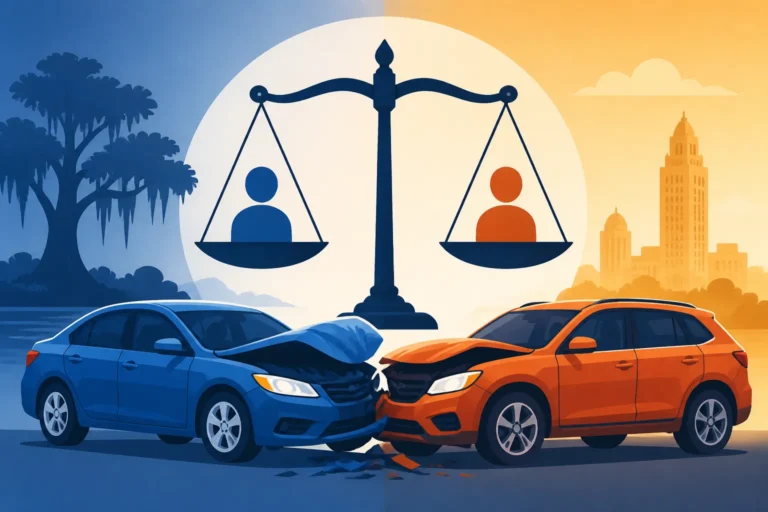
On the other end of the spectrum are states that embrace pure comparative negligence, such as California, Florida, and New York. This system is generally considered the most forgiving when it comes to shared fault. In these states, your ability to recover damages is simply reduced by your percentage of fault. There's no magical threshold that bars you from recovery entirely.
Let's revisit our left-turn example. If you made an unsafe left turn and were found 70% at fault, but the oncoming driver was 30% at fault for speeding, you could still recover 30% of your total damages. If your total damages (medical bills, lost wages, pain and suffering, vehicle repair) amounted to $10,000, you would be able to collect $3,000 from the other driver's insurance. Conversely, they could collect 70% of their damages from your insurance. This system aims for a proportional distribution of financial responsibility, reflecting the precise contribution of each party to the accident. It ensures that even if you bear significant responsibility, you aren't completely shut out from recovering for the portion of damages the other driver caused.
Modified Comparative Negligence The 50% and 51% Bars
Most states fall into the category of modified comparative negligence, which attempts to strike a balance between the two extremes. Within this system, there are two main variations: the "50% bar rule" and the "51% bar rule."
- 50% Bar Rule: In states like Colorado, Maine, and South Carolina, if you are found to be 50% or less at fault, you can recover damages, but they will be reduced by your percentage of fault. However, if you are found to be 51% or more at fault, you are completely barred from recovering any damages. Think of it this way: as long as you are not more at fault than the other party, you can still get compensation.
- 51% Bar Rule: This is the more common type of modified comparative negligence, adopted by states like Texas, Arizona, and Georgia. Here, you can recover damages as long as you are 50% or less at fault. If you are found to be 51% or more at fault, you are barred from recovery. The critical difference is that if you are exactly 50% at fault, you can still recover in a 51% bar state, but not in a 50% bar state.
This distinction can feel like splitting hairs, but it's a huge deal for your potential recovery. For instance, if you're deemed 50% responsible in a 50% bar state, you walk away with nothing. But if you're in a 51% bar state with 50% fault, you can still recover half of your damages. This makes the precise percentage of fault assigned by insurance companies and, potentially, courts incredibly important. Our article on What Does 50/50 Fault Mean for Your Claim? can offer more insights into these specific scenarios.
Here's a quick reference table to help visualize these differences:
| State Type | Your Fault Percentage | Your Recovery (Example with $10,000 Damages) | Outcome |
|---|---|---|---|
| Contributory Negligence | 1% or more | $0 | Completely barred from recovery if any fault is assigned to you. |
| Pure Comparative Negligence | Any percentage | Reduced by your fault percentage | If 70% at fault, you recover 30% ($3,000); if 30% at fault, you recover 70% ($7,000). |
| Modified Comparative (50% Bar) | 50% or less | Reduced by your fault percentage | If 50% at fault, you recover 50% ($5,000); if 51% at fault, you recover $0 (barred). |
| Modified Comparative (51% Bar) | 50% or less | Reduced by your fault percentage | If 50% at fault, you recover 50% ($5,000); if 51% at fault, you recover $0 (barred). Crucially, 50% fault allows recovery. |
How Your Percentage of Fault is Determined
The question of "who is at fault" is often the first thing everyone asks after an accident. But how do they actually figure out the percentages? It's not a shot in the dark; it's a systematic process that involves collecting and analyzing every piece of available information.
The Role of Evidence and Investigation
Determining fault is like solving a mystery, and evidence is your set of clues. This includes everything from physical evidence at the scene (skid marks, vehicle damage, debris patterns) to recorded information and human accounts. Dashcam footage or security camera video can be invaluable, offering an objective, unbiased account of what transpired. Photos and videos you take at the scene are also incredibly important; they capture the immediate aftermath before anything is moved or cleaned up. Even the smallest detail, like the position of a car's turn signal, can contribute to the overall picture. Without solid evidence, it often comes down to one person's word against another's, making it much harder to prove your side of the story. If you're wondering how to build a strong case, our guide on How to Prove the Other Driver Was at Fault provides excellent tips.
Insurance Company Investigations and Adjusters
Once an accident claim is filed, the insurance companies of all involved parties swing into action. Their primary goal is to investigate the incident and determine fault to assess liability. This is where insurance adjusters come in. They will contact you, the other driver, and any witnesses. They'll review police reports, examine vehicle damage, and sometimes even visit the accident scene. They're looking for any statements or evidence that can help them assign a percentage of fault to each driver. It's crucial to remember that the adjusters, while seemingly helpful, are working for their respective companies with the goal of minimizing payouts. This is why being prepared and understanding what to expect is so important.
Police Reports and Witness Statements
While police officers don't legally determine civil fault, their accident reports carry significant weight in insurance investigations. A police report will typically include diagrams, officer observations, and statements from drivers and witnesses. If the officer assigned a traffic citation (like for speeding or failure to yield), this will also be noted and can strongly influence the fault determination. Beyond the police, independent witnesses who saw the accident unfold can provide invaluable, unbiased accounts. Their statements can corroborate your version of events or shed light on details you might have missed in the chaos of the moment. Collecting contact information from witnesses at the scene is one of the most critical steps you can take after a collision. For more information on the weight of official reports, check out Police Reports and Car Accident Fault.
Impact on Your Car Accident Claim and Compensation
Understanding how fault is assigned is only half the battle. The real impact comes when it's time to talk about your damages and compensation. Being partially at fault can significantly alter what you receive and even what you might be required to pay.
Reduced Settlement Amounts
This is often the most immediate and painful consequence of being partially at fault. As discussed with comparative negligence, your total settlement amount will be directly reduced by your assigned percentage of fault. So, if your total damages (medical expenses, lost wages, pain and suffering, vehicle repairs) are valued at $20,000, but you're found 25% at fault in a pure comparative negligence state, your maximum recovery will be $15,000 ($20,000 – 25%). In states with modified comparative negligence, if your fault exceeds the 50% or 51% threshold, you could lose your right to any compensation entirely. This reduction can make a substantial difference in your ability to cover all the costs associated with the accident. Our article on How Comparative Fault Reduces Your Settlement offers detailed examples.
Damage to Your Own Vehicle
When you're partially at fault, getting your own vehicle repaired can become more complicated. If the other driver is primarily at fault, their insurance should cover the bulk of your vehicle damage, minus your percentage of fault. However, if your fault percentage is high enough to bar you from recovery under modified comparative negligence rules, or if the other driver simply doesn't have sufficient insurance, you'll likely need to rely on your own collision coverage.
Using your own collision coverage usually means paying your deductible first. Your insurance company will then pay for the repairs, and if they manage to recover some costs from the other driver's insurer (a process called subrogation), they might reimburse your deductible. However, if fault is heavily against you, your deductible may not be reimbursed. This situation can add significant financial strain, especially if your car is totaled and you're already dealing with medical bills.
Paying for the Other Driver's Damages
This is the flip side of the coin. If you are found to be partially at fault, your liability insurance will be responsible for covering a portion of the other driver's damages, including their medical expenses, lost wages, and vehicle repairs, up to your policy limits. For instance, if you're 25% at fault and the other driver's damages total $30,000, your insurance would theoretically be liable for $7,500 of that amount. This can impact your insurance premiums going forward, as being found at fault often leads to rate increases. In severe cases, if the other driver's damages exceed your insurance policy limits, you could potentially be held personally responsible for the remaining balance, although this is less common and often involves significant injury claims.
Navigating the Claims Process When Partially at Fault
The claims process can feel like a labyrinth even when fault is clear. When you're partially at fault, it becomes even more challenging. It's vital to tread carefully and understand the dynamics at play. To get a holistic view, consider reading How Car Accident Insurance Claims Work.
Communicating with Your Insurance Company
Your first and most important step after an accident, regardless of fault, is to report it to your own insurance company. Even if you think the other driver is completely to blame, it's a good practice to inform your insurer promptly. They are there to protect you, and they can guide you through the initial steps. Be honest but factual; stick to the observable facts without admitting blame or speculating about what happened. Your insurance company will then open a claim and begin their own investigation, which may include contacting the other driver's insurance and negotiating on your behalf. They will ultimately determine their assessment of your fault percentage based on the evidence collected.
What to Avoid Saying Admissions of Fault
This is perhaps the single most crucial piece of advice when dealing with an accident where you might be partially at fault. Never, ever admit fault at the scene of the accident or to anyone immediately afterward, including the other driver, witnesses, or even initially to the police or insurance adjusters. Saying things like "I'm so sorry, I didn't see you!" or "It was totally my fault" can have devastating consequences for your claim. These statements are considered "admissions of fault" and can be used against you by the other driver's insurance company to reduce or deny your compensation.
Stick to the facts: what you saw, what you heard, what you felt. Do not speculate, guess, or take responsibility. Let the investigation determine fault. Even if you feel a sense of guilt, articulate it as a statement of regret over the incident, not an acceptance of legal responsibility. Our detailed guide on What Is an Admission of Fault and How to Avoid It? delves deeper into this critical topic.
The Importance of Documentation
When you're partially at fault, meticulous documentation becomes your best friend. Every piece of paper, every photograph, and every record can serve as vital evidence. This includes:
- Accident Scene Photos: Take pictures of both vehicles from multiple angles, road conditions, traffic signals, skid marks, debris, and any visible injuries.
- Contact Information: Exchange insurance and contact information with the other driver. Get names and phone numbers of any witnesses.
- Medical Records: Seek immediate medical attention, even for seemingly minor injuries. Document all medical appointments, treatments, and prescriptions. Keep detailed records of symptoms and how they impact your daily life.
- Vehicle Damage Estimates: Obtain repair estimates for your vehicle from reputable mechanics.
- Lost Wages Documentation: If you miss work, get a letter from your employer confirming lost hours and wages.
The more detailed and organized your documentation, the stronger your position will be when negotiating with insurance companies, especially if they try to unfairly shift more blame onto you. For a step-by-step approach, refer to our guide on What to Do After a Car Accident: Step-by-Step (2027).
Practical Strategies to Protect Yourself
Being partially at fault doesn't mean you're helpless. There are proactive steps you can take to mitigate the impact and protect your rights and potential compensation.
Gathering Evidence at the Scene
The moments immediately following an accident are critical for gathering evidence. Even if you're shaken up, try to take a deep breath and systematically document the scene. Use your smartphone to take copious photos and videos. Capture wide shots showing the overall accident area, close-ups of vehicle damage, license plates, visible injuries, and any relevant road signs or traffic signals. Note the weather conditions, time of day, and specific location. If there are any witnesses, politely ask for their contact information and a brief statement of what they observed. This objective evidence can be crucial in counteracting claims that put undue blame on you. Remember, the accident scene will change quickly, so capturing details immediately is paramount.
Seeking Medical Attention Promptly
Even if you feel fine right after the crash, it's imperative to seek medical attention as soon as possible. Many common car accident injuries, like whiplash or concussions, have delayed symptoms that can appear hours or even days later. A prompt medical evaluation creates an official record of your injuries, linking them directly to the accident. This documentation is vital when making a claim, especially if an insurance company later tries to argue that your injuries were pre-existing or unrelated to the collision. Following through with all recommended treatments, therapies, and follow-up appointments is equally important, as it demonstrates the severity of your injuries and your commitment to recovery. For more on this, you might find Why You Should See a Doctor After a Car Accident helpful.
Consulting with a Legal Professional
When you're facing a partial fault scenario, the complexities of different state laws and aggressive insurance company tactics can be overwhelming. This is where a car accident lawyer becomes an invaluable asset. A seasoned attorney understands the nuances of comparative and contributory negligence laws in your specific state. They can conduct an independent investigation, gather crucial evidence, interview witnesses, and challenge unfair fault determinations made by insurance adjusters. They can also effectively negotiate with insurance companies on your behalf, ensuring that your percentage of fault is accurately represented and that you receive the maximum compensation possible, even with a reduced settlement. Navigating these waters alone, particularly against a large insurance corporation, can leave you vulnerable to being unfairly blamed or receiving a significantly lower payout than you deserve. If you're wondering if legal help is necessary, our guide Do You Need a Lawyer for a Car Accident? (2026) explores this question in detail.
State-Specific Examples and Variations
As we've discussed, the rules for partial fault aren't universal. Let's delve into a few specific state examples to illustrate how these varying legal systems play out in real-world accident claims.
A Look at California's Comparative Negligence
California operates under a pure comparative negligence system. This means that even if you are found 99% at fault for an accident, you can still recover 1% of your damages from the other driver. It’s a very forgiving system that aims to ensure every party receives compensation proportionate to the other party's fault.
Consider this: you're driving in Los Angeles, glance down at your phone for a split second, and rear-end another car stopped at a red light. The other driver wasn't doing anything wrong, but maybe their brake lights were a little dim, or they slammed on their brakes more abruptly than necessary. While you'd likely be found mostly at fault – say, 90% – a savvy attorney might argue that the dim brake lights or sudden stop contributed 10% to the severity of the collision. If your total damages are $15,000, you could still potentially recover $1,500 from the other driver's insurance, and your insurance would be on the hook for 90% of the other driver's damages. This system encourages settlements even when fault is heavily skewed, because there's always some potential for recovery for all parties involved.
Understanding Texas's Modified Comparative Negligence
Texas, like many states, follows a modified comparative negligence rule with a 51% bar. This means you can recover damages as long as your percentage of fault is 50% or less. If your fault is determined to be 51% or higher, you cannot recover anything. This threshold is crucial and often becomes a point of intense negotiation between insurance companies.
Imagine you're driving through Dallas, trying to merge onto a busy highway, and you misjudge the gap. You clip the side of a semi-truck. The truck driver, however, was also exceeding the speed limit for a commercial vehicle by a small margin. An investigation might determine you are 60% at fault for an unsafe lane change, and the truck driver is 40% at fault for speeding. In this Texas scenario, because your fault (60%) is over the 50% threshold, you would be completely barred from recovering any damages from the truck driver or their company. However, the truck driver could still pursue 60% of their damages from your insurance. This stark difference highlights why fighting for even a percentage point of fault can have massive financial implications in a modified comparative negligence state. For more Texas-specific details, consider our post on Comparative Negligence Laws in Texas.
The Strict Rules in Contributory Negligence States
In the handful of states that still adhere to pure contributory negligence – like Maryland – the rules are incredibly strict. If you contribute even 1% to the cause of an accident, you are entirely barred from recovering any damages. This is a formidable legal hurdle for victims.
Consider an accident in Baltimore: you're crossing an intersection on a green light, but you were looking down at your radio for a split second, not fully attentive to the road ahead. Another driver, clearly distracted by their phone, blows through a red light and collides with you. Even though the other driver's actions were egregious, if an aggressive defense attorney or insurance adjuster could prove that your momentary distraction contributed even 1% to the collision (e.g., if you had reacted a millisecond sooner, you might have avoided the collision, or reduced its impact), you could potentially lose all rights to compensation for your significant injuries and vehicle damage. This "all or nothing" approach makes these states particularly challenging for accident victims, often necessitating strong legal representation to navigate effectively. Our guide Contributory Negligence States Where 1% Fault Bars Recovery provides further context.
When to Consider a Car Accident Lawyer
It’s a common misconception that lawyers are only for "big" accidents or when fault is entirely clear. In fact, if you find yourself partially at fault, or even accused of being partially at fault, a lawyer becomes an invaluable advocate.
Challenging an Unfair Fault Determination
Insurance companies, even your own, want to pay out as little as possible. It's a business, after all. If you're being unfairly assigned a higher percentage of fault than you believe is accurate, a lawyer can be your champion. They have the experience to challenge the insurance company's investigation, bringing in expert witnesses if necessary, reviewing accident reconstruction data, and scrutinizing police reports for inaccuracies or omissions.
For example, if the other driver's insurance adjuster points to a minor detail like a slightly worn tire on your vehicle as contributing 20% to the accident, when the primary cause was clearly their reckless lane change, your lawyer can effectively argue against such an inflated fault assignment. They understand how to present evidence and legal arguments to reduce your attributed fault, which directly translates to more money in your pocket.
Maximizing Your Reduced Compensation
Even if you are legitimately found to be partially at fault, a lawyer can help ensure that the remaining portion of your claim is maximized. They understand all the types of damages you're entitled to – not just medical bills and vehicle repairs, but also lost wages, future medical expenses, pain and suffering, and loss of enjoyment of life.
Consider a scenario where you're 30% at fault in a pure comparative negligence state. Without a lawyer, you might settle for a lowball offer from the other driver's insurance, missing out on significant compensation for your non-economic damages. A lawyer knows how to properly calculate and demand compensation for these often-overlooked elements. They can negotiate fiercely to ensure that your total damages are fully accounted for before your fault percentage reduces the final amount. This means that even with a reduction, your net settlement could be significantly higher than what you'd achieve on your own. For more on this, check out How to Negotiate a Car Accident Settlement.
Navigating Complex Legalities
Car accident claims, especially those involving shared fault, are rarely straightforward. There are statutes of limitations to consider (the time limits for filing a lawsuit), specific state laws regarding evidence and discovery, and complex legal procedures if your case moves beyond direct insurance negotiations into a lawsuit. A lawyer can handle all these legal complexities, protecting your rights every step of the way. They can ensure all deadlines are met, necessary paperwork is filed correctly, and you're not inadvertently signing away your rights. They act as your shield, allowing you to focus on your recovery while they handle the intricate legal battles. This peace of mind alone is often worth the investment, and most personal injury lawyers work on a contingency fee basis, meaning you don't pay unless they win.
Disclaimer
Please remember that this article provides general information and insights into car accident claims when partially at fault. It is not legal advice. Every accident is unique, and the laws surrounding fault and liability can be complex and state-specific. For personalized advice and guidance regarding your specific situation, you should consult with a qualified legal professional.