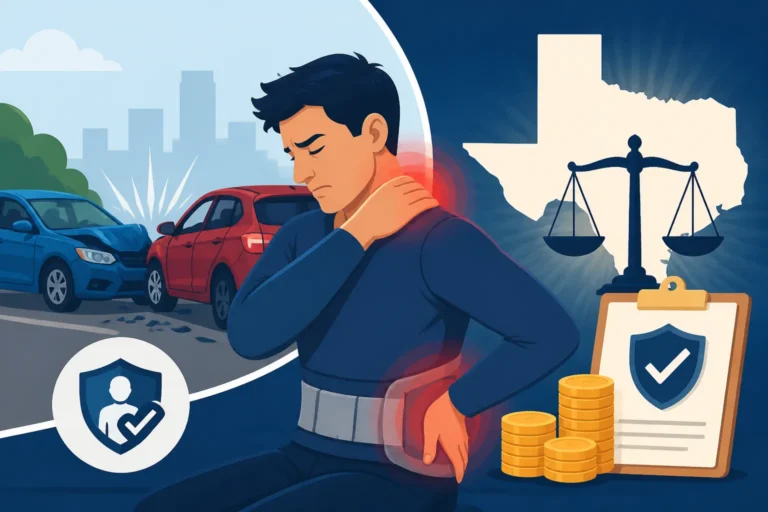
Claiming Compensation for Shoulder Injury in Texas
Getting into a car accident is a jarring, frightening experience. Even a seemingly minor fender-bender can leave you with lingering pain and unexpected medical bills. One of the most common and debilitating injuries people sustain in these collisions is a shoulder injury. Trying to navigate the world of insurance claims, doctors' appointments, and recovery while dealing with constant shoulder pain in Texas can feel overwhelming. This guide will walk you through everything you need to know about claiming compensation for a shoulder injury after a car accident in the Lone Star State, helping you understand the process and what to expect.
Understanding Shoulder Injuries from Car Accidents
Your shoulder is a complex joint, a ball-and-socket marvel that allows for incredible range of motion. Unfortunately, this very flexibility also makes it vulnerable to injury, especially during the sudden, violent forces of a car accident. Whether it's the impact of the crash itself, the tension from a seatbelt, or bracing yourself for impact, shoulder injuries can range from mild strains to severe, life-altering conditions. Recognizing the type and severity of your injury is the first critical step toward understanding your claim.
Common Types of Shoulder Injuries Sustained in Collisions
When a car accident happens, the forces at play can wrench, twist, or compress your shoulder in ways it's not designed to handle. You might feel immediate, sharp pain, or sometimes, the discomfort can creep in hours or even days later. It’s crucial to understand that not all shoulder pain is the same, and the type of injury you have will significantly impact your medical treatment and the potential compensation you can claim. Some of the most frequently seen shoulder injuries in car accidents include rotator cuff tears, which affect the group of muscles and tendons stabilizing your shoulder joint. These can be partial or complete tears and often require extensive physical therapy or even surgery to repair.
Another common culprit is a fractured clavicle (collarbone) or humerus (upper arm bone). These fractures can be incredibly painful and limit your arm's mobility for weeks or months, often necessitating casts, slings, or surgical intervention to stabilize the bone. Dislocations of the shoulder joint also occur when the humerus head pops out of the socket. This is an acutely painful injury that requires immediate medical attention to reset the joint, and it can leave you prone to future dislocations if not properly treated and rehabilitated.
Beyond these, you might experience labral tears, affecting the cartilage rim around your shoulder socket, or even nerve damage, which can lead to weakness, numbness, or tingling down your arm. Thoracic outlet syndrome, though less common, can also develop when nerves or blood vessels between your collarbone and first rib become compressed. It’s a wide spectrum of issues, each with its own recovery path and implications for your daily life.
The Immediate and Long-Term Impact on Your Life
A shoulder injury isn't just a temporary ache; it can profoundly disrupt nearly every aspect of your life. In the immediate aftermath, you might find simple tasks like dressing yourself, reaching for a cup, or even sleeping comfortably to be incredibly difficult or impossible. If your dominant arm is affected, this limitation becomes even more pronounced, impacting your ability to work, care for your family, or enjoy hobbies. Imagine trying to lift groceries, type on a computer, or play catch with your kids when every movement sends a jolt of pain through your shoulder.
Beyond the physical limitations, there’s the emotional and financial toll. The medical bills for diagnosis, treatment, medication, and physical therapy can quickly add up, creating significant financial stress. You might also lose wages if your injury prevents you from working, or if you have to take a less strenuous, lower-paying job. On top of that, the chronic pain, loss of independence, and inability to engage in activities you once loved can lead to frustration, anxiety, and even depression. These are all real consequences that need to be considered when pursuing compensation. The journey to recovery can be long and arduous, and understanding the full scope of both your immediate and long-term damages is essential for a fair claim.
Navigating the Car Accident Claims Process in Texas
Texas operates under an "at-fault" insurance system, which means that the driver who caused the accident is responsible for the damages. This is a crucial distinction from states with "no-fault" systems, where your own insurance company would pay for your initial medical bills regardless of who caused the crash. Because Texas is an at-fault state, proving that the other driver was negligent and directly caused both the accident and your shoulder injury becomes paramount to claiming compensation. This can be a complex process, but knowing the steps involved can help you protect your rights. For a broader overview, you can refer to our guide on What to Do After a Car Accident: Step-by-Step (2027).
Establishing Fault in Texas
The entire premise of your compensation claim for a shoulder injury in Texas hinges on establishing who is at fault in a car accident. In an at-fault system, the other driver's insurance company will only pay for your damages if their policyholder is found to be responsible for the collision. This isn't always as straightforward as it sounds, especially if there were multiple vehicles involved or conflicting accounts. Police reports, witness statements, accident scene photos, and even traffic camera footage can all be instrumental in proving fault. Remember, in Texas, if you are found to be more than 50% at fault, you may be barred from recovering any damages from the other party under the state's modified comparative negligence rule.
Insurance companies will conduct their own investigations to determine fault, and they are notoriously thorough in looking for reasons to deny or minimize claims. They might try to argue that you contributed to the accident, even in a minor way, to reduce their payout. For example, if you were T-boned at an intersection, they might try to claim you sped up to beat a yellow light. Having strong evidence and a clear narrative of how the accident occurred is vital. Understanding How Insurance Companies Determine Who Is at Fault can give you an edge in these discussions.
Reporting the Accident and Dealing with Insurance Companies
After an accident resulting in a shoulder injury, one of your first steps, after seeking medical attention, should be to report the incident to your insurance company, even if you believe the other driver was entirely at fault. While you'll ultimately be filing a claim with the at-fault driver's insurance, informing your own insurer is usually a requirement of your policy. When you file a claim with the at-fault driver’s insurance, you'll be dealing with a third-party claim. This means you’re not their customer, and their primary goal is to protect their policyholder and minimize their financial exposure.
When interacting with insurance adjusters, be courteous but cautious. Avoid giving recorded statements without consulting with an attorney, and never admit fault or minimize your injuries. Insurance companies often try to settle claims quickly for less than they are worth, especially if you seem overwhelmed or desperate. Keep meticulous records of all communications, medical appointments, receipts, and any expenses related to your shoulder injury. This documentation will be invaluable as you move through the claims process. Our article on How to File a Car Accident Insurance Claim offers a detailed walkthrough of this critical step.
Gathering Evidence for Your Shoulder Injury Claim
To successfully claim compensation for a shoulder injury in Texas, you need a robust collection of evidence that clearly links the accident to your injury and quantifies your damages. This isn't just about telling your story; it's about providing concrete proof. Medical records are the backbone of any personal injury claim. This includes everything from your initial emergency room visit or urgent care records, to specialist consultations, diagnostic imaging results (X-rays, MRIs, CT scans), physical therapy notes, and prescription details. These documents not only prove the existence and severity of your shoulder injury but also demonstrate the course of treatment you’ve undergone.
Beyond medical documentation, you'll need evidence of economic damages. This includes receipts for all medical bills, pharmacy costs, and any assistive devices like slings or braces. If your shoulder injury forced you to miss work, you'll need documentation of lost wages, such as pay stubs, employment verification, and a statement from your employer detailing the time missed and earnings lost. Don't forget to keep a detailed log of all out-of-pocket expenses, such as mileage to and from doctor's appointments, parking fees, and even childcare costs incurred due to your injury. Photos of the accident scene, vehicle damage, and visible injuries (if any) are also vital. A journal detailing your daily pain levels, limitations, and emotional distress can also be powerful evidence for non-economic damages like pain and suffering.
Calculating Compensation for Your Shoulder Injury
The value of a car accident claim involving a shoulder injury in Texas can vary widely, depending on numerous factors. There's no one-size-fits-all answer, but understanding the categories of damages and how they are calculated will help you manage your expectations and advocate for a fair settlement. The goal is to recover compensation for both the direct financial losses you've incurred and the intangible suffering you've endured. For more general information on how settlements are calculated, see How Car Accident Settlements Are Calculated.
Economic Damages: Covering Your Tangible Losses
Economic damages are the most straightforward part of your claim to quantify because they represent the actual, verifiable financial losses you've experienced due to your shoulder injury. These are often referred to as "special damages" because they are specific to your case and can be itemized. The most significant component of economic damages for a shoulder injury is typically medical expenses. This includes the cost of emergency care, doctor's visits, diagnostic tests like MRIs, surgery (if needed), physical therapy, medication, and any future medical care that your doctors determine will be necessary for your recovery. Even transportation costs to and from appointments can be included.
Beyond medical bills, lost wages are another major economic damage. If your shoulder injury prevented you from working, or if it limited your capacity to earn at your previous level, you can claim compensation for these lost earnings. This includes both past lost wages (money you’ve already missed) and future lost earning capacity, which accounts for any long-term disability or reduced ability to work that your injury causes. Property damage, such as repairs to your vehicle or replacement of personal items damaged in the crash, also falls under economic damages. Keeping meticulous records and receipts for all these expenses is absolutely critical for proving your claim.
Non-Economic Damages: Compensating for Intangible Suffering
While economic damages are about dollar-for-dollar reimbursement, non-economic damages address the less tangible, but equally real, impact your shoulder injury has had on your life. These are often called "general damages" because they are not easily calculable by a receipt. The most common form of non-economic damage is pain and suffering. This encompasses not just the physical pain of your injury and treatment, but also the emotional distress, discomfort, and inconvenience it has caused. For example, the constant ache that keeps you awake at night, the sharp pain when you try to lift your arm, or the general misery of dealing with your recovery all fall under this umbrella. Our detailed guide on Pain and Suffering: How It's Calculated dives deeper into this complex area.
Loss of enjoyment of life is another significant non-economic damage. If your shoulder injury prevents you from engaging in hobbies, sports, or family activities you once cherished—like playing golf, gardening, swimming, or even simply hugging your children without pain—you can seek compensation for this diminished quality of life. Scarring and disfigurement, especially if surgery was required, can also be included. In Texas, there are no caps on non-economic damages in most personal injury cases arising from car accidents, which means there's no limit to how much you can claim for these subjective harms, as long as they are reasonably proven.
Factors Influencing Your Settlement Value
Several factors will significantly influence the overall settlement value of your shoulder injury claim in Texas. The severity of your injury is, without a doubt, the most important element. A minor shoulder sprain will naturally result in less compensation than a complete rotator cuff tear requiring surgery and extensive rehabilitation. The extent of your medical treatment and its duration also plays a crucial role. Long-term treatment, multiple surgeries, and ongoing physical therapy will lead to higher medical bills and thus a larger claim.
The impact on your daily life and ability to work is another major factor. If your shoulder injury results in permanent impairment, limits your ability to perform your job, or prevents you from returning to your previous profession, your claim will likely be worth more. The clarity of fault is also paramount in Texas. If the other driver was clearly 100% at fault, your case is stronger. However, if there's any dispute over liability, or if you're found to be partially at fault, your compensation can be reduced according to Texas's modified comparative negligence rule. Even the specific insurance policy limits of the at-fault driver can affect the maximum amount you can recover. A driver with minimal liability coverage might not be able to cover all your damages, even if they are clearly at fault.
Here's a simplified table comparing typical shoulder injuries and their impact:
| Type of Shoulder Injury | Common Symptoms | Typical Treatment | Potential Long-Term Impact |
|---|---|---|---|
| Rotator Cuff Tear | Pain, weakness, limited arm movement | Rest, physical therapy, injections, surgery | Chronic pain, weakness, reduced range of motion |
| Fractured Clavicle | Severe pain, swelling, deformity | Sling, pain medication, surgery (in some cases) | Uneven shoulders, stiffness, nerve damage |
| Shoulder Dislocation | Intense pain, visible deformity | Manual reduction, immobilization, physical therapy | Recurrent dislocations, instability, arthritis |
| Labral Tear | Aching pain, clicking/popping | Rest, physical therapy, injections, surgery (arthroscopy) | Chronic pain, instability, limited athletic activity |
| Soft Tissue Sprain/Strain | Mild to moderate pain, stiffness | Rest, ice, anti-inflammatories, physical therapy | Lingering soreness, increased risk of re-injury |
Common Challenges and How to Address Them
The path to claiming compensation for a shoulder injury in Texas isn't always smooth sailing. You might encounter various obstacles thrown up by insurance companies or the complexities of the legal system. Being prepared for these challenges can make a significant difference in the outcome of your claim.
Disputing Fault or Minimizing Injury Claims
Insurance companies are in the business of minimizing payouts, and they have various tactics to achieve this. One common strategy is to dispute fault, trying to shift some or all of the blame for the accident onto you. In Texas, as a modified comparative negligence state, if you are found to be 51% or more at fault, you cannot recover any damages. Even if you are found 10% or 20% at fault, your compensation will be reduced by that percentage. They might allege you were distracted, speeding, or otherwise negligent. To counter this, you need strong evidence from the accident scene and potentially witness testimony. Our guide on What Happens If the Other Driver Blames You? offers valuable insights here.
Another frequent challenge is the minimization of your shoulder injury. Adjusters might argue that your injury isn't as severe as you claim, that it's a pre-existing condition, or that your treatment was excessive. They might point to gaps in your medical treatment or question your doctor's recommendations. This is why consistent medical care, detailed record-keeping, and following your doctor's orders are absolutely critical. If you have a pre-existing shoulder condition, it's important to document how the accident aggravated that condition, rather than trying to hide it.
Dealing with Lowball Settlement Offers
It’s almost a given: the first settlement offer you receive from the insurance company will likely be a lowball offer. This is a common tactic to see if you'll accept a quick, inadequate sum, especially if they sense you're under financial pressure or don't fully understand the value of your claim. This offer often only covers basic medical bills and barely touches on pain and suffering or future losses. It's important to remember that this is just a starting point for negotiation, not the final word. You are not obligated to accept it.
When you receive a low offer for your shoulder injury, take a deep breath. Review your total damages—economic (medical bills, lost wages) and non-economic (pain, suffering, loss of enjoyment). Have a clear understanding of what you believe your claim is truly worth. You'll need to articulate why their offer is insufficient, backing up your counter-offer with your medical records, expense receipts, and perhaps a demand letter detailing all your damages. For more comprehensive advice on this, check out How to Deal With a Lowball Insurance Offer. If you're struggling with negotiations, it might be time to consider getting legal counsel involved.
Disclaimer
Please remember that this article provides general information and is not intended as legal advice. Every car accident and personal injury claim is unique, and the information presented here may not apply to your specific situation. Laws can change, and interpretations vary. For personalized advice regarding your shoulder injury claim in Texas, it is strongly recommended that you consult with a qualified personal injury attorney.