Comparative Negligence Laws in Alaska
Getting into a car accident is incredibly stressful, and when you're trying to figure out who's to blame, the legal jargon around "fault" can feel like another massive headache. It's not always a clear-cut situation where one person is 100% at fault, especially in states like Alaska where the rules of comparative negligence come into play. This guide is here to untangle the complexities of how fault works in Alaska car accidents, helping you understand what happens if both drivers share some responsibility for a crash.
Understanding Comparative Negligence in Alaska
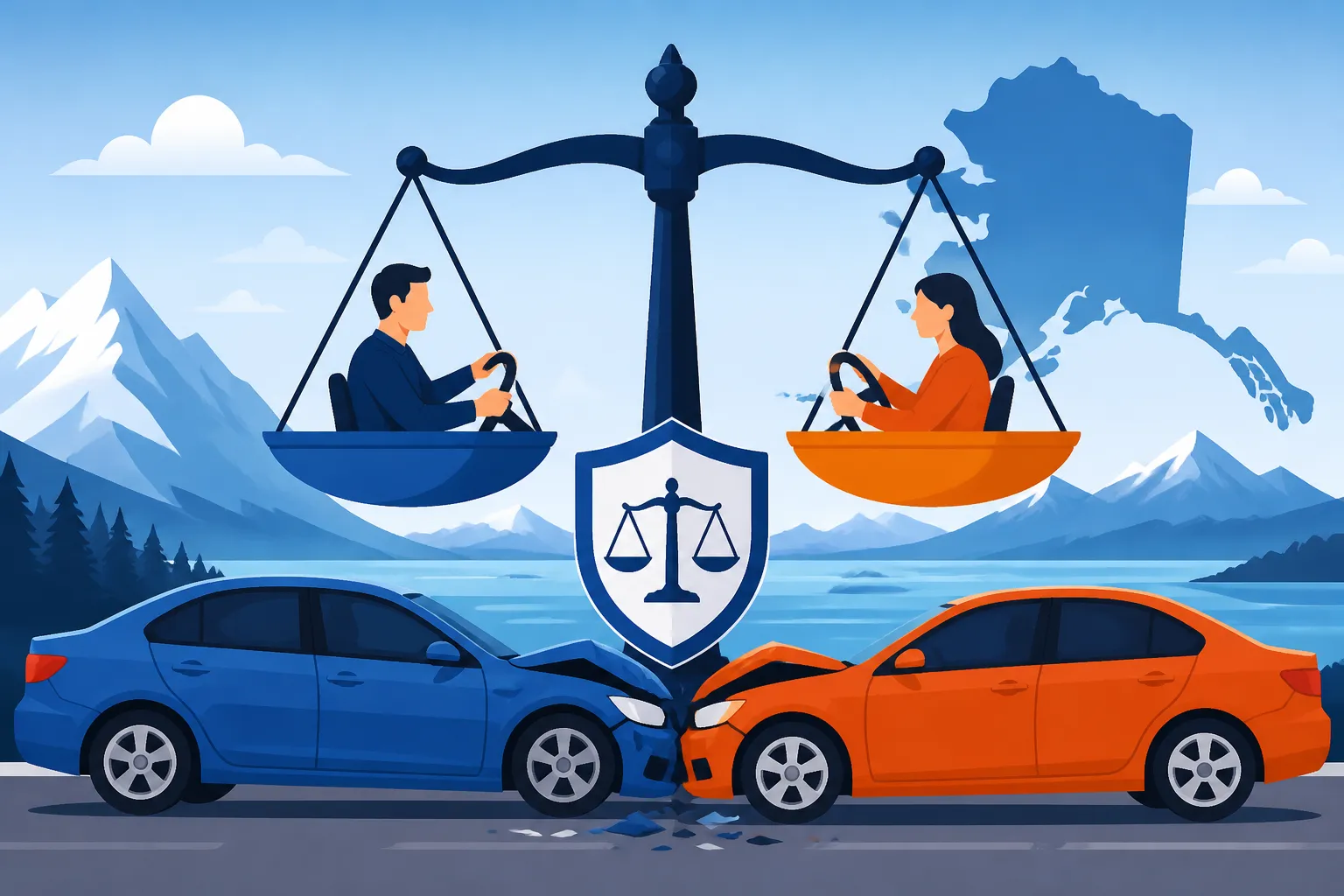
When a car accident happens, the big question is always: "Who is at fault?" In many states, this question has a significant impact on whether you can recover compensation for your injuries and damages. Alaska operates under a system called "pure comparative negligence," which is a fancy legal term for a fairly straightforward concept once you break it down. Essentially, it means that even if you're partly responsible for causing an accident, you can still seek damages from the other driver, but your compensation will be reduced by your percentage of fault. This stands in stark contrast to other systems like "contributory negligence," where even being 1% at fault could completely bar you from recovering anything.
What Pure Comparative Negligence Means for You
In Alaska, the term "pure" is key. It signifies that there's no cutoff point. Some states have "modified comparative negligence" rules, often with a 50% or 51% bar. This means if you're found to be 50% or 51% or more at fault, you can't recover any damages at all. But not in Alaska! Here, if you're determined to be, say, 70% at fault for a collision near the Ship Creek area in Anchorage, you can still recover 30% of your damages from the other driver. It’s a system designed to ensure that everyone bears responsibility for their share of the blame, no matter how large or small.
Let's imagine a scenario: You're driving down a snowy residential street in Fairbanks, perhaps a bit faster than conditions warrant, and another driver pulls out from a side street without fully stopping. A collision occurs. The police report might indicate that the other driver failed to yield, but your speed contributed to the severity of the crash. A court or insurance company might assign the other driver 80% fault and you 20% fault. Under Alaska's pure comparative negligence, if your total damages (medical bills, lost wages, vehicle repair, pain and suffering) amount to $50,000, you would still be able to recover $40,000 (80% of $50,000) from the other driver. You would absorb the remaining $10,000 as your share of the responsibility. This equitable division of financial responsibility is a core tenet of Alaska's approach.
Contrasting with Other Negligence Systems
To truly appreciate Alaska's pure comparative negligence system, it helps to understand what it isn't. In the handful of states that still follow "contributory negligence," like Alabama or Maryland, if you are found to have contributed even 1% to the cause of an accident, you are completely barred from recovering any damages from the other party. Imagine the frustration: you suffer severe injuries and significant vehicle damage, but because you might have momentarily glanced away at the wrong time, your entire claim is wiped out. It's a very harsh rule that often leaves accident victims without recourse.
Then there are the "modified comparative negligence" states. These are a middle ground. Some, like Texas, use a "51% bar," meaning if you are 51% or more at fault, you get nothing. If you're 50% or less at fault, your damages are reduced by your percentage of fault. Others, like New Hampshire, use a "50% bar," meaning if you're 50% or more at fault, you're out of luck. The key difference here from Alaska's "pure" system is that there is a threshold. Cross that threshold, and your claim is completely extinguished, regardless of how catastrophic your injuries or damages might be. Alaska's system avoids these hard cutoffs, always allowing for some recovery, provided another party shares some fault. This fundamental difference can drastically impact the outcome for individuals involved in car accidents, especially when fault isn't clearly one-sided.
How Fault Is Determined in an Alaska Car Accident
So, you've been in a crash, and now the process of determining fault begins. It's rarely as simple as one person saying, "My bad!" Insurance companies, and sometimes courts, launch into a detailed investigation. Their goal is to reconstruct the accident, identify the negligent acts of each driver, and assign a percentage of responsibility to everyone involved. This process can be lengthy and involves collecting a lot of different pieces of information. If you're wondering, "How Insurance Companies Determine Who Is at Fault," it's a multi-faceted approach.
The Investigation Process and Evidence Gathering
After an accident, especially one with injuries or significant damage, law enforcement will often be called to the scene. The police report is usually the first crucial piece of evidence. This document, compiled by an officer who observed the immediate aftermath, will include details like the date, time, and location of the accident, vehicle information, witness statements, and, often, the officer's initial assessment of fault. While a police report doesn't legally determine fault in a civil claim, it carries significant weight with insurance adjusters and can heavily influence their initial decisions. You might find more details in our guide on Police Reports and Car Accident Fault.
Beyond the police report, insurance companies and legal teams will dig much deeper. They'll look at photographs and videos from the accident scene – these are incredibly valuable, so if you're ever in a crash, always document everything you can immediately after. They'll also collect statements from all drivers and passengers involved, and any independent eyewitnesses. Medical records become paramount if injuries are sustained, as they help establish the severity and extent of harm directly linked to the accident. Vehicle damage estimates also play a role, as the type and location of damage can often tell a story about how the collision occurred. For complex cases, accident reconstruction experts might be brought in to analyze skid marks, vehicle positioning, and other physical evidence to create a detailed scientific model of the collision. Understanding How to Prove the Other Driver Was at Fault is crucial, and it hinges on solid evidence.
Factors Influencing Fault Assignment
When assigning percentages of fault, several factors are carefully weighed. The most obvious is adherence to traffic laws. Did a driver run a red light? Were they speeding? Did they fail to yield right-of-way, perhaps while making a Left-Turn Accident Fault Rules violation? These are clear indicators of negligence. Distracted driving, such as texting or talking on the phone, is another huge factor in today's world. Driving under the influence of alcohol or drugs immediately raises a driver's fault percentage significantly. Weather conditions also play a part; while a driver can't control the weather, they are expected to adjust their driving to suit conditions like icy roads on the Seward Highway or heavy rain.
The severity of each driver's negligent action is also considered. For instance, a driver who blows through a stop sign without looking is likely to be assigned a higher percentage of fault than a driver who was technically speeding but attempting to avoid a sudden hazard. Ultimately, the goal is to paint a comprehensive picture of who did what, when, and how it contributed to the crash. This holistic evaluation, combining physical evidence, witness accounts, and legal principles, allows adjusters and juries to fairly apportion blame according to Alaska's pure comparative negligence rules.
Impact of Comparative Negligence on Your Car Accident Claim
Now for the part that directly affects your wallet: how does Alaska's pure comparative negligence system actually influence the money you might receive after a car accident? It's simple arithmetic, but with significant real-world implications. If you're found to be partially at fault, the total amount of damages you are eligible to recover will be reduced proportionally to your percentage of fault. This is true whether you're negotiating with an insurance company for a settlement or if your case goes all the way to a jury verdict in an Alaskan courtroom. Our article on What Happens If You're Partially at Fault? delves deeper into this.
Real-World Examples of Reduced Settlements
Let's walk through some practical examples to illustrate how this works in Alaska. Say you were involved in a collision on the Glenn Highway outside Palmer, and your total damages – including medical expenses, lost income, pain and suffering, and vehicle repair costs – are assessed at $100,000.
- Scenario 1: You are 10% at fault. If the investigation determines you contributed 10% to the accident, your $100,000 in damages would be reduced by 10%. This means you could recover $90,000 from the other driver's insurance.
- Scenario 2: You are 40% at fault. In this case, your $100,000 in damages would be reduced by 40%. You would then be eligible to recover $60,000.
- Scenario 3: You are 75% at fault. Even if you bear a significant portion of the blame, say 75%, Alaska's pure comparative negligence still allows you to recover. Your $100,000 in damages would be reduced by 75%, leaving you with $25,000.
This proportionate reduction applies across all types of damages – economic (like medical bills and lost wages) and non-economic (like pain and suffering). The key takeaway is that your compensation is directly tied to the percentage of fault assigned to the other party. The less fault you have, the more you recover. The more fault you have, the less you recover. This makes accurately determining fault a critical step in any car accident claim in Alaska. You can explore How a Settlement Changes If You're Partly at Fault for more context.
Here's a table summarizing these scenarios:
| Total Assessed Damages | Your Percentage of Fault | Other Driver's Percentage of Fault | Your Recoverable Amount |
|---|---|---|---|
| $100,000 | 10% | 90% | $90,000 |
| $100,000 | 25% | 75% | $75,000 |
| $100,000 | 50% | 50% | $50,000 |
| $100,000 | 75% | 25% | $25,000 |
| $100,000 | 90% | 10% | $10,000 |
Strategies for Navigating Comparative Negligence
Navigating a car accident claim, especially one where fault might be shared, can be a daunting process. The insurance company for the other driver will almost certainly try to minimize their payout by maximizing your perceived fault. Therefore, it's vital to be prepared and strategic from the very beginning. One of the first things you should do after an accident, once safety is ensured, is gather as much evidence as possible at the scene. This includes taking photos of vehicle positions, damage, road conditions, traffic signs, and any visible injuries. Collecting contact information for witnesses is also incredibly important. Our guide on What to Do After a Car Accident: Step-by-Step (2026) provides a comprehensive checklist.
Seeking prompt medical attention is another non-negotiable step, even if you feel fine immediately after the crash. Some injuries, like whiplash or a concussion, have Delayed Injury Symptoms After a Car Accident and might not manifest for hours or even days. A delay in medical treatment can be used by insurance companies to argue that your injuries weren't caused by the accident or aren't as severe as you claim. Seeing a doctor creates an official record that links your injuries directly to the accident, which is crucial for proving your damages. This documentation is essential not just for your health but for proving your claim for How Much Is My Car Accident Settlement Worth? (2026).
Finally, and perhaps most importantly, consider consulting with an experienced personal injury attorney in Alaska. An attorney can be your advocate, handling all communications with insurance companies, gathering necessary evidence, and building a strong case to protect your right to fair compensation. They understand the nuances of Alaska's pure comparative negligence laws and can skillfully argue against inflated claims of your fault, ensuring you receive the maximum possible recovery. Remember, Dealing With Insurance Adjusters After a Car Accident can be tricky, and having an expert on your side can make all the difference. While the idea of a lawyer might seem intimidating, often they work on a contingency fee basis, meaning you don't pay unless they win your case. They can help navigate the complexities of How Car Accident Settlements Are Calculated and fight for your best interests.
Disclaimer
Please remember that this information is for educational and informational purposes only and does not constitute legal advice. Car accident laws are complex and can vary based on specific circumstances. You should always consult with a qualified legal professional for advice tailored to your individual situation.