Comparative Negligence Laws in Colorado
It’s a situation many of us dread: you’ve been in a car accident, and while you know it wasn't all your fault, you also suspect you might share some of the blame. The confusion and worry about how this shared responsibility affects your ability to recover damages can be overwhelming, leaving you wondering if it's even worth pursuing a claim. This guide will meticulously break down Colorado's comparative negligence laws, explaining exactly how fault is determined, how it impacts your compensation, and what steps you can take to protect your rights.
Understanding Comparative Negligence in Colorado
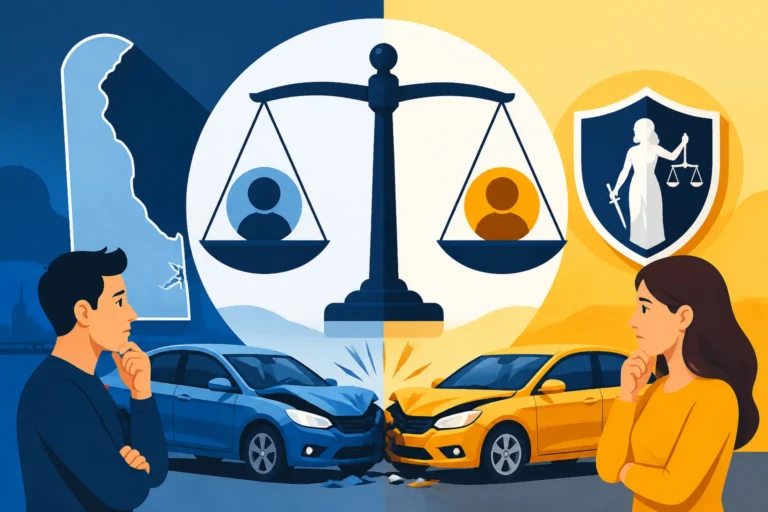
When you're involved in a car accident, one of the most immediate questions is always, "Who was at fault?" But the answer isn't always a simple 'Driver A' or 'Driver B'. Sometimes, multiple parties contribute to an accident, and that's where the concept of comparative negligence comes into play. It's designed to provide a fair way to assign responsibility and distribute damages when more than one person is to blame.
What is Comparative Negligence?
At its heart, comparative negligence is a legal principle that allows an injured party to recover damages even if they were partially at fault for an accident. This stands in stark contrast to an older, much stricter legal doctrine called "contributory negligence," which still exists in a handful of states. In a pure contributory negligence system, if you were found even 1% responsible for an accident, you would be completely barred from recovering any compensation from the other driver, regardless of how severe your injuries or damages were. Imagine getting into a fender bender on a busy street in Baltimore, a city in a contributory negligence state like Maryland, and being told you get nothing because you glanced down at your radio for two seconds. It’s a harsh reality that many find incredibly unfair.
Fortunately, most states, including Colorado, have adopted some form of comparative negligence because it’s generally seen as a much more equitable approach. It acknowledges that accidents are often complex events with multiple contributing factors, and it seeks to ensure that injured parties can still receive some compensation, proportional to the other party's greater share of the blame. This system aims to prevent the injustice of a minor misstep on your part completely wiping out your ability to seek justice for the harm caused by another driver's significant negligence.
Colorado's Modified Comparative Negligence (50% Bar Rule)
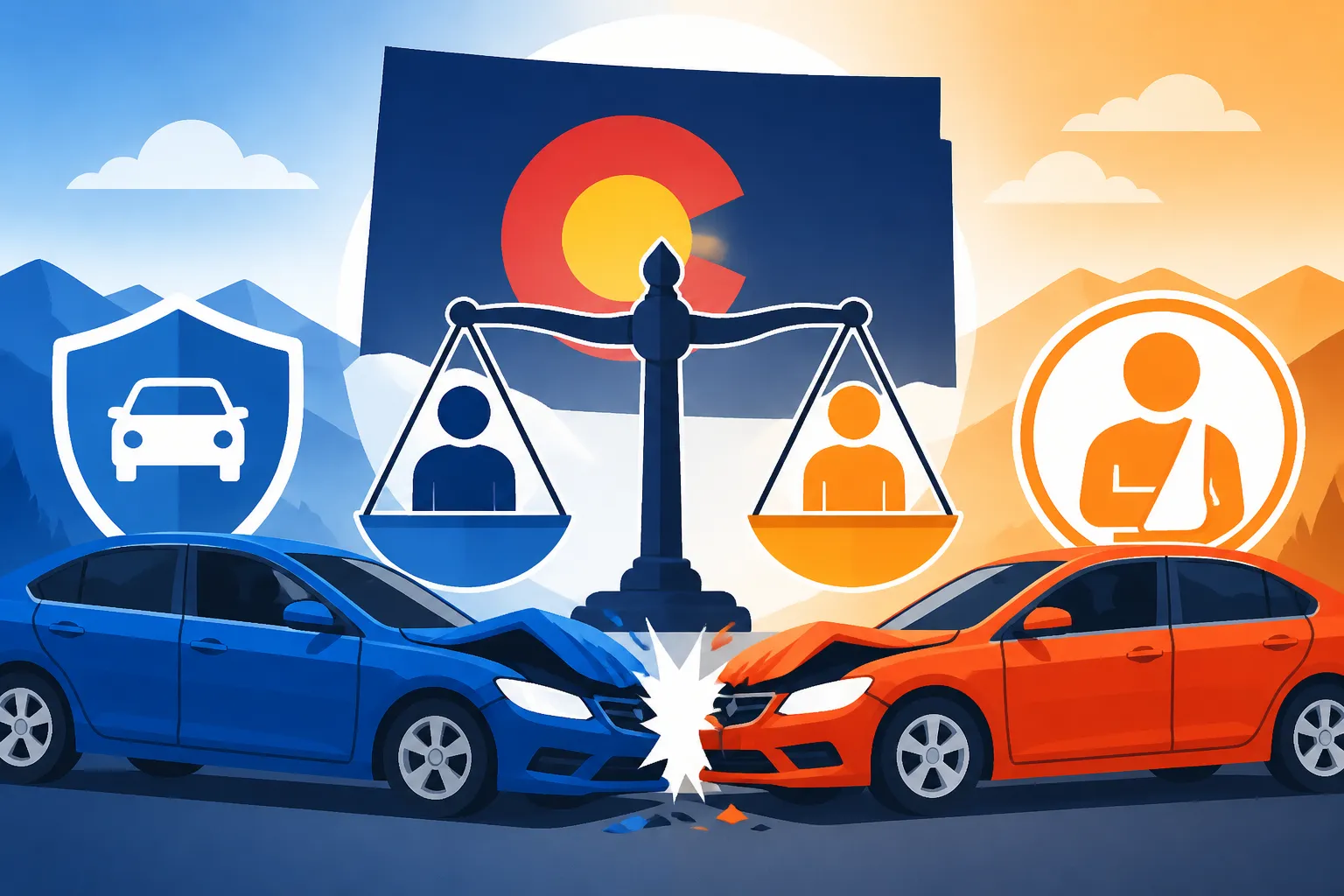
Colorado operates under a specific type of comparative negligence known as "modified comparative negligence" with a "50% bar rule." This rule is absolutely critical to understand because it sets a clear threshold for when you can and cannot recover damages. Essentially, if you are found to be 50% or more at fault for an accident, you cannot recover any compensation from the other driver. However, if you are found to be 49% or less at fault, you can recover damages, but your total award will be reduced by your percentage of fault.
Let's illustrate this with a couple of scenarios. Imagine you're driving through downtown Denver, approaching an intersection, and another driver runs a red light, striking your vehicle. If a police report or insurance investigation determines that the other driver was 100% at fault, you would be eligible to recover 100% of your damages. That's pretty straightforward. But now, consider if you were also speeding slightly when the accident occurred. An investigation might conclude that the other driver was 90% at fault for running the light, but you were 10% at fault for speeding, which contributed to the severity of the impact or your inability to react in time. In this case, because your fault is below the 50% bar, you could still recover 90% of your total damages. If your medical bills and car repair costs totaled $10,000, you would receive $9,000. This proportional reduction is the core of how Colorado’s system aims for fairness.
The real challenge comes when your assigned fault approaches or reaches that 50% mark. Let's say you're merging onto I-25 near Colorado Springs, and another driver aggressively cuts you off. In the confusion, you swerve, and there's a collision. An adjuster might argue that while the other driver was largely to blame, you also failed to check your blind spot adequately or reacted too late, assigning you 40% of the fault. You would still be able to recover 60% of your damages. However, if that same investigation found you 50% at fault – perhaps you were merging without signaling, and the other driver was also distracted – you would be completely barred from recovering any damages. This 50% threshold is a hard stop, and understanding it is paramount for anyone involved in an accident in Colorado. For a deeper dive, you might find our guide on what Does 50/50 Fault Mean for Your Claim? to be particularly insightful.
How Your Fault Affects Your Claim in Colorado
It’s one thing to understand the legal principle, but it’s another entirely to see how it plays out in real life when you're trying to get your vehicle fixed and your medical bills paid. The percentage of fault assigned to you directly translates into a reduction of the compensation you can receive. This can be a tough pill to swallow, especially when you feel like the other driver was clearly the primary cause of the collision.
The Impact on Your Compensation
When you file a car accident claim in Colorado, whether it's for property damage, medical expenses, lost wages, or pain and suffering, your total potential compensation is directly tied to the fault assessment. Every percentage point of fault attributed to you means a corresponding reduction in your final settlement or award. So, if your total damages are calculated to be $20,000, and you are found to be 20% at fault, you would only be eligible to receive $16,000 (an 80% recovery). The insurance company of the at-fault driver is only liable for their percentage of negligence.
This isn't just an abstract number; it has very real financial consequences. That $4,000 reduction in our example could mean the difference between fully covering your chiropractor visits, therapy, and lost time from work, or having to pay a significant portion out of your own pocket. It's why arguing over even small percentages of fault becomes so important during the claims process. Insurance companies are acutely aware of this rule and will often attempt to shift as much blame as possible onto you to minimize their payout. Learning how Comparative Fault Reduces Your Settlement can really help you prepare for these conversations.
Scenarios of Shared Fault and Recovery
Let's look at a few common scenarios to grasp how this might unfold on the streets of Colorado, from bustling downtown areas to quieter suburban roads.
-
You are 10% at fault: Imagine you're driving in Boulder, and another driver makes an illegal U-turn, causing a crash. However, during the investigation, it's discovered you were slightly distracted by your phone for a moment before the collision. The other driver is assigned 90% fault, and you get 10%. If your total damages are $15,000, you can recover $13,500. This is still a significant recovery, highlighting that minor contributions to fault don't entirely derail your claim.
-
You are 25% at fault: Picture this: you're making a left turn at a busy intersection in Fort Collins. You thought you had enough time, but an oncoming car was speeding. Both of you contributed to the collision. The other driver is found 75% at fault for speeding, and you are 25% at fault for misjudging the turn. With $30,000 in damages, you could still recover $22,500. This scenario perfectly demonstrates how Colorado's system attempts to split the financial burden based on each party's contribution to the accident.
-
You are 49% at fault: This is the brink of the 50% bar. Let's say you were involved in a rear-end collision on a snowy road near Evergreen. While the driver behind you was clearly following too closely for the conditions, you also had a burnt-out taillight, making your vehicle less visible. An investigation determines the other driver is 51% at fault, and you are 49%. If your total damages are $50,000, you would receive $25,500. Even though your fault is substantial, you still recover. This razor-thin margin shows just how impactful small differences in fault percentages can be.
-
You are 50% or more at fault: This is the crucial point where recovery stops. If in the snowy road example, you were found 50% at fault due to multiple factors (like the taillight and perhaps a brake light issue, or you slammed on your brakes unnecessarily), you would recover nothing. The same applies if you were found 51% or 60% at fault. This "50% bar" is why understanding how fault is determined in a car accident is so vital, and why protecting your claim by accurately documenting the scene is paramount.
| Percentage of Your Fault | Percentage of Damages Recoverable | Example Scenario |
|---|---|---|
| 0% | 100% | Another driver runs a red light, hits you. |
| 10% | 90% | Other driver makes unsafe lane change; you were slightly speeding. |
| 25% | 75% | You misjudged a turn; other driver was distracted. |
| 49% | 51% | Other driver failed to yield; you slightly exceeded safe speed for conditions. |
| 50% or more | 0% | You failed to yield, and other driver was also speeding; combined fault is 50/50 or worse for you. |
Proving Fault and Protecting Your Claim
After an accident, especially one where fault might be shared, the burden often falls on you to gather evidence and advocate for your position. It’s not enough to simply believe the other driver was more at fault; you need to be able to demonstrate it. This process can feel daunting, but being prepared can make a significant difference in the outcome of your claim.
Gathering Evidence at the Scene
The moments immediately following an accident are chaotic, but they are also incredibly important for documenting what happened. What you do or don't do at the scene can profoundly affect how fault is later assigned and, consequently, your ability to recover damages in Colorado. One of the first and most critical steps is to safely exchange information with the other driver, including their insurance details, license plate, and contact information.
Next, if you are able, use your phone to take comprehensive photographs and videos. Don't just focus on your car or the other vehicle; capture the entire scene. Get wide shots showing the positions of both cars, skid marks on the road, traffic signs or signals, and any relevant road conditions like potholes or debris. Zoom in on specific damage to both vehicles. If there were any witnesses, politely ask for their contact information and a brief statement of what they observed. These objective details can be invaluable later on. Even if it seems minor, calling the police to the scene to file a Police Reports and Car Accident Fault can be a powerful piece of evidence, as the officer's report often includes their initial assessment of fault and details about the accident.
Don't forget to seek medical attention, even if you don't feel immediate pain. Adrenaline can mask injuries, and a documented medical record from shortly after the accident is crucial for proving the extent of your injuries and linking them directly to the crash. Following our guide on What to Do After a Car Accident: Step-by-Step can ensure you cover all your bases during this stressful time.
Dealing with Insurance Adjusters and Allegations of Fault
Once you've reported the accident, you'll inevitably be dealing with insurance adjusters. Remember, their primary goal is to settle claims for the lowest possible amount, which often means trying to assign as much fault as possible to you, especially in a modified comparative negligence state like Colorado. They might ask for a recorded statement or try to get you to admit fault, even subtly.
It's crucial to be polite but firm. You are not obligated to give a recorded statement to the other driver's insurance company without consulting with a legal professional first. Stick to the facts you know for certain and avoid speculating or admitting any fault. For instance, if an adjuster asks, "Were you paying attention?" instead of saying, "Well, I might have glanced at my GPS," simply state what you were doing and what you observed. "I was driving within the speed limit and saw their vehicle approach the intersection." Avoid phrases like "I'm sorry" or "It was my fault" even if you're just being polite. These can be twisted into admissions of liability. If the adjuster tries to blame you unfairly, providing them with the evidence you gathered at the scene – photos, witness statements, police report – can help counter their claims. Remember, the ultimate goal is to present a strong case demonstrating How to Prove the Other Driver Was at Fault to maximize your potential recovery.
Examples of Comparative Negligence in Action
Understanding comparative negligence can feel academic until you see it applied to real-world driving scenarios. The truth is, many accidents are not black and white, and shared fault is a surprisingly common occurrence on Colorado roads.
Common Accident Scenarios with Shared Fault
Let’s consider a few situations where fault often isn’t 100% one-sided:
-
Left-Turn Accidents: This is a classic. You're making a Left-Turn Accident Fault Rules onto a busy street in Greeley. The oncoming car is speeding, but you initiated your turn before it was entirely safe. An investigation might find the oncoming driver 70% at fault for speeding, and you 30% at fault for failing to yield completely. Both actions contributed to the collision. Your recovery would be reduced by 30%.
-
Lane-Change Accidents: Imagine you're driving on a multi-lane highway near Pueblo. You signal and start to move into the next lane, but a car already in that lane speeds up or fails to check their blind spot, leading to a collision. The other driver might claim you didn't see them, while you argue they were driving aggressively. An adjuster might assign 60% fault to the other driver for failing to maintain a safe speed and 40% to you for not ensuring the lane was entirely clear before merging. This is why understanding How Fault Works When Changing Lanes on the Highway is so important.
-
Parking Lot Accidents: Parking lots, especially busy ones at shopping centers like Cherry Creek in Denver, are ripe for shared fault scenarios. Two cars back out of opposing parking spots at the same time, colliding in the middle. Who's at fault? Often, it's 50/50, or one driver might be assigned slightly more fault if they failed to check their mirrors or were backing up too quickly. If a driver hits a parked car, it's usually 100% the moving driver's fault, but if the parked car was illegally parked in a fire lane, there might be a small percentage of comparative fault assigned to the parked car owner for contributing to the obstruction. Learn more about Who Is at Fault in a Parking Lot Accident?
-
Bad Weather Accidents: Driving through a snowstorm in the mountains near Aspen presents its own challenges. If you're involved in a collision, and the other driver was going too fast for conditions, but you also had worn-out tires, fault could be split. While the other driver might be deemed primarily at fault, your worn tires could be seen as a contributing factor to your inability to control the vehicle, leading to a reduction in your claim. This illustrates the complexities of Who Is at Fault in Bad Weather Rain, Snow, Ice?.
In all these cases, insurance companies will weigh various factors to determine fault, including traffic laws, road conditions, driver actions, and any available evidence. This process is complex, and knowing How Insurance Companies Determine Who Is at Fault can give you a significant advantage.
What If Both Drivers Are 50% at Fault?
This is the big one for Colorado. Under the state’s modified comparative negligence rule, if a court or insurance adjuster determines that both drivers are equally 50% at fault for an accident, neither driver can recover any damages from the other. This is the "bar" in the "50% bar rule."
Let's say you're in a situation in Colorado Springs where you and another driver both failed to stop completely at a four-way stop sign, and you collide. After reviewing witness statements and traffic camera footage, the investigators conclude that both of you were equally negligent in failing to stop. Because you are both deemed 50% responsible, you would not be able to claim compensation for your injuries or vehicle damage from the other driver's insurance, and they would not be able to claim from yours. Each party would essentially bear their own losses.
This scenario underscores why even a small difference in the fault percentage – moving from 49% to 50% – can have such a drastic impact on your ability to recover. It also highlights the contentious nature of fault assignment, as both sides will fiercely argue to stay below that 50% threshold. This is often where a neutral third party, like a police officer's report or an experienced car accident lawyer, can play a pivotal role in arguing for a lower percentage of fault on your behalf. For more context on such situations, consider reading our article on Who Is at Fault When Both Drivers Are to Blame?.
Disclaimer
Please remember that this article provides general information and insights into comparative negligence laws in Colorado. It is not a substitute for professional legal advice. Every car accident case is unique, and the specific facts and circumstances of your situation will determine the application of these laws. If you have been involved in a car accident, especially one involving shared fault, it is always recommended to consult with a qualified legal professional who can provide advice tailored to your specific needs.