Who Is at Fault When Both Drivers Are to Blame?
It's an utterly frustrating and often confusing situation when you've been in a car accident, and suddenly, both drivers are pointing fingers, or worse, you're being told that you share some of the blame. No one wants to hear that they contributed to a crash, especially when you're dealing with injuries, vehicle damage, and the sheer stress of the aftermath. This guide is here to walk you through exactly what happens when fault isn't cut and dry, helping you understand the legal landscape and how to protect yourself if you find yourself in this tricky position.
Understanding Shared Fault in Car Accidents
When two vehicles collide, it’s often easy to assume there’s a single "at-fault" driver, and that assumption usually forms the basis of how we think about insurance claims and compensation. However, the reality on our busy roads, especially in bustling cities like Los Angeles or Chicago, is far more nuanced. Many accidents involve actions or inactions from both drivers that contribute to the collision, making the determination of fault a complex dance of evidence and legal principles.
The Reality of Dual Responsibility
Imagine a scenario: you're driving along a busy street in downtown Atlanta, and another car suddenly swerves into your lane without signaling. You react quickly, but perhaps you were going a little over the speed limit, or maybe you hesitated slightly before braking. The collision occurs. On the surface, the other driver who swerved is clearly in the wrong, but an investigation might reveal that your slightly excessive speed or delayed reaction also played a small role in the severity of the impact, or even in making the accident unavoidable. This is the heart of dual responsibility – situations where the actions of both parties, even if one is more egregious, somehow contribute to the incident.
This concept can feel incredibly unfair. You might feel like you were simply trying to avoid a crash, only to be told your actions weren't perfect. It's a common frustration, and it highlights why understanding the specifics of how fault is assigned is so important. The legal system acknowledges that accidents are rarely black and white, and often, multiple factors converge to create a collision. When we talk about Who Is at Fault in a Car Accident? Complete Guide (2027), it's rarely a straightforward accusation but rather an analysis of each driver's contribution.
Initial Blame Versus Legal Fault
There's a significant difference between who might initially seem to be at fault at the scene of an accident and who is legally deemed responsible after a thorough investigation. At the scene, emotions are high, adrenaline is pumping, and everyone has their own perspective. One driver might immediately apologize, seemingly taking full blame, but that doesn't necessarily mean they'll be held 100% legally responsible. Similarly, a police officer at the scene might issue a citation to one driver, but even that isn't the final word on legal fault for insurance or civil claims.
Legal fault is determined through a meticulous process involving evidence collection, witness statements, accident reconstruction, and an understanding of traffic laws. Insurance companies will conduct their own investigations, and if a case goes to court, a judge or jury will weigh all the evidence. For example, in a Left-Turn Accident Fault Rules scenario, the turning driver is often primarily at fault, but if the oncoming driver was speeding excessively, their percentage of fault could increase. It's not about who made the first mistake, but about how each driver's negligence contributed to the outcome. This can feel like a lengthy and invasive process, especially when you just want to move on and get things resolved.
How States Handle Shared Fault: Comparative Negligence
The legal system has evolved to address the complexities of shared fault, giving rise to doctrines like comparative negligence. This system acknowledges that sometimes, a car accident isn't entirely one person's fault; both drivers might share some responsibility. Most states in the U.S. operate under some form of comparative negligence, which means that even if you're partly to blame, you might still be able to recover damages, albeit a reduced amount. Understanding Comparative vs Contributory Negligence Explained is crucial for anyone involved in an accident where fault isn't clear-cut.
Pure Comparative Negligence Explained
Imagine you're driving in a state like California or Florida, which follows "pure comparative negligence." In this system, your ability to recover damages is directly proportional to the other driver's percentage of fault, no matter how much you contributed to the accident. Let's say you were involved in a minor fender bender in San Diego. The other driver was definitely distracted and hit you, but perhaps you had a burnt-out taillight that made your vehicle harder to see. If a jury determines the other driver was 80% at fault and you were 20% at fault, you can still recover 80% of your total damages.
This means if your damages (medical bills, lost wages, vehicle repair) totaled $10,000, you would be able to collect $8,000 from the other driver's insurance. It's a system designed to ensure that everyone who contributed to an accident bears some financial responsibility, but also that injured parties aren't entirely barred from recovery just because they weren't 100% perfect. This can be a huge relief, especially if you're facing significant expenses and worrying about how you'll make ends meet. It's all about fairness, even when circumstances are less than ideal. You can learn more about specific state laws in our article, Pure Comparative Negligence States Explained.
Modified Comparative Negligence: The 50% Bar Rule
Now, let's consider states that follow a "modified comparative negligence" rule with a 50% bar. In states like Colorado, Maine, or Oklahoma, you can recover damages as long as you are found to be 50% or less at fault. If your fault exceeds 50%, you recover nothing. Let’s say you were involved in a parking lot accident in Denver. You were backing out of a spot, and another driver was speeding through the lot. If you are found to be 50% at fault, and the other driver 50% at fault, you can still recover 50% of your damages.
However, if the fault shifts slightly, and you are found to be 51% at fault, you would be completely barred from recovering any damages from the other driver. This threshold can feel incredibly arbitrary and high-stakes. One percentage point can mean the difference between getting compensation for your injuries and car repairs, or walking away with nothing. This puts a lot of pressure on the fault determination process, making every piece of evidence and every negotiation point critical. For more on this, check out Modified Comparative Negligence (50% vs 51% Bar).
Modified Comparative Negligence: The 51% Bar Rule
Another common variation of modified comparative negligence is the 51% bar rule, which is observed in states such as Texas, Georgia, and Pennsylvania. Under this rule, you can still recover damages as long as your fault is determined to be 50% or less. If you are found to be 51% or more at fault, you are completely barred from recovering any compensation from the other driver. This is a subtle but very important distinction from the 50% bar rule.
To illustrate, if you had an accident in Dallas, Texas, and you were found 50% at fault, you could still recover 50% of your damages. But if the scale tipped to 51% fault on your part, your claim for compensation would be entirely dismissed. This means in states with a 51% bar, you have a slightly higher chance of recovery than in 50% bar states, as being equally at fault (50/50) doesn't completely bar your claim. Still, the underlying principle is the same: once your fault crosses that 50% line, your right to collect damages from the other party vanishes. It underscores just how critical the precise percentage of fault can be in these systems.
Here’s a quick overview of how these different systems compare:
| Negligence System | Description | Recovery Eligibility | Example (Total Damages $10,000, Your Fault 20%) | Example (Total Damages $10,000, Your Fault 60%) |
|---|---|---|---|---|
| Pure Comparative | Allows recovery of damages even if you are mostly at fault; your payout is reduced by your percentage of fault. | Always, regardless of your fault percentage. | Recover $8,000 (80%) | Recover $4,000 (40%) |
| Modified (50% Bar) | Allows recovery if you are 50% or less at fault. If your fault is 51% or more, you recover nothing. | If your fault is ≤ 50%. | Recover $8,000 (80%) | Recover $0 |
| Modified (51% Bar) | Allows recovery if you are 50% or less at fault. If your fault is 51% or more, you recover nothing. (Essentially the same as 50% bar in outcome, but the wording is different). | If your fault is ≤ 50%. You can recover if you are equally at fault (50%). | Recover $8,000 (80%) | Recover $0 |
| Contributory Negligence | If you are found to be even 1% at fault, you are completely barred from recovering any damages. | Only if you are 0% at fault. | Recover $0 | Recover $0 |
The Stricter Side: Contributory Negligence
While most states have moved towards some form of comparative negligence to allow for partial recovery, a few holdouts still adhere to the much stricter rule of "contributory negligence." This doctrine is a throwback to older legal principles and can be incredibly unforgiving for accident victims. It can feel incredibly harsh, especially when you're dealing with the chaos of an accident and the other driver was clearly a major contributor.
Understanding the Contributory Negligence Rule
The rule of contributory negligence is stark in its simplicity and severity: if you contribute in any way to your own injuries or the accident, no matter how minor your contribution, you are completely barred from recovering any damages from the other at-fault driver. Even if the other driver was 99% responsible and you were just 1% responsible, you would receive nothing. This is a tough pill to swallow for anyone involved in a crash.
Imagine an accident where another driver runs a red light and broadsides you in Maryland. While they are overwhelmingly at fault, if it's discovered you were perhaps checking your rearview mirror for a moment longer than strictly necessary, and that fractional delay might have prevented the crash (even if it's a huge stretch), you could be found contributorily negligent and lose your entire claim. It's an incredibly high bar for victims and often leads to significant frustration and financial hardship. This is why understanding Contributory Negligence States (Where 1% Fault Bars Recovery) is so vital if you're in one of these areas.
Where Contributory Negligence Still Applies
As of early 2024, only a handful of states and the District of Columbia still follow the strict contributory negligence rule. These jurisdictions include Alabama, Maryland, North Carolina, Virginia, and the District of Columbia. For residents or anyone involved in an accident in these areas, the stakes for fault determination are exceptionally high. In these places, if you're even minimally responsible for the accident, your entire claim for medical expenses, lost wages, and pain and suffering could be completely jeopardized.
This makes the post-accident steps even more critical. Documenting everything, gathering witness statements, and securing prompt legal advice are paramount. In these states, an admission of any fault, even a minor one, could devastate your ability to pursue a claim. This is a stark reminder that geographical location significantly impacts your legal rights after a collision and why knowing the specific laws where your accident occurred is non-negotiable.
Impact on Your Car Accident Claim and Settlement
When both drivers are found to share some degree of fault, it introduces a layer of complexity to your car accident claim that isn't present in clear-cut cases. It changes the dynamic of negotiations with insurance companies and, ultimately, affects the amount of compensation you might receive. This is often where the real struggle begins for accident victims, as they try to piece their lives back together while battling complicated legal and financial hurdles.
How Shared Fault Reduces Your Payout
The most direct and immediate impact of shared fault is on the amount of your settlement or verdict. Under any comparative negligence system, if you are found partially at fault, your total damages will be reduced by your percentage of fault. For example, if your total damages (including medical bills, lost wages, and pain and suffering) are calculated at $50,000, but you are found to be 20% at fault, your recoverable amount would be reduced by 20%, leaving you with $40,000. This reduction happens regardless of whether it's a Rear-End Collision Fault: Who Is Responsible? or a complex multi-car pileup.
This reduction can feel frustrating, especially when you believe the other driver was primarily responsible. It means that even though you've suffered significant harm, the legal system requires you to bear a portion of that financial burden yourself. This is how How Comparative Fault Reduces Your Settlement works in practice. It's a system designed to apportion responsibility, but it can certainly feel like a penalty when you're the one facing reduced compensation.
The Role of Insurance Companies in Assigning Blame
Insurance companies are central to the fault determination process. They employ adjusters whose job it is to investigate the accident, collect evidence, and assign a percentage of fault to each driver involved. This isn't always a neutral process; an adjuster's primary goal is to protect their company's bottom line. If they can legitimately assign some fault to you, it reduces the amount their company has to pay out.
They will meticulously review police reports, witness statements, photographs, video footage, and even your own recorded statements. It's not uncommon for an adjuster to try and shift some blame onto you, even if you feel you did nothing wrong. This can be an incredibly stressful part of the claims process, as you might feel like you're constantly defending yourself against accusations from a large, powerful corporation. This is why understanding How Insurance Companies Determine Who Is at Fault is crucial, and why being careful about what you say after an accident is paramount.
What If You Disagree with the Fault Assessment?
It's entirely possible, and frankly, quite common, to disagree with an insurance company's fault assessment. You might firmly believe you were not at fault, or that your degree of fault is much lower than what the insurance company is claiming. When this happens, it becomes a dispute that needs to be addressed. Simply accepting their determination without question can cost you a significant amount of money and potentially even your right to recover.
If you find yourself in this situation, it's vital not to give up. You can present your own evidence, such as dashcam footage, additional witness statements, or expert analysis. This is often where having a knowledgeable legal professional on your side becomes invaluable. They can help you challenge the insurance company's findings, negotiate on your behalf, and present a compelling case for a different fault allocation. You don't have to just accept What Happens If the Other Driver Blames You? without a fight.
Navigating a Claim When Both Drivers Are at Fault
Successfully navigating a car accident claim when both drivers are to blame requires a strategic and informed approach. It’s not simply about reacting to the other side's accusations, but about proactively building your case and understanding your rights. The stakes are higher, and the process can be more challenging, so preparedness is key.
Gathering Evidence to Support Your Position
In any accident, evidence is king, but when fault is disputed, it becomes absolutely indispensable. Your goal is to gather as much objective information as possible to support your version of events and minimize your percentage of fault. This starts immediately at the scene. Take photographs and videos of everything: vehicle damage, the position of cars, skid marks, road conditions, traffic signs, and any visible injuries. If you're physically able, capturing the environment provides invaluable context.
Get contact information from any witnesses, even if they seem hesitant. Their unbiased perspective can be critical. If a police report was filed, obtain a copy, though remember it's not the final word on fault. Keep meticulous records of all medical treatments, doctor visits, prescription costs, and any time missed from work. Every piece of documentation helps to build a comprehensive picture of the accident and its aftermath. This comprehensive approach is central to How to Prove the Other Driver Was at Fault.
The Importance of Legal Counsel
When fault is shared, the complexities of the claim multiply. This is often when people realize they need more than just an insurance adjuster to guide them. A skilled car accident lawyer understands the intricacies of comparative and contributory negligence laws in your specific state. They can analyze the evidence, identify weaknesses in the opposing side's arguments, and build a strong case to minimize your assigned fault and maximize your potential recovery.
They can handle all communications with insurance companies, preventing you from inadvertently making statements that could harm your claim. Lawyers often have access to accident reconstruction specialists, medical experts, and other professionals who can provide crucial support. Trying to tackle a shared-fault claim on your own can be overwhelming, and it's easy to make mistakes that could cost you thousands. For many, the question of Do You Need a Lawyer for a Car Accident? (2027) becomes a resounding yes in these tricky situations.
Negotiation Strategies for Shared Fault Claims
Negotiating a settlement when both drivers are at fault requires a nuanced approach. The initial offers from insurance companies, especially if they've assigned you a high percentage of fault, are often lowball. Your legal team will use the evidence you've gathered to counter these claims and argue for a lower fault percentage for you. This might involve demonstrating that the other driver's actions were far more negligent, or that your contribution was minimal.
It's a back-and-forth process where your lawyer will present a demand package, highlight the full extent of your damages, and argue against any unfair fault allocation. They'll also be prepared to explain the legal precedents and relevant case law that support your position. The goal is to reach a fair settlement that reflects the true apportionment of fault and adequately compensates you for your losses, even if it means entering into mediation or, in some cases, filing a lawsuit. Understanding How to Negotiate a Car Accident Settlement is critical here.
Real-World Scenarios of Dual Blame
It’s one thing to talk about legal doctrines in the abstract, and another to see how they apply in the messy reality of everyday driving. Accidents involving shared fault are surprisingly common and often stem from seemingly minor oversights or split-second decisions by both drivers. These scenarios are not hypothetical but reflect the challenges people face every single day on roads across the country.
Intersection Collisions and Contributory Actions
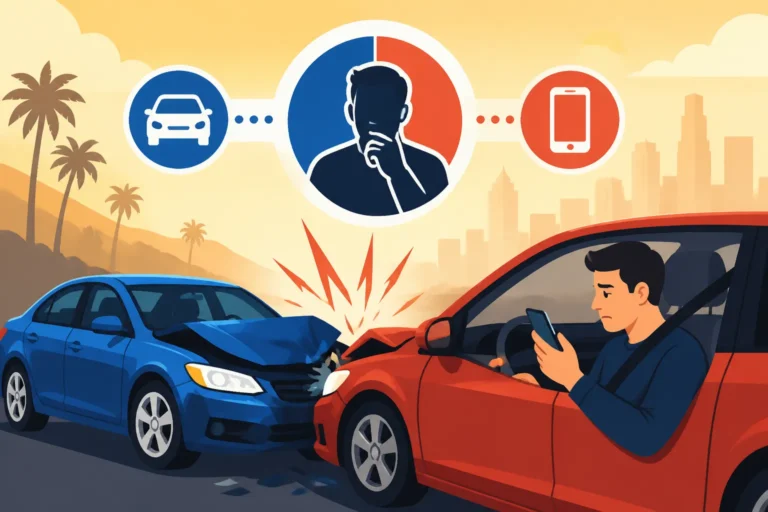
Intersection accidents are a prime example of where shared fault frequently arises. Take, for instance, a common T-bone collision at an intersection. The driver running the red light is clearly at fault. However, what if the other driver, who had the green light, was distracted by their phone or was speeding through the intersection without checking for cross-traffic? Even with a green light, drivers are expected to operate their vehicle safely and reasonably.
In such a case, an insurance adjuster or jury might assign a portion of fault to the driver who had the green light, perhaps 10% or 20%, for failing to exercise due care. The primary blame still rests with the red-light runner, but the distracted driver's compensation would be reduced by their percentage of fault. This can be incredibly frustrating for the person who had the right-of-way, feeling they were adhering to the rules, only to find their momentary lapse in attention is now costing them money. It underscores the concept that nearly every driver has a duty to drive defensively, regardless of who has the technical right-of-way. These are complex situations, much like determining Who Is at Fault in a T-Bone Accident?.
Lane Changes and Mutual Responsibility
Another common scenario for dual blame involves lane changes. Imagine you're driving on a multi-lane highway near Houston, and you signal to change lanes. As you begin to merge, another car rapidly accelerates from your blind spot and clips your rear quarter panel. At first glance, you might think the other driver was speeding and therefore entirely at fault. However, the other driver might argue that you initiated the lane change too aggressively, or that you failed to properly check your blind spot despite signaling.
In this situation, both drivers could potentially be assigned a percentage of fault. The merging driver has a responsibility to ensure the lane is clear before changing lanes, and the other driver has a responsibility to maintain a safe speed and be aware of their surroundings. An investigation might reveal that while the other driver was speeding, your blind spot check was inadequate. Consequently, fault could be split, perhaps 60% to the speeding driver and 40% to the merging driver. This is a classic example of how How Fault Works When Changing Lanes on the Highway often involves looking at the actions of both parties. It highlights how even in seemingly simple maneuvers, multiple factors can contribute to an accident, making fault determination a real puzzle.
Disclaimer
Please remember, the information provided in this article is for general informational purposes only and does not constitute legal advice. Car accident laws, including those pertaining to fault and negligence, vary significantly by state. It is always recommended to consult with a qualified legal professional in your specific jurisdiction for advice regarding your individual situation.