Who Is at Fault in a Lane-Change Accident in California?
Ah, the dreaded lane change accident. If you've ever driven on California's bustling freeways—whether it's the 101 through Hollywood, the 5 through Orange County, or the 80 near the Bay Area—you know how quickly traffic can get chaotic. One moment you're cruising along, and the next, someone tries to merge without looking, or you find yourself in a blind spot. These incidents are incredibly common, frustrating, and often leave drivers scratching their heads, wondering, "Who on earth is at fault?" This comprehensive guide will meticulously break down how fault is determined in a lane-change accident in California, giving you the clarity you need.
Understanding Lane Change Accidents in California
California’s roads are notorious for their congestion and fast-paced driving. A simple lane change, which seems like a routine maneuver, can easily escalate into a collision if not executed with extreme care. The rules governing these movements are pretty clear, but the real-world application, especially in the heat of the moment, often leads to disputes.
The Basics of Safe Lane Changes
In California, the law is quite explicit about the responsibilities of a driver making a lane change. According to California Vehicle Code (CVC) Section 22107, "No person shall turn a vehicle from a direct course or move right or left upon a roadway until such movement can be made with reasonable safety and then only after the giving of an appropriate signal in the manner provided in this chapter in the event any other vehicle may be affected by the movement." What this boils down to is a fundamental duty: the driver initiating the lane change must ensure it is safe to do so.
This means checking mirrors, looking over your shoulder to account for blind spots, and, critically, signaling your intention well in advance. It's not enough to just flash your signal as you start drifting; the signal must be given continuously for a sufficient distance to warn other drivers. This isn't just a courtesy; it's a legal requirement designed to prevent accidents. For example, if you're traveling on a busy stretch of the 405 and want to move over, you need to be absolutely certain there's enough space and that your actions won't force another driver to brake sharply or swerve.
Why Lane Changes Go Wrong So Often
Despite these clear guidelines, lane change accidents happen with alarming frequency across California. Why? There are a multitude of factors, often occurring in combination, that contribute to these crashes. One of the most prevalent issues is the existence of blind spots. Even with properly adjusted mirrors, a vehicle can disappear from view for a critical second or two, leading a driver to believe the lane is clear when it isn't. This is particularly true for smaller vehicles alongside larger trucks or SUVs.
Distracted driving is another massive culprit. With everyone glued to their phones or preoccupied with navigation systems, a driver might simply not notice a vehicle in their target lane. We've all seen drivers drifting across lanes, oblivious to their surroundings. Aggressive driving also plays a significant role. Drivers in a hurry might attempt to squeeze into too-small gaps, misjudging distances and speeds. And, of course, the failure to signal, or signaling too late, robs other drivers of the precious seconds they need to react safely. On high-speed highways, where reactions need to be instantaneous, even a slight miscalculation can have severe consequences.
Determining Fault in Lane Change Accidents
When a lane-change accident occurs, the question of "Who Is at Fault in a Lane-Change Accident?" immediately arises, and the answer isn't always as straightforward as it might seem. While there's a general rule, California's specific laws about fault determination can introduce nuances that complicate things.
The Presumption of Fault for the Changing Driver
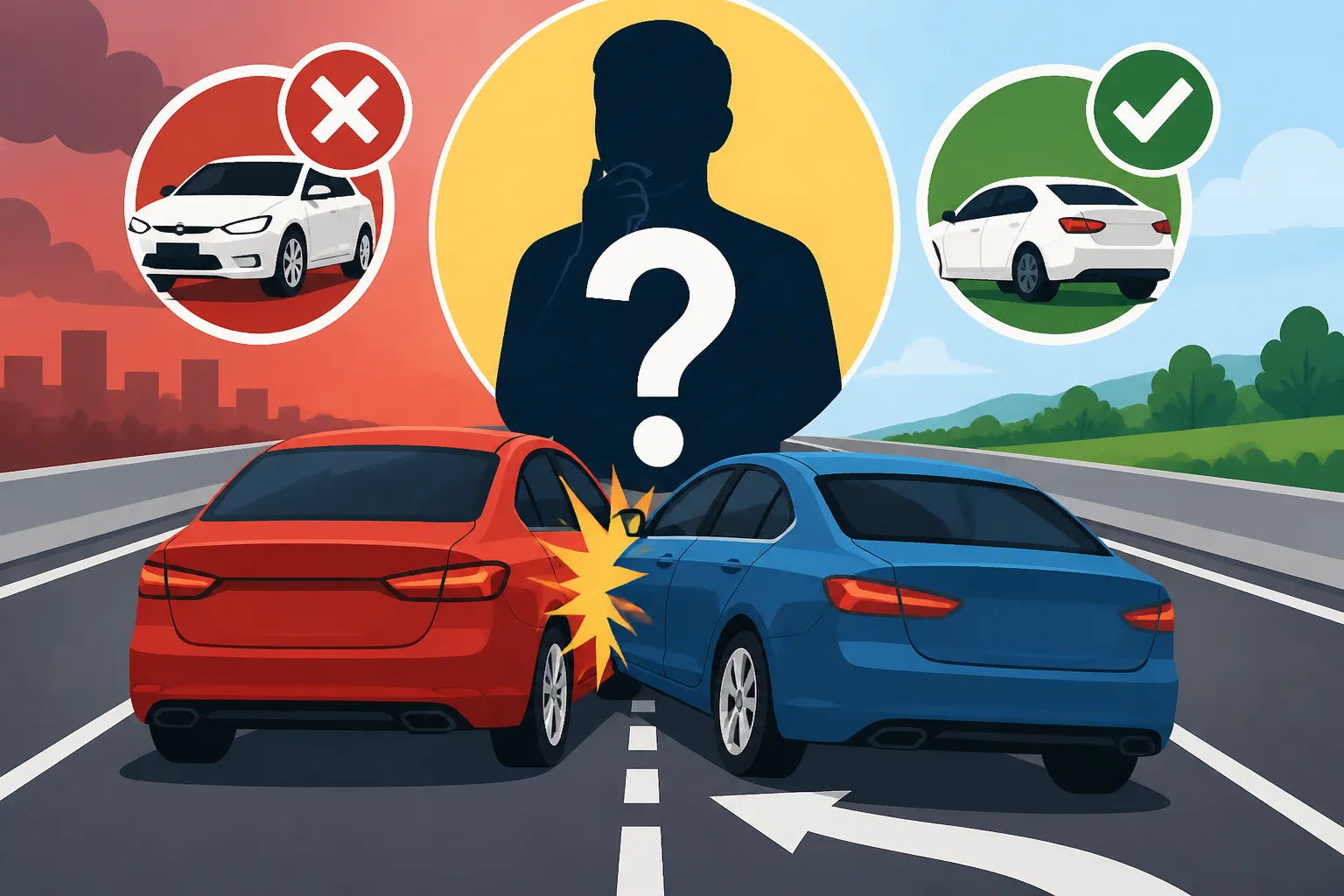
In most lane-change accident scenarios, the driver who was making the lane change is presumed to be at fault. This presumption stems directly from CVC Section 22107, which places the onus on the changing driver to execute the maneuver safely. If you changed lanes and collided with another vehicle, the initial assumption is that you failed in your duty to ensure reasonable safety.
For instance, imagine a driver on Highway 101 near San Jose trying to move from the middle lane to the fast lane. If they clip the front fender of a car already in the fast lane, the burden of proof will largely fall on the lane-changing driver to show why they shouldn't be held responsible. Insurance adjusters and law enforcement often start their investigation with this default assumption. They'll look for evidence that you didn't check your blind spot, didn't signal, or attempted the change too quickly. However, "presumed" doesn't mean "always." It just means you'll have to work harder to prove otherwise. If you're wondering How Insurance Companies Determine Who Is at Fault, this initial presumption is a key factor they consider.
When the Other Driver Can Be Partially or Wholly at Fault
Here's where California's unique legal landscape comes into play. California operates under a system of "pure comparative negligence." This means that even if you, as the lane-changing driver, are found to be partly at fault for the accident, you can still recover damages from the other driver, reduced by your percentage of fault. This is quite different from some other states. To learn more about this, you can look into Pure Comparative Negligence States Explained.
There are several situations where the "other" driver (the one who was already in their lane) might be found partially or even wholly at fault:
- Speeding: If the other driver was traveling significantly over the speed limit, they might not have had enough time to react safely to your lane change, even if you initiated it improperly. Their excessive speed could be deemed a contributing factor.
- Distracted Driving: Similar to the lane-changing driver, if the other driver was texting, talking on the phone, or otherwise distracted, they might not have seen your signal or reacted appropriately. Their inattention could share or shift fault.
- Illegal Maneuvers: Perhaps the other driver was attempting an illegal maneuver themselves, such as trying to prevent you from merging or rapidly accelerating to close a gap you were attempting to enter.
- Failing to React Appropriately: While you have a duty to change lanes safely, other drivers also have a general duty to drive defensively and avoid accidents when possible. If they had a clear opportunity to avoid the collision (e.g., ample space to brake or swerve safely) but failed to do so, they might share some fault.
For example, imagine you're slowly merging into the right lane on a highway, signal on, and a driver behind you in that lane, who was tailgating another car, suddenly swerves into you while trying to avoid the car in front of them. In such a complex scenario, you might argue that their tailgating and erratic driving contributed significantly to the crash, shifting some of the blame. Proving this requires solid evidence, which is why understanding How to Prove the Other Driver Was at Fault becomes crucial.
Key Evidence to Establish Fault
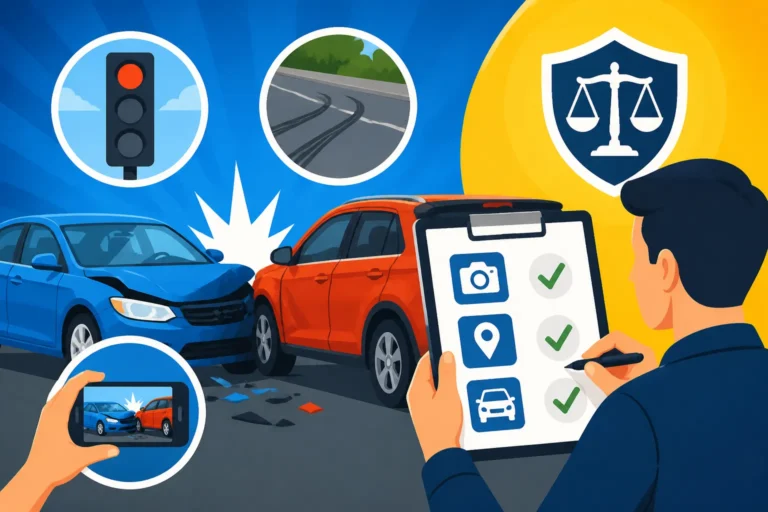
Gathering clear and compelling evidence is paramount in any car accident claim, especially one involving a lane change where fault can be contested. Without it, you're often left in a "he said, she said" situation, which rarely works in your favor.
- Police Reports: While a police report often indicates the officer's initial assessment of fault, it's not always the final word. Officers might not have witnessed the accident and rely on driver statements, which can be biased. However, a police report can provide crucial details like diagrams of the accident scene, citations issued, and witness information. For more on this, check out Police Reports and Car Accident Fault.
- Witness Statements: Independent witnesses who saw the accident unfold can be incredibly valuable. They have no vested interest in the outcome, so their accounts are often given significant weight. If you're involved in a crash, always try to get contact information from anyone who stopped.
- Dashcam Footage: This is rapidly becoming one of the most powerful pieces of evidence. Dashcams provide an objective, real-time recording of the events leading up to and during the collision. In a lane-change accident, dashcam footage can definitively show if a signal was used, if a driver cut someone off, or if the other driver was speeding or driving erratically. If you have a dashcam, preserve that footage immediately!
- Physical Evidence: The location and type of damage to the vehicles can tell a story. For example, if the damage on your vehicle is to the front-side panel and the other vehicle has damage to its rear-side panel, it might indicate that you were merging into them. Skid marks, debris fields, and the final resting positions of the vehicles also offer clues.
- Photos and Videos: Taking photos and videos at the accident scene from various angles is critical. Capture the position of the vehicles, damage, road conditions, traffic signs, and any relevant surroundings.
Navigating the Claims Process After a California Lane Change Crash
Once the initial shock of a lane-change accident wears off, you're left with the daunting task of navigating the insurance claims process. This can feel like a maze, particularly if fault is being disputed. Knowing what to do and what to avoid can make a significant difference.
Immediate Steps at the Accident Scene
The moments immediately following a car accident are critical, not just for safety but for gathering the information you'll need for your claim. First and foremost, ensure everyone's safety. If possible and safe, move your vehicles out of the flow of traffic to prevent further collisions. Check for injuries. If anyone is hurt, call 911 immediately.
After ensuring safety, begin documenting everything. This means taking pictures and videos of the accident scene, vehicle damage, and any relevant road conditions or signs. Get the other driver's information: name, contact number, driver's license number, vehicle make and model, license plate number, and insurance details. If there are any witnesses, politely ask for their names and contact information. Even seemingly minor details can become important later. For a comprehensive checklist, refer to What to Do After a Car Accident: Step-by-Step (2027). Remember, these initial steps lay the groundwork for any claim you might file.
Dealing with Insurance Companies in California
Once you've left the scene, the next step is usually to report the accident to your insurance company. If the other driver was clearly at fault, you might be dealing with their insurer directly. Be prepared for a thorough investigation by the insurance adjuster. They will review police reports, witness statements, vehicle damage estimates, and potentially accident reconstruction reports. Their goal is to determine fault and evaluate damages, often with an eye toward minimizing payouts.
It's absolutely crucial to be careful about what you say. Avoid admitting fault or speculating about the accident, even in casual conversation. Statements like "I didn't see you" or "I think I might have drifted" can be used against you. Simply stick to the facts of what happened. You don't have to give a recorded statement to the other driver's insurance company without consulting with your own insurer or legal counsel first. This is a common tactic, and it's best to be prepared. Understanding What Is an Admission of Fault (and How to Avoid It)? is vital to protect your claim.
The Impact of Comparative Negligence on Your Claim
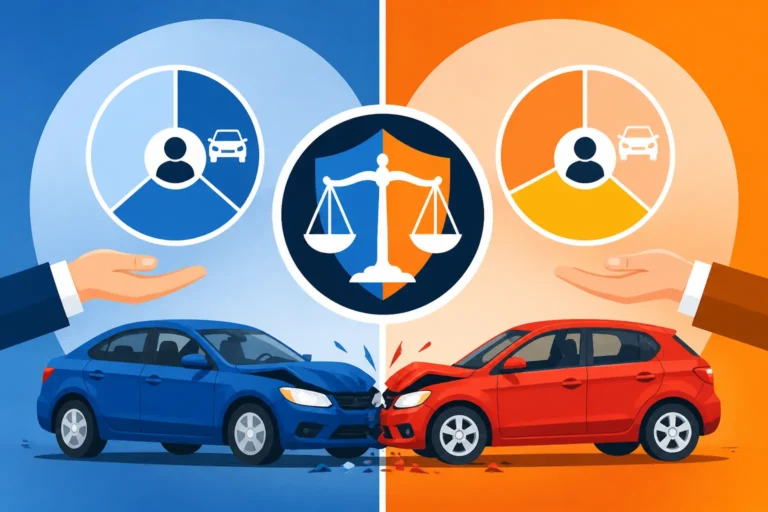
California's pure comparative negligence system is a double-edged sword. On one hand, it means that even if you bear some responsibility for the lane-change accident, you aren't completely barred from recovering damages. On the other hand, it means your potential settlement or award will be reduced proportionally to your percentage of fault.
Let's say you were making a lane change and didn't check your blind spot as thoroughly as you should have. Simultaneously, the other driver was speeding excessively. An investigation might conclude that you were 20% at fault, and the other driver was 80% at fault. If your total damages (medical bills, lost wages, pain and suffering) are determined to be $10,000, you would only be able to recover $8,000 (80% of $10,000) from the other driver's insurance. This can be a significant reduction, especially in cases involving serious injuries. This principle is clearly explained in How Comparative Fault Reduces Your Settlement. It's also reassuring to know that Can You Still Get Paid If You're Partly at Fault?, even if your recovery is less than 100%.
Here's a simplified look at how comparative fault might play out:
| Driver's Role | Scenario | % at Fault (Example) | Recoverable Damages (% of total) |
|---|---|---|---|
| Driver A (Changing Lanes) | Failed to signal, clipped Driver B. | 100% | 0% |
| Driver A (Changing Lanes) | Failed to check blind spot. Driver B was speeding. | 50% | 50% |
| Driver A (Changing Lanes) | Signaled, checked, but Driver B accelerated to block merge. | 20% | 80% |
| Driver B (Already in Lane) | Distracted, didn't react to Driver A's safe merge. | 100% | 0% (Driver A recovers 100%) |
Legal Considerations for California Lane Change Accidents
While dealing with insurance companies can often resolve many car accident claims, sometimes the complexities of fault, combined with injuries or significant property damage, necessitate legal intervention. Understanding when and why to seek legal counsel is an important part of protecting your rights.
When to Consult a Car Accident Lawyer
It's a common question: Do You Need a Lawyer for a Car Accident?. In the context of a lane-change accident in California, especially if there's any dispute over fault or if you've suffered more than minor injuries, consulting a car accident lawyer is highly advisable. A lawyer experienced in California personal injury law can:
- Investigate thoroughly: They can gather evidence, interview witnesses, and even work with accident reconstructionists to build a strong case for your side of the fault equation.
- Negotiate with insurers: Lawyers understand the tactics insurance companies use to minimize payouts and can effectively counter lowball offers, ensuring you receive fair compensation.
- Handle complex legal arguments: If the other driver tries to shift blame or if your case goes to court, a lawyer can articulate the legal arguments necessary to protect your interests, especially concerning California’s comparative negligence rules.
- Evaluate damages: Accurately calculating the full extent of your damages, including future medical expenses, lost earning capacity, and pain and suffering, can be complex. A lawyer ensures all potential damages are considered.
Even if you think your case is straightforward, a quick consultation with an attorney can clarify your options and inform you of any potential pitfalls. This is especially true given the subjective nature of fault in many lane-change scenarios.
The Statute of Limitations in California
One crucial legal detail that you absolutely cannot overlook is the statute of limitations. This is the legal deadline for filing a lawsuit after an accident. In California, for most personal injury claims resulting from a car accident, you generally have two years from the date of the accident to file a lawsuit. If you miss this deadline, you typically lose your right to sue, regardless of the merits of your case.
While two years might seem like a long time, the claims process can be drawn out. Investigating the accident, treating your injuries, and negotiating with insurance companies all take time. It's easy for the clock to run out without you realizing it. This is another reason why early consultation with a lawyer is beneficial; they can ensure all deadlines are met. For more detailed information on this, refer to Statute of Limitations for Car Accidents in California.
Navigating a lane-change accident in California can be challenging, but by understanding the nuances of fault determination, gathering strong evidence, and knowing your legal rights, you can protect your interests and pursue the compensation you deserve.
Disclaimer
Please note that this article provides general informational guidance and is not intended as legal advice. Car accident claims are complex, and the outcome of any specific case depends on its unique facts and applicable laws. If you have been involved in a car accident, it is highly recommended that you consult with a qualified legal professional for advice tailored to your situation.