Who Is at Fault in a Parking Lot Accident in California?
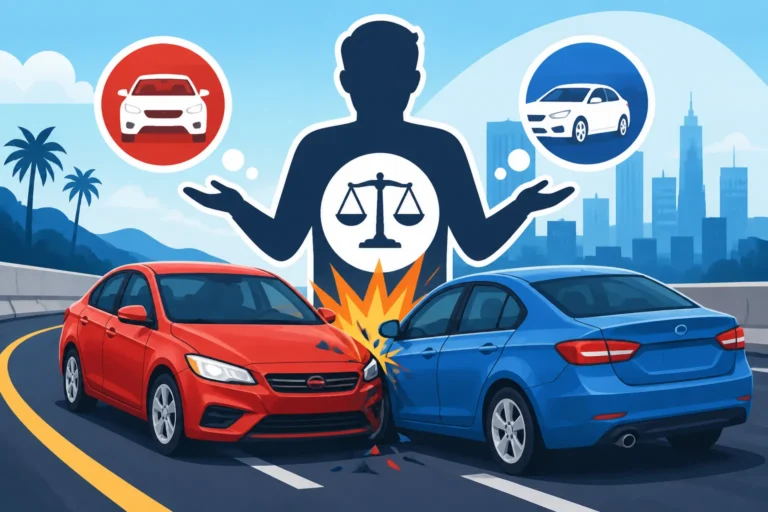
Parking lot fender benders. We've all been there, or at least witnessed the aftermath: a minor ding, a scraped bumper, or maybe something more serious, all happening in what feels like a chaotic free-for-all. It's incredibly frustrating because parking lots, despite being low-speed environments, are breeding grounds for confusion about who's actually responsible. This guide aims to clear up that confusion, specifically focusing on how fault is determined in a parking lot accident right here in California.
Understanding Fault in California Parking Lot Accidents
Let's be honest, parking lots often feel like the Wild West of driving. There are cars backing out, pedestrians darting, and impatient drivers trying to snag that elusive spot. When an accident happens, it's easy to assume it's just a "minor incident," but even a small scrape can lead to headaches, rising insurance premiums, and costly repairs. Understanding fault is the first step in navigating this tricky terrain.
The Basics of Comparative Negligence in California
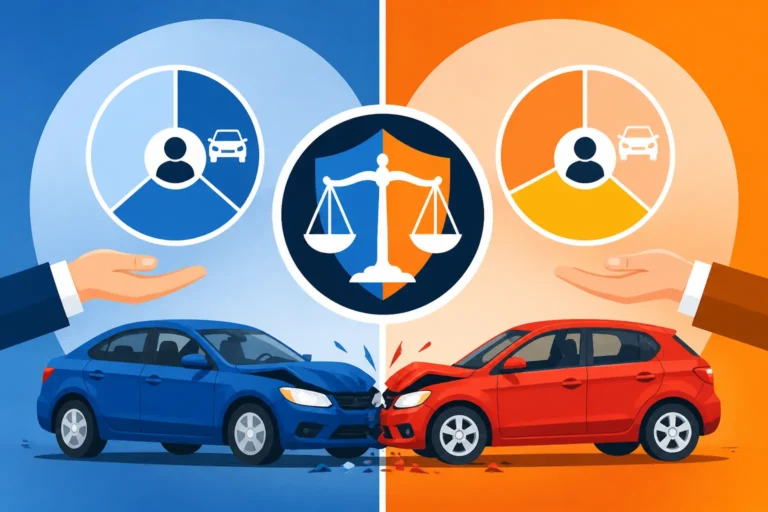
One of the most crucial things to know when you're dealing with an accident in California, whether it's on a busy freeway or in a quiet mall parking lot, is our state's "pure comparative negligence" rule. This isn't just some legal jargon; it's a fundamental principle that directly affects how much compensation you might receive or pay out. In plain English, it means that even if you were partly to blame for an accident, you can still recover damages from the other driver. However, your recovery will be reduced by your percentage of fault.
For example, imagine you're backing out of a spot, and someone speeds through the parking lot and hits you. A claims adjuster or jury might decide you were 20% at fault for not checking adequately, but the other driver was 80% at fault for reckless driving. If your total damages (medical bills, car repairs, etc.) are $10,000, you'd only be able to recover $8,000 from the other driver, because your share of the blame reduces your payout. This system is a bit different from other states, so it’s important to understand California's approach, which we've explored in more detail in our article on Comparative Negligence Laws in California. It’s designed to ensure fairness, but it can also make proving fault a bit more complex. If you're wondering What Happens If You're Partially at Fault?, this is exactly how it works here.
Common Scenarios and Fault Determination
While traffic laws might seem less formal in a parking lot, they generally still apply. Drivers are expected to exercise reasonable care, yield the right-of-way, and be aware of their surroundings. This includes paying attention to painted arrows, stop signs, and pedestrian crossings, even if they aren't official "city" signs. When assessing fault, insurance companies and, if it comes to it, courts, will look at who failed to act reasonably under the circumstances.
Think about it: just because you're in a private parking lot doesn't give you permission to ignore basic safety. Speeding, distracted driving (yes, even just checking your shopping list on your phone), or failing to yield to a pedestrian are still negligent acts. The person whose actions, or lack thereof, directly caused the collision is typically assigned the majority of the fault. However, the other driver's actions will also be scrutinized to see if they contributed in any way.
Specific Parking Lot Collision Types and Fault
Parking lots are a unique environment with their own set of common collision scenarios. While every accident is unique, there are some general guidelines regarding fault that often hold true.
Backing Out of a Space or Driveway
This is probably the most common parking lot accident scenario, and honestly, one of the most contentious. You’re slowly reversing, craning your neck, and suddenly – crunch! Another car has either driven behind you or was backing out themselves. In the vast majority of these situations, the driver backing up is assigned the primary fault. Why? Because a driver backing up has a significant responsibility to ensure their path is clear before and during the maneuver.
It’s about the duty of care. When you’re backing up, you have restricted visibility, and the onus is on you to proceed only when it’s safe. This means looking over both shoulders, checking your mirrors, and even using a backup camera if your car has one. If another vehicle happens to be driving by in the lane, they usually have the right-of-way. Even if the other driver was going a little too fast, the backing driver typically carries a higher percentage of fault for failing to yield. We delve deeper into this specific situation in our guide, Who Is at Fault When Backing Out of a Driveway?.
Now, if both drivers were backing out of adjacent spaces and collided, it gets a little trickier, and fault might be split more evenly, perhaps 50/50, or skewed based on who initiated the maneuver first or who had a clearer view. In these cases, it becomes incredibly important to have evidence of the impact point and any witness statements to help determine who actually started backing up first or had a better opportunity to avoid the collision.
Collisions at Stop Signs or Intersections within Lots
Just because a stop sign is in a private parking lot (like at your local Target or Costco) doesn't mean you can ignore it. These signs are there for a reason: to regulate traffic flow and prevent accidents. If you blow through a marked stop sign within a parking lot and collide with another vehicle, you will almost certainly be found at fault. The same goes for painted yield signs or traffic arrows indicating one-way lanes.
These rules, though not enforced by police in the same way as public streets, set expectations for driver behavior. Ignoring a stop sign or a one-way arrow is a clear failure to exercise reasonable care. However, California's comparative negligence still applies here. If the driver who had the right-of-way was speeding excessively or distracted and could have avoided the crash, they might bear a small percentage of fault. Still, the primary blame will lie with the driver who violated the parking lot's traffic controls.
Pedestrians and Stationary Objects
Parking lots are busy places, often filled with pedestrians carrying groceries, pushing strollers, or wrangling children. Drivers have a heightened duty of care to watch out for people on foot. If you hit a pedestrian in a parking lot, even if they seemingly appeared out of nowhere, you're likely to be found mostly at fault. Pedestrians often have the right-of-way in parking lots, especially in marked crosswalks or when they are already in the traffic lane.
While rare, a pedestrian could be found partially at fault if they were, for example, running recklessly into traffic while looking at their phone and ignored all warning signs. However, the legal system generally places a very high burden on drivers to avoid hitting pedestrians. Similarly, if you collide with a stationary object – a lamp post, a shopping cart corral, or even another parked car – the fault almost always lies entirely with you, the moving driver, for failing to maintain control or observe your surroundings.
Here's a quick overview of common scenarios and typical fault assignments in California parking lots:
| Scenario | Typical Fault Assignment (California) |
|---|---|
| Backing Out of a Space/Driveway | Primary fault on backing driver. Driver has duty to ensure path is clear. Other driver may have partial fault if speeding or distracted. |
| Both Drivers Backing Out | Often shared fault. Can be 50/50 or skewed based on who initiated, visibility, and opportunity to avoid. |
| Failure to Yield at Stop/Yield Sign | Primary fault on driver who failed to yield. Ignoring marked signs in a parking lot is a breach of duty. |
| Lane Change/Merging | Primary fault on changing/merging driver. Driver must check for clear path. |
| Hitting a Parked Car | 100% fault on moving driver. Driver is responsible for controlling their vehicle and avoiding stationary objects. |
| Hitting a Pedestrian | Primary fault on driver. Drivers have high duty of care to watch for pedestrians. Pedestrian may have partial fault if acting recklessly. |
| Driving in Wrong Direction | Primary fault on driver going wrong way. Violating one-way signs. |
| Speeding | Fault on speeding driver. However, comparative negligence means other drivers' actions will also be considered if they contributed. |
Gathering Evidence to Prove Fault
After a parking lot accident, whether it's a minor scrape or something more significant, the immediate aftermath can be disorienting. However, this is a critical time to start collecting evidence, which will be essential when it comes to proving fault and dealing with insurance companies. The more information you have, the stronger your position will be, especially in California where comparative negligence means every detail matters.
The Importance of Documentation
In the heat of the moment, it's easy to just want to exchange insurance information and leave. But taking a few extra minutes to document the scene thoroughly can make all the difference. Your phone is your best friend here. Start by taking a wide array of photos and videos. Get shots of the entire scene, showing the positions of both vehicles, any relevant parking lot markings (like stop signs, yield signs, or one-way arrows), and the surrounding area. Then, zoom in on the damage to both vehicles. Take multiple angles of the impact points, and don't forget photos of any skid marks, debris, or other visual cues that tell the story of how the accident happened.
It's also crucial to gather contact and insurance information from the other driver. Get their full name, phone number, email, driver's license number, license plate number, and insurance company details, including policy number. If they claim to be uninsured, note that down. If there are any visible injuries to anyone involved, or if you feel any pain, make sure to document that too. All of this forms the foundation of How to Prove the Other Driver Was at Fault and will be invaluable for your insurance claim.
Witness Statements and Surveillance Footage
Beyond your own documentation, independent witnesses can be incredibly powerful in proving fault. If anyone saw the accident happen – perhaps a shopper walking by, an employee of a nearby store, or someone sitting in their car – politely ask for their name and contact information. An unbiased third-party account can often tip the scales in your favor, especially if there's a dispute over what actually occurred.
Additionally, many parking lots, especially those at larger retail establishments or shopping centers, are equipped with surveillance cameras. While the business might not immediately hand over footage to you, it's worth asking if they have cameras that cover the area where the accident occurred. If they do, ask for the manager's contact information and the best way to request the footage. Your insurance company or an attorney will likely be able to formally request this evidence, which can provide irrefutable proof of how the accident unfolded. This footage can be a game-changer when it comes to Police Reports and Car Accident Fault or dealing with reluctant insurance companies.
What to Do After a Parking Lot Accident in California
So, you've had a parking lot mishap. The immediate moments afterward can be stressful and confusing. Knowing what steps to take right away can protect your safety, your legal rights, and your ability to pursue a successful claim.
Prioritizing Safety and Reporting the Incident
First and foremost, your safety and the safety of anyone else involved should be your top priority. If there are any injuries, even seemingly minor ones, call 911 immediately. Move your vehicles to a safe location if it's possible and won't exacerbate the situation or endanger others. Turn on your hazard lights. Once you're safe, take a moment to compose yourself before engaging with the other driver.
In California, generally, if there are no injuries and the property damage is minor (under $1,000 to either vehicle), you aren't legally required to call the police to the scene. However, it's almost always a good idea to at least try to get law enforcement involved, especially if there's any dispute about fault, if the other driver is uncooperative, or if they appear intoxicated. Even if they don't file a full report, their presence can help document the scene and facilitate the exchange of information. For a more comprehensive guide on immediate steps, check out our resource on What to Do After a Car Accident: Step-by-Step (2027). If police don't respond, don't panic – What If There Was No Police Report? covers alternative documentation methods.
Navigating Insurance Claims and Potential Disputes
After you've handled the immediate aftermath, your next call should typically be to your own insurance company. Even if you believe the other driver is 100% at fault, your insurer can guide you through the claims process. They will want to hear your side of the story and will likely ask for all the documentation you collected at the scene. This initial report doesn't mean your rates will automatically go up, but it starts the official record.
The other driver's insurance company will also get involved, and this is where things can sometimes get contentious, particularly in a comparative negligence state like California. They might try to assign you a higher percentage of fault to reduce their payout. This is why all that evidence you gathered is so critical. Be prepared to clearly articulate what happened, providing photos, witness statements, and any other evidence you have. Our guide on How Insurance Companies Determine Who Is at Fault can give you a better idea of what to expect. Knowing How to File a Car Accident Insurance Claim correctly, and being prepared for Dealing With Insurance Adjusters After a Car Accident, are crucial skills. Remember, failing to report an accident, especially one that results in damage over $1,000, can have consequences, which we detail in What Happens If You Don't Report an Accident?.
Disclaimer
Please remember that this article provides general information and is not a substitute for professional legal advice. Every car accident case is unique, and the specific facts and circumstances of your situation may affect the outcome. We recommend consulting with a qualified attorney or your insurance provider to discuss your individual claim.