Is Indiana a No-Fault State?
Navigating the aftermath of a car accident can feel like trying to solve a puzzle with half the pieces missing, especially when you’re not sure how your state’s specific insurance laws work. Many folks assume all states handle accident claims the same way, leading to a lot of confusion about who pays for what. If you're a driver in Indiana and have been asking yourself, "Is Indiana a no-fault state?", you're not alone in seeking clarity. This guide is designed to cut through the legal jargon, explain exactly how car accident claims function in the Hoosier State, and help you understand your rights and responsibilities.
Indiana Operates Under an At-Fault Insurance System
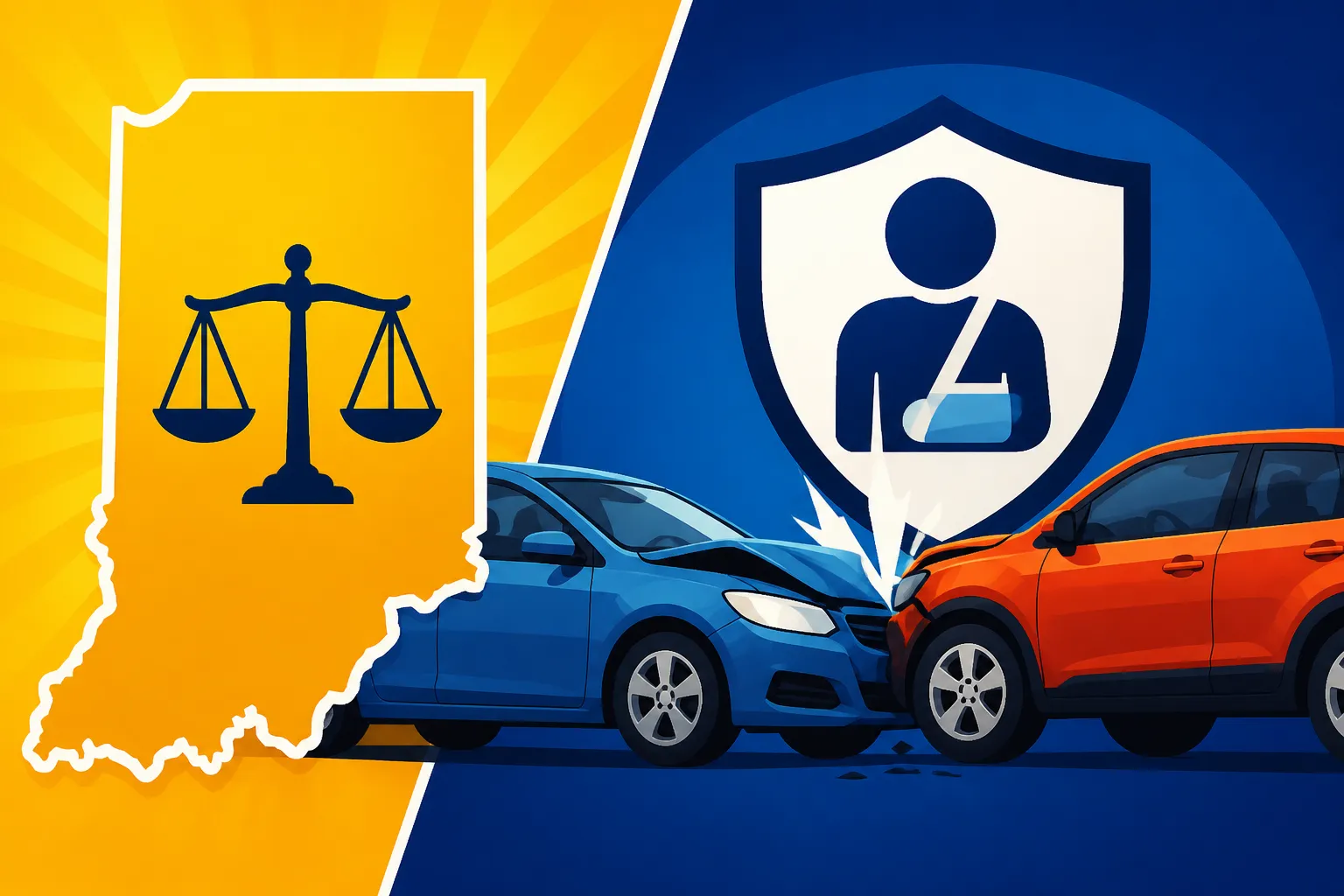
Let's get right to the heart of the matter: Indiana is not a no-fault state. Instead, it operates under an "at-fault" or "tort" insurance system. This distinction is incredibly important because it dictates how car accident claims are handled, who is responsible for damages, and what avenues you have for seeking compensation after a crash. Knowing this upfront can save you a lot of headaches and help you make informed decisions.
Understanding At-Fault Versus No-Fault Systems
The difference between at-fault and no-fault systems is a fundamental concept in car insurance. In a no-fault system, after an accident, each driver typically files a claim with their own insurance company to cover their medical expenses and lost wages, regardless of who caused the collision. These systems often require drivers to carry Personal Injury Protection (PIP) coverage. The idea is to streamline the process for minor injuries and reduce litigation, but it also usually restricts your ability to sue the at-fault driver for "pain and suffering" unless your injuries meet a certain threshold of severity or cost. If you're curious about how these systems vary across the country, it's worth understanding What Is a No-Fault State? (And Which States Are No-Fault).
On the other hand, an at-fault system, like the one in Indiana, means that the driver who is determined to be responsible for causing the accident is also held financially liable for the damages and injuries of all parties involved. This includes not just property damage to vehicles, but also medical bills, lost wages, and non-economic damages like pain and suffering. The burden of proof in these states often falls on the injured party to demonstrate that the other driver's negligence led to the accident.
The Implications of Indiana's At-Fault Rule
Because Indiana is an at-fault state, if you're involved in a car accident and another driver is found to be negligent, you will generally pursue compensation by filing a claim directly with their insurance company. This is known as a third-party claim. Their insurer is then responsible for paying for your reasonable and necessary medical treatment, repairs to your vehicle, any income you lost because of your injuries, and even the emotional distress and physical discomfort you endured.
Your own car insurance in Indiana will primarily kick in if you are deemed at fault for the accident, or if you have specific coverages like collision coverage for your vehicle, or medical payments coverage (MedPay) for your immediate medical bills. MedPay is often recommended because it can provide an immediate source of funds for medical expenses regardless of fault, acting as a bridge until fault is established or if you decide to use your health insurance. Additionally, if the at-fault driver is uninsured or underinsured, your uninsured/underinsured motorist (UM/UIM) coverage would become crucial, allowing you to seek compensation from your own policy. Since Indiana operates under an at-fault system, you also maintain the right to pursue legal action directly against the at-fault driver for all eligible damages if a fair settlement cannot be reached with their insurance company.
How Fault is Determined in Indiana Accidents
The cornerstone of an at-fault system is, naturally, determining fault. This can often be the most contentious and challenging part of the entire car accident claim process. Both insurance companies and, if necessary, the courts, will meticulously examine all available evidence to assign responsibility. Understanding How Fault Is Determined in a Car Accident is paramount for anyone involved in a collision in Indiana.
Key Factors in Establishing Responsibility
Establishing who is at fault involves a careful investigation of the accident circumstances. Immediately after a collision, it's incredibly important to gather as much evidence as possible. This includes taking clear photographs of the accident scene from various angles, documenting vehicle damage, skid marks, road conditions, and any traffic signs or signals. Collecting contact information from eyewitnesses who saw what happened can also provide invaluable, objective accounts. Their statements can corroborate your version of events and strengthen your claim.
Another critical piece of evidence is the police report. When law enforcement responds to an accident, they will document the scene, interview drivers and witnesses, and often issue citations if traffic laws were violated. While a police report is not always the definitive legal determination of fault, it carries significant weight and provides an official record of the incident. It acts as a strong piece of evidence that insurance companies consider. You can learn more about how police reports factor into these situations by reading Police Reports and Car Accident Fault. Common violations like speeding, failing to yield, running a red light, or distracted driving are often clear indicators of negligence and can strongly point towards who caused the accident.
Ultimately, insurance companies will launch their own investigations, reviewing police reports, witness statements, photographic evidence, and sometimes even reconstructing the accident scene or analyzing traffic camera footage. Their goal is to piece together a comprehensive picture of what transpired to make a fault determination. This process underscores why comprehensive documentation at the scene is so vital. It directly impacts How Insurance Companies Determine Who Is at Fault.
Indiana's Modified Comparative Negligence Rule
In the real world, accidents are rarely cut and dry with one driver being 100% at fault. Often, both drivers may have contributed in some way, however small, to the collision. This is where the legal concept of comparative negligence comes into play. Comparative negligence is a doctrine that allocates fault among all parties involved in an accident, even if one party is largely more responsible than the other.
Indiana follows a specific version of this doctrine known as modified comparative negligence with a 51% bar rule. What this means for you as a driver in Indiana is that you can only recover damages for your injuries and losses if you are found to be 50% or less at fault for the accident. If your share of fault is determined to be 51% or more, you are legally barred from recovering any compensation from the other party, even if they were significantly at fault themselves. This is a crucial detail to understand, and it's thoroughly explained in articles like Modified Comparative Negligence (50% vs 51% Bar).
To illustrate, let's say you're in an accident, and your total damages (medical bills, lost wages, vehicle repair, pain and suffering) amount to $20,000. If an investigation determines that the other driver was 80% at fault and you were 20% at fault, you would be able to recover 80% of your damages, or $16,000. However, if that same investigation found you were 60% at fault and the other driver 40% at fault, you would recover nothing because your fault percentage crossed the 51% threshold. This rule profoundly impacts What Happens If You're Partially at Fault? and how much your settlement might be. It emphasizes the importance of meticulously proving the other driver's fault while minimizing any perceived fault on your part.
Your Steps After an Accident in At-Fault Indiana
Being involved in a car accident is stressful enough without having to worry about the complex steps that follow. However, knowing what to do immediately after a crash and in the days and weeks that follow can significantly impact your ability to successfully navigate the at-fault insurance system in Indiana and secure the compensation you deserve.
Immediate Actions at the Accident Scene
The very first priority after any car accident is the safety of everyone involved. If possible and safe to do so, move your vehicle out of the flow of traffic to prevent further accidents. Check yourself and your passengers for injuries, and offer assistance to others if you can. If anyone is injured, or if there is significant property damage, call 911 immediately to report the accident and request emergency medical services and police assistance. Remember, in Indiana, filing a police report is essential for documenting the incident and initiating the formal process of assigning fault.
Once safety is secured, begin documenting the scene. Use your smartphone to take copious photos and videos of the vehicles involved, any visible damage, road conditions, traffic signals, and the general surroundings. These visual records can be incredibly powerful in proving fault later on. Exchange information with all other drivers involved, including names, contact details, insurance company names and policy numbers, and vehicle identification numbers (VINs). Don't forget to get contact information from any witnesses who stopped to help or observe the scene. Crucially, avoid admitting fault or making any statements that could be interpreted as an admission of fault at the scene. Stick to the facts. For a comprehensive checklist, refer to What to Do After a Car Accident: Step-by-Step (2027).
Navigating the Insurance Claim Process
Even if you firmly believe the other driver was entirely at fault, it’s a good practice to notify your own insurance company about the accident promptly. While they may not be paying for the damages initially in an at-fault claim, they can offer guidance, particularly if you have medical payments coverage or need to activate your uninsured/underinsured motorist policy. This initial notification is a key part of How to File a Car Accident Insurance Claim.
The bulk of your claim process in an at-fault state will involve dealing with the at-fault driver's insurance company. You will file a third-party claim with them, and their insurance adjuster will then conduct an investigation, gather evidence, and ultimately make a decision regarding fault and the value of your claim. It's important to remember that insurance adjusters work for the insurance company, and while they may seem friendly, their primary goal is to protect their company's bottom line. Being prepared and cautious when Dealing With Insurance Adjusters After a Car Accident is critical.
One of the most vital steps you can take after an accident, even a seemingly minor one, is to seek immediate medical attention. Many serious injuries, such as whiplash, concussions, or internal injuries, might not manifest symptoms until hours or even days after the collision. A prompt medical evaluation creates an official record of your injuries, linking them directly to the accident, which is crucial for your claim. This is a topic thoroughly covered in Why You Should See a Doctor After a Car Accident. Your medical records will be paramount in proving the extent of your injuries and the costs associated with your treatment. In an at-fault state like Indiana, you can seek compensation for both your "economic damages" – measurable financial losses like medical bills, lost wages, and property damage – and your "non-economic damages," which encompass things like pain, suffering, emotional distress, and loss of enjoyment of life. Understanding the difference between these is key for your claim, as detailed in Economic vs Non-Economic Damages Explained.
Common Misconceptions and Protecting Your Rights
The period following a car accident is often filled with uncertainty, and many people fall prey to common misconceptions that can unintentionally jeopardize their claim. Being aware of these pitfalls and understanding your rights can empower you to navigate the process effectively in Indiana's at-fault system.
The Myth of "Minor Accidents" and Delayed Symptoms
One of the most dangerous myths is the idea that if an accident seems "minor," it couldn't have caused significant injuries. Many people walk away from fender-benders feeling shaken but otherwise fine, only to experience severe pain, stiffness, headaches, or other debilitating symptoms days or even weeks later. This is incredibly common with injuries like whiplash, soft tissue damage, or even mild traumatic brain injuries (concussions). Because Indiana is an at-fault state, linking these delayed symptoms directly to the accident is paramount for compensation. If you wait too long to seek medical attention, the insurance company might argue that your injuries weren't caused by the crash, or that you exacerbated them by delaying treatment.
Always, always document any and all symptoms you experience, no matter how insignificant they might seem at first. Keep a detailed journal of your pain levels, limitations on daily activities, and any changes in your physical or mental well-being. Regular follow-up with medical professionals, including physical therapists or specialists if recommended, provides objective evidence of your recovery process and the ongoing impact of your injuries. This meticulous record-keeping is vital for proving the full extent of your damages, especially when you're pursuing non-economic damages like pain and suffering, which are subjective and require strong corroborating evidence.
Understanding Your Rights and Potential Challenges
When dealing with the at-fault driver's insurance company, it's essential to remember that the adjuster's loyalty lies with their employer, not with you. While they might appear sympathetic, their job is to investigate the claim and resolve it for the lowest possible amount. This means they might question the severity of your injuries, the necessity of your treatment, or even your version of how the accident occurred. Be cautious about giving recorded statements without consulting with legal counsel first, as these statements can be used against you later.
It's also common to receive an initial settlement offer that feels far too low, especially if you have significant medical bills, lost wages, or considerable pain and suffering. Insurance companies often start with a low offer, hoping you'll accept it quickly to get the process over with. Don't feel pressured to accept the first offer. You have the right to negotiate for a fair settlement that fully compensates you for all your losses. Many people find that having an experienced car accident attorney on their side can significantly increase their chances of a favorable outcome, as lawyers are skilled at valuing claims and negotiating with insurance adjusters.
Finally, be aware of the strict legal deadlines that exist in Indiana for filing a personal injury lawsuit. This is known as the "statute of limitations." In Indiana, generally, you have two years from the date of the car accident to file a personal injury lawsuit. If you miss this deadline, you will likely lose your right to pursue compensation in court, regardless of how strong your case might be. There are exceptions, particularly involving minors or government entities, but it's always best to act promptly. For more detailed information on these critical deadlines, you can consult resources like How Long Do You Have to Sue After a Car Accident in Indiana?. Consulting with a personal injury lawyer can help you understand these deadlines and ensure your rights are protected throughout the entire claim process.
| Feature | At-Fault (Indiana) | No-Fault (Example) |
|---|---|---|
| Medical Bills | At-fault driver's insurance typically pays (third-party claim); your MedPay or health insurance may also cover initial costs. | Your own insurance (Personal Injury Protection – PIP) pays, regardless of fault, up to policy limits. |
| Property Damage | At-fault driver's insurance covers damage to your vehicle. | At-fault driver's insurance covers property damage. |
| Right to Sue | Generally unrestricted; you can sue the at-fault driver for all damages, including pain and suffering. | Restricted for pain and suffering unless injuries meet specific "serious injury" thresholds or medical cost minimums. |
| Fault Role | Crucial for determining who is financially responsible for all damages. | Less crucial for immediate medical bills (paid by your PIP), but still relevant for property damage or if injury thresholds are met for a tort claim. |
| Shared Fault | Indiana's Modified Comparative Negligence (51% bar rule) applies; you can only recover if 50% or less at fault. | Comparative fault rules still apply for property damage or if an injury threshold is met to pursue a tort claim. |
Disclaimer
Please remember that the information provided in this article is for general informational purposes only and does not constitute legal advice. Car accident claims are complex, and laws can change. It is always recommended to consult with a qualified legal professional for advice tailored to your specific situation.