How to File a Car Accident Claim in Virginia
Experiencing a car accident can throw your entire world into a tailspin. One moment you're driving along, minding your own business, and the next, you're grappling with crumpled metal, potential injuries, and the overwhelming headache of insurance claims. Navigating the aftermath, especially in a state like Virginia with its unique fault laws, can feel like an impossible maze. This comprehensive guide is here to untangle that process, providing a clear, step-by-step roadmap for filing a car accident claim in Virginia, so you can focus on healing and recovery.
Understanding Virginia's Strict Fault System
When you've been in a car accident in Virginia, one of the very first things you need to wrap your head around is how the state handles fault. Unlike many other states that use a more lenient "comparative negligence" system, Virginia operates under a much stricter rule: contributory negligence. This isn't just a legal technicality; it's a game-changer that can dramatically impact your ability to recover compensation for your damages and injuries. It means that if you are found to have contributed to the accident in any way, even if it's just 1%, you might be completely barred from recovering compensation from the other driver.
Imagine for a moment you're driving through a busy intersection in Richmond. Another driver blows a red light, T-boning your vehicle. Clearly, they're mostly at fault, right? But if it's later determined that you were, say, going 5 miles per hour over the speed limit just before the crash, even that minor infraction could be enough for the at-fault driver's insurance company to argue you contributed to the accident. If that argument holds up, under Virginia law, you could walk away with nothing. This is why understanding this foundational principle is absolutely paramount when dealing with a claim here. It sets a very high bar for proving the other party's sole responsibility.
The Strict Rule of Contributory Negligence
Let's dive a bit deeper into what contributory negligence truly means for someone trying to file a car accident claim. In states with comparative negligence, if you're found partially at fault, your compensation is simply reduced by your percentage of fault. So, if you had $100,000 in damages and were 20% at fault, you'd still get $80,000. Sounds fair, doesn't it? Well, Virginia doesn't work that way. Here, even the slightest degree of fault on your part, no matter how minor compared to the other driver's negligence, can completely extinguish your right to recover any damages. This is a common and often frustrating reality for accident victims in the Commonwealth.
Think about a scenario where you're making a legal left turn in Virginia Beach, but you misjudged the distance of an oncoming car by a fraction of a second. That oncoming car was speeding significantly, and a collision occurred. Even though the other driver's speeding was a major contributing factor to the severity and occurrence of the accident, if the insurance company can prove you were even slightly negligent in making your turn – perhaps not waiting for a completely clear path – your entire claim could be denied. This isn't just a theoretical concern; insurance companies in Virginia are highly aware of this rule and will actively seek to find any evidence of your contributory negligence to avoid paying out a claim. It's a tough pill to swallow when you're clearly the one who suffered most. If you want to understand more about specific states, you can explore resources like Contributory Negligence States Where 1% Fault Bars Recovery.
Why Proving Fault is Critical in Virginia
Given the harsh reality of Virginia's contributory negligence laws, it becomes abundantly clear that proving the other driver was solely at fault for your accident is not just important – it's absolutely critical. You can't just have a strong case; you need an ironclad one. This is where meticulous evidence gathering and a clear understanding of How Fault Is Determined in a Car Accident become your best friends. Every piece of information you collect, every detail you remember, and every witness statement you secure works towards building that undeniable case of the other driver's exclusive responsibility.
Without concrete evidence demonstrating that you bore no responsibility whatsoever for the collision, you're leaving a massive opening for the insurance company to deny your claim. They will scrutinize every detail of the accident, looking for any possible misstep on your part. This means collecting photos of the accident scene, vehicle damage, and road conditions. It means getting detailed police reports, seeking out surveillance footage if available, and obtaining contact information for all witnesses. It's a high-stakes game, and your preparation directly correlates to your chances of success in receiving the compensation you deserve.
Immediate Steps After a Car Accident in Virginia
The moments immediately following a car accident are often chaotic, confusing, and scary. Your adrenaline is pumping, you might be in pain, and your mind is likely racing. However, what you do in these critical first minutes and hours can significantly impact the success of your car accident claim in Virginia, especially given the strict contributory negligence rules we just discussed. Taking the right steps from the get-go is paramount, not only for your safety but for building a strong foundation for your claim. This isn't the time to be polite or to simply "move on" if the damage seems minor; it's the time to be proactive and methodical.
Securing the Scene and Seeking Medical Attention
First and foremost, your safety and the safety of others must be your priority. If possible and safe to do so, move your vehicle to the side of the road to prevent further accidents. Turn on your hazard lights. Next, and this is crucial in Virginia, immediately call 911 to report the accident. Even if it seems like a minor fender-bender, a police report can be an invaluable piece of evidence, detailing the conditions, initial statements, and often, the officer's preliminary determination of fault. The police report can be a critical document when dealing with insurance adjusters later on.
Once the scene is secured and emergency services are on their way, assess yourself and your passengers for injuries. Even if you don't feel immediate pain, or if you think it's "just a bump," it is always, always advisable to seek medical attention. You might feel fine in the immediate aftermath due to adrenaline, but injuries like whiplash, concussions, or internal bleeding can have Delayed Injury Symptoms After a Car Accident. A medical professional can properly diagnose any injuries, and a documented medical record serves as crucial evidence of your injuries and their direct link to the accident. Waiting too long to see a doctor can give insurance companies an opportunity to argue that your injuries weren't caused by the crash.
Gathering Evidence at the Accident Scene
After ensuring safety and calling for help, your next critical task is to start gathering evidence. This is where you become your own accident investigator, and in a contributory negligence state like Virginia, you cannot afford to skip this step. The more comprehensive your evidence, the stronger your position will be when proving the other driver's sole fault.
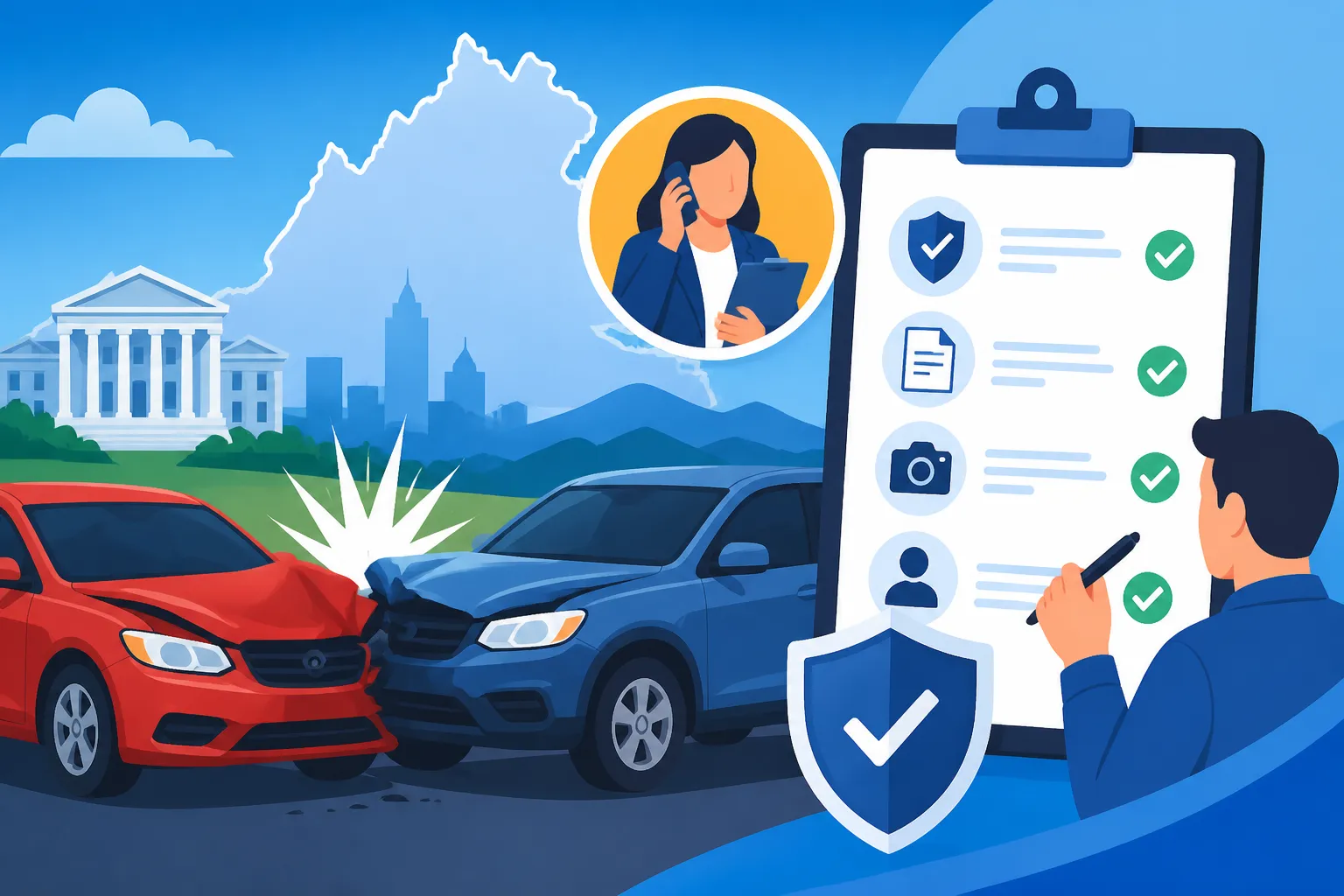
Here’s a checklist of what to do:
- Take Photos and Videos: Use your smartphone to capture as many photos and videos as possible. Get wide shots of the entire scene, showing the position of all vehicles, road conditions, traffic signs, and any skid marks. Then, get close-up shots of vehicle damage, broken glass, deployed airbags, and any visible injuries on yourself or your passengers. Don't forget to photograph the other driver's license plate, VIN (often found on the dashboard), and their insurance card.
- Identify Witnesses: Look around for anyone who saw the accident happen. These could be pedestrians, drivers in other lanes, or people in nearby businesses. Get their full names, phone numbers, and email addresses. Their independent accounts can be incredibly powerful in corroborating your version of events and countering any claims of your contributory negligence.
- Obtain Police Report Information: Ask the responding officer for their name, badge number, and the incident report number. This will allow you to obtain a copy of the official Police Reports and Car Accident Fault report later, which can provide vital details and observations. Remember, while a police report is helpful, it doesn't always definitively determine fault for insurance purposes, but it's a strong piece of the puzzle.
- Exchange Information: Get the other driver's full name, contact information, insurance company name and policy number, and vehicle information (make, model, year, license plate number). Provide them with your information, but stick to the facts and avoid discussing fault. Do not apologize or say anything that could be construed as admitting responsibility. What Is an Admission of Fault and How to Avoid It? is a critical concept to understand here.
- Document Environmental Factors: Note the time of day, weather conditions (rain, fog, sun glare), road conditions (wet, icy, potholes), and any relevant traffic signals or signs.
Every piece of this information will be crucial in building your case and countering any attempts by the other driver's insurance to shift blame onto you. For a more general guide on what to do, you can refer to What to Do After a Car Accident: Step-by-Step (2027).
Navigating the Virginia Car Accident Claim Process
Once the immediate aftermath of the accident has been handled, the real work of filing your claim begins. This is often the most confusing and frustrating part for many people, especially when dealing with the intricacies of Virginia's laws. You'll be dealing with insurance companies, adjusters, and a lot of paperwork. Staying organized, understanding the process, and knowing what to expect are key to successfully navigating this phase.
Reporting the Accident to Your Insurance Company
Even if you believe the other driver was 100% at fault, it is almost always a good idea to report the accident to your own insurance company promptly. Many policies require you to notify them within a certain timeframe, regardless of fault. Think of your insurer as a safety net. While your primary goal might be to recover from the at-fault driver's insurance, your own policy can offer several benefits, particularly in a state like Virginia.
For instance, if the other driver is uninsured or underinsured, your own policy’s uninsured/underinsured motorist coverage would kick in. This is incredibly important in Virginia, where a significant number of drivers may not carry adequate insurance. Your policy might also have MedPay (Medical Payments) coverage, which can help cover your medical expenses regardless of who was at fault, or collision coverage for your vehicle damage. When you call your insurer, be factual about what happened, but again, avoid speculating or admitting any fault. Just provide the objective details you gathered at the scene. They will typically open a claim and assign an adjuster to your case. This is also a good time to think about Property Damage vs Bodily Injury Claims and how they might be handled.
Filing a Third-Party Claim Against the At-Fault Driver's Insurance
This is where the real battle begins, especially in Virginia's contributory negligence landscape. A "third-party claim" means you are filing a claim directly against the at-fault driver's insurance policy. This is how you seek compensation for your medical bills, lost wages, vehicle damage, and pain and suffering from the driver who caused the accident.
The process typically involves:
- Notification: You (or your lawyer) will formally notify the other driver's insurance company about the accident and your intent to file a claim.
- Investigation: Their insurance company will assign an adjuster to investigate the accident. This adjuster's primary goal is to minimize their company's payout, and in Virginia, this often means actively searching for any evidence of your contributory negligence. They will review the police report, talk to their insured, and potentially contact you.
- Evidence Submission: You will need to provide all your compiled evidence: photos, medical records, police report, witness statements, repair estimates for your vehicle, and documentation of lost wages. This is where your diligent work at the scene truly pays off, as it directly relates to How to Prove the Other Driver Was at Fault.
- Negotiation: Based on their investigation and the evidence you provide, the insurance company may make a settlement offer. This initial offer is often a lowball offer, especially if they see any opportunity to argue contributory negligence.
It’s crucial to remember that you are not obligated to accept their first offer, nor are you required to give them a recorded statement without first consulting with an attorney. Be wary of adjusters who try to rush you or pressure you into accepting a quick settlement.
Dealing with Insurance Adjusters and Potential Disputes
Insurance adjusters, even friendly ones, work for the insurance company, not for you. Their job is to protect their company's bottom line. In Virginia, this often translates into an aggressive pursuit of any shred of evidence that suggests you contributed to the accident. This can be one of the most frustrating aspects of the claims process. They might try to downplay your injuries, question your medical treatment, or even outright deny your claim by asserting your contributory fault.
Here are some tips for dealing with adjusters:
- Be Polite, But Firm: Maintain a professional demeanor but do not be overly chatty. Stick to the facts you've already established.
- Never Admit Fault: As mentioned, any admission of fault, even a casual "I'm sorry," can be used against you.
- Limit Information: You are not required to give a recorded statement to the other driver's insurance company. If they press for one, politely decline or state that you'd like to consult with an attorney first.
- Document Everything: Keep a detailed log of all communications, including dates, times, who you spoke with, and what was discussed. Save copies of all emails and letters.
- Don't Accept a Lowball Offer: Initial offers are often significantly less than what your claim is truly worth. If you feel the offer is unfair, you have the right to negotiate. Understanding How to Deal With a Lowball Insurance Offer is crucial.
- Be Prepared for Blame Shifting: In Virginia, expect the other insurance company to try and blame you. If What Happens If the Other Driver Blames You?, or if they deny your claim due to alleged contributory negligence, this is a clear sign that legal intervention may be necessary.
This table summarizes key differences and advice for car accident claims in Virginia:
| Aspect of Claim | General Rule (Many States) | Virginia Specific Rule | Impact on Your Claim |
|---|---|---|---|
| Fault System | Comparative Negligence | Contributory Negligence | Even 1% at-fault can bar recovery. Extremely high burden to prove other driver is 100% at fault. |
| Evidence Needed | Strong evidence of fault | Ironclad evidence of sole fault for the other driver. | Meticulous documentation (photos, witnesses, police report) is essential to overcome contributory negligence defense. |
| Initial Steps | Report to insurance, seek medical care. | Immediate 911 call & detailed police report recommended for all accidents. Seek immediate medical attention. | Police report is critical for establishing initial facts, especially fault. Prompt medical care links injuries to accident. |
| Insurance Adjusters | Seek to minimize payout. | Actively look for any evidence of your fault to deny claim entirely. | Be very careful with statements. Do not admit fault. Prepare for strong pushback and blame-shifting. |
| Legal Counsel | Recommended for serious injuries/disputes. | Highly recommended for any claim involving injuries or disputed fault, even seemingly minor ones, due to contributory negligence. | A lawyer understands how to overcome contributory negligence and can protect your right to compensation. |
| Claim Timeline | Varies, can be lengthy. | May be longer if fault is disputed, as defense will fight vigorously. | Patience and strong legal representation are key. |
Common Challenges and Seeking Legal Guidance in Virginia
Even if you've done everything right at the scene and during the initial reporting phase, navigating the nuances of a car accident claim in Virginia can be incredibly complex. The unique legal landscape here presents challenges that many other states simply don't have. Recognizing these hurdles and knowing when to seek professional help can make all the difference in achieving a fair outcome.
The Impact of Contributory Negligence on Your Claim
We've talked about it a few times, but it bears repeating: Virginia's contributory negligence rule is the biggest hurdle you'll face. It's not an exaggeration to say that this rule can make or break your entire car accident claim. Insurance companies are experts at using this rule to their advantage. They have teams of adjusters and lawyers whose job it is to find any plausible argument that you contributed, even slightly, to the cause of the accident. This could be anything from a minor traffic infraction, like driving a few miles over the speed limit, to not wearing your seatbelt correctly, or even just failing to react quickly enough to another driver's sudden maneuver.
The burden of proof falls squarely on you to demonstrate that you were completely free of any negligence that contributed to the crash. This is a very high bar, and it means that if the insurance company can convince a jury (or simply convince you that they could convince a jury) that you were even 1% at fault, your entire claim for bodily injury and property damage could be dismissed. This makes every piece of evidence, every witness statement, and every detail of your actions leading up to the accident incredibly important. It's a daunting prospect to face alone, especially when you're also trying to recover from injuries.
When to Consider a Car Accident Lawyer in Virginia
Given the complexities introduced by Virginia's contributory negligence law, deciding whether to hire a lawyer isn't just about maximizing your settlement; it's often about ensuring you receive any settlement at all. While you can try to handle a minor fender-bender with no injuries on your own, if your situation involves anything more than that, getting legal counsel becomes highly advisable.
Here are strong indicators that you should consider hiring a car accident lawyer in Virginia:
- Any Injuries Sustained: If you've suffered any physical injuries, from whiplash to broken bones, or even if you're experiencing PTSD and Emotional Distress After a Car Accident, a lawyer is essential. They will help ensure your medical expenses, lost wages, and pain and suffering are properly documented and sought after, and they'll handle negotiations with insurance companies who will try to minimize your injuries or deny your claim based on contributory negligence.
- Disputed Fault: If the other driver or their insurance company is trying to place any blame on you, a lawyer can aggressively fight against these allegations. They understand how to present evidence and construct arguments to prove the other driver's sole fault, which is critical in Virginia.
- Significant Property Damage: If your vehicle is totaled or sustained substantial damage, the financial stakes are higher, and a lawyer can ensure you're fairly compensated.
- Uninsured or Underinsured Drivers: Dealing with a driver who lacks adequate insurance adds another layer of complexity. A lawyer can help you navigate your own uninsured/underinsured motorist coverage.
- Complex Accidents: Multi-car pileups, accidents involving commercial vehicles, or cases with unclear liability often require expert legal guidance.
- Insurance Company Tactics: If an insurance company is delaying, denying, or offering a ridiculously low settlement, a lawyer can step in and advocate for your rights. They know the tactics insurers use and how to counter them.
A skilled Virginia car accident lawyer will understand the intricacies of state law, including how to overcome the contributory negligence defense. They can conduct a thorough investigation, gather expert testimony if needed, negotiate with insurance companies, and if necessary, represent you in court. Many personal injury attorneys offer free initial consultations, giving you a chance to discuss your case and ask Questions to Ask a Car Accident Lawyer without any upfront cost. Deciding whether Do You Need a Lawyer for a Car Accident? (2026) is a big step, but in a state like Virginia, it can be the smartest one you make for your claim.
Disclaimer
Please remember that the information provided in this article is for general informational purposes only and does not constitute legal advice. Car accident claims are complex and highly dependent on the specific facts of each case and the laws of Virginia. It is highly recommended to consult with a qualified legal professional for advice tailored to your individual situation.