Claiming Compensation for Broken Leg in Texas
A broken leg isn't just a minor inconvenience; it's a life-altering injury that can plunge you into a world of pain, medical appointments, and financial stress, especially if it's the result of someone else's negligence in a car accident. Facing exorbitant medical bills, lost wages, and the sheer discomfort of recovery can feel overwhelming. This comprehensive guide is here to walk you through the process of claiming the compensation you deserve for a broken leg injury in Texas, offering clear, empathetic advice every step of the way.
Understanding Broken Leg Injuries After a Car Accident
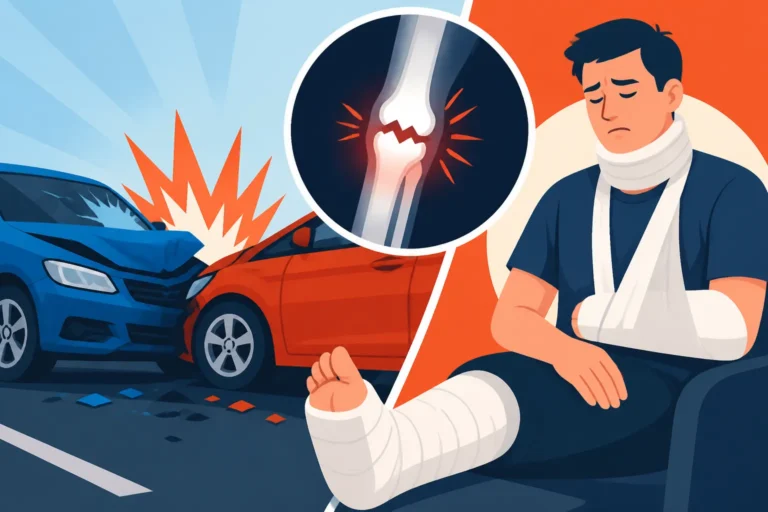
When you're involved in a car accident, the sudden, violent impact can twist, crush, or fracture your leg bones in ways you never imagined. A broken leg can range from a relatively straightforward fracture to a complex injury requiring multiple surgeries and a lengthy recovery period. Understanding the nature of your injury is the first step in comprehending the journey ahead for your physical healing and your compensation claim.
Types of Broken Leg Fractures
The leg is a complex structure, comprising the femur (thigh bone), tibia (shin bone), and fibula (calf bone), along with numerous smaller bones in the ankle and foot. A fracture in any of these bones can be incredibly debilitating. Fractures are often classified by their location and severity. For example, a distal tibia fracture occurs near the ankle, while a mid-shaft femur fracture is a break in the middle of your thigh bone.
Beyond location, doctors will categorize your fracture based on its characteristics. A closed fracture means the skin remains intact, while an open or compound fracture involves the bone breaking through the skin, introducing a high risk of infection. Comminuted fractures are particularly nasty, where the bone shatters into three or more pieces, often requiring extensive surgical intervention with plates, screws, or rods. Then there are spiral fractures, caused by a twisting force, which are common in pedestrian accidents or impacts where the leg is rotated unnaturally. Hairline fractures are tiny cracks, often mistaken for a severe bruise, but can still cause significant pain and require immobilization. An avulsion fracture occurs when a small piece of bone attached to a tendon or ligament gets pulled away from the main bone. Each type dictates different treatment protocols, recovery timelines, and, consequently, impacts the value of your personal injury claim.
The immediate aftermath of a broken leg injury is usually characterized by intense pain, swelling, visible deformity, and an inability to bear weight. The shock of the accident itself can sometimes mask the initial severity, but the sharp, undeniable pain quickly makes itself known. It's not just the bone itself; surrounding muscles, ligaments, and nerves can also be damaged, compounding the injury and extending the recovery period.
Common Causes of Broken Legs in Texas Car Crashes
Broken legs are a tragically common outcome in many types of car accidents due to the physics of a collision and the unprotected nature of our lower limbs inside a vehicle. Your legs are often pressed against the dashboard, seat, or door, making them highly vulnerable to impact forces. High-speed collisions, especially those involving significant front-end or side impacts, frequently result in severe leg fractures.
Consider a T-bone accident at an intersection, where a vehicle strikes the side of another car directly where a passenger's leg might be. The crushing force can easily lead to a broken tibia or fibula. Similarly, in a head-on collision, the sheer force of the impact can push the dashboard or engine compartment into the passenger space, pinning and fracturing legs. Even a seemingly less severe rear-end collision, if forceful enough, can cause a driver's leg to jam against the brake pedal or steering column, resulting in a fracture. Pedestrians struck by vehicles are also at high risk for multiple leg fractures, often involving both the upper and lower leg bones, due to the direct impact and subsequent fall.
Twisting injuries, such as those that produce spiral fractures, can occur when a vehicle is spun violently, or if a foot is caught while the body continues to rotate. The sudden deceleration and change in direction can put immense stress on the leg bones, pushing them beyond their structural limits. The specific circumstances of your accident, therefore, play a crucial role in understanding how your broken leg injury occurred and who might be held responsible.
Immediate Medical Steps After a Broken Leg Injury
The moment you realize you might have a broken leg after a car accident, your priority must be immediate medical attention. Even if you don't feel excruciating pain right away due to adrenaline or shock, any suspected fracture requires urgent professional evaluation. Delaying medical care can not only worsen your injury but also complicate your future compensation claim. For a comprehensive guide on initial steps, you might find our article on what to do after a car accident: What to Do After a Car Accident: Step-by-Step (2027).
When paramedics arrive on the scene, they will typically stabilize the injured leg to prevent further damage during transport to an emergency room. At the ER, doctors will perform a thorough examination, including X-rays, and possibly CT scans or MRIs, to precisely diagnose the type and extent of the fracture. This diagnostic imaging is absolutely critical as it provides objective proof of your injury, forming the bedrock of your medical records. Depending on the severity, treatment could involve setting the bone (reduction), applying a cast or brace, or even immediate surgery to implant rods, plates, and screws to stabilize the bone fragments.
Following your initial treatment, your medical journey will likely include follow-up appointments, physical therapy, and potentially more imaging. Adhering to your doctor's treatment plan is paramount for your recovery and for the strength of your claim. Any deviation from prescribed care could be used by insurance companies to argue that your injuries weren't as severe or that you contributed to your prolonged recovery. Remember, seeing a doctor after a car accident is vital, even for minor incidents, and especially for significant injuries like a broken leg. Our guide on Why You Should See a Doctor After a Car Accident can provide more details.
Building Your Broken Leg Injury Claim in Texas
Navigating the aftermath of a car accident, especially with a severe injury like a broken leg, is daunting. In Texas, a state operating under an "at-fault" system, the negligent driver is responsible for your damages. Building a strong compensation claim requires meticulous documentation and a clear understanding of the legal landscape.
Documenting Your Injuries and Treatment
When it comes to a personal injury claim, medical documentation is your strongest ally. Every doctor's visit, every diagnostic test, every physical therapy session, and every medication prescription creates a paper trail that proves the extent of your broken leg injury and the necessity of your treatment. It's not enough to just say you broke your leg; you need detailed records from hospitals, orthopedists, physical therapists, and any other medical professional involved in your care. These records should include initial diagnoses, treatment plans, progress notes, and any prognoses for long-term effects.
Beyond official medical records, it's incredibly helpful to keep a personal injury journal. Document your daily pain levels, limitations on activities, emotional distress, and how the injury impacts your daily life. This journal provides a real-time, personal account of your suffering and can be invaluable when detailing non-economic damages. Take photos or videos of your cast, brace, surgical scars, and any visible limitations you experience throughout your recovery. This visual evidence can be incredibly powerful in conveying the reality of your situation. For more on proving your injuries, check out our article on How to Prove Injuries in a Car Accident Claim. The more thoroughly you document your journey, the stronger your case will be.
Gathering Evidence for Liability and Damages
Proving liability – meaning who was at fault for the accident – is just as important as proving your injuries. In Texas, you need to show that the other driver's negligence directly caused your broken leg and other damages. This often starts with the police report, which provides an official account of the accident, sometimes indicating fault or issuing citations. However, remember that a police report doesn't always determine who pays. Learn more about the role of police reports in our article: Police Reports and Car Accident Fault.
Beyond the police report, gather any evidence from the accident scene: photographs of vehicle damage, road conditions, traffic signals, and debris. If there were witnesses, secure their contact information and statements. Dashcam footage or nearby surveillance video can also be crucial. For a clear understanding of how fault is determined, you can refer to How Fault Is Determined in a Car Accident. Your attorney may also consult accident reconstruction specialists to establish how the impact specifically led to your broken leg. This comprehensive collection of evidence links the at-fault driver's actions directly to your broken leg injury and the associated costs, solidifying your claim for both economic and non-economic damages. Documenting the scene meticulously is key, as highlighted in How to Document a Car Accident Scene.
Understanding Texas's "At-Fault" System and Comparative Negligence
Texas operates under an "at-fault" insurance system, which means that the driver responsible for causing the accident is also responsible for covering the damages incurred by the other parties. This is in contrast to "no-fault" states, where your own insurance generally pays for your medical expenses regardless of who caused the accident. If you're wondering about the difference, our guide on What Is a No-Fault State? (And Which States Are No-Fault) explains it thoroughly.
However, simply being "at fault" isn't always black and white. Texas also uses a "modified comparative negligence" rule, often referred to as the 51% bar rule. This rule dictates that you can recover compensation for your broken leg injury as long as you are not found to be 51% or more responsible for the accident. If you are found to be partly at fault, your total compensation award will be reduced by your percentage of fault. For example, if your damages total $100,000 but you are found to be 20% at fault, you would only be able to recover $80,000. If you are found 51% or more at fault, you would recover nothing.
This aspect of Texas law makes proving fault even more critical, as even a small percentage attributed to you can reduce your payout. Insurance companies will often try to shift some blame onto you to minimize their liability, so it's essential to have strong evidence supporting your claim that the other driver was primarily responsible. Understanding What Happens If You're Partially at Fault? is crucial here.
Here's a simplified look at how comparative negligence might affect a broken leg claim in Texas:
| Your Percentage of Fault | Your Maximum Recoverable Compensation | Example: $100,000 in Damages |
|---|---|---|
| 0% | 100% | $100,000 |
| 10% | 90% | $90,000 |
| 25% | 75% | $75,000 |
| 50% | 50% | $50,000 |
| 51% or more | 0% (barred from recovery) | $0 |
This table clearly illustrates why understanding and fighting against unfair fault assignments is so important in Texas. For more detailed information on this rule, refer to Modified Comparative Negligence (50% vs 51% Bar).
Types of Compensation for a Broken Leg in Texas
A broken leg injury from a car accident can impose a heavy financial burden and emotional toll. Thankfully, Texas law allows injured individuals to pursue various types of damages, broadly categorized into economic and non-economic, to compensate them for these losses. The goal is to make you "whole again" as much as possible, covering everything from direct medical bills to the unseen pain and suffering.
Economic Damages: Covering Your Tangible Losses
Economic damages, also known as "special damages," are the measurable, out-of-pocket costs directly attributable to your broken leg injury. These are often the easiest to calculate because they come with receipts, bills, and pay stubs. The list of potential economic damages for a broken leg can be extensive and should cover both past and future anticipated expenses. For a more general understanding of these types of damages, see our guide on Economic vs Non-Economic Damages in Injury Claims.
First and foremost are medical expenses. This category encompasses everything from the initial emergency room visit, ambulance ride, and diagnostic imaging (X-rays, CT scans, MRIs) to surgical fees, hospital stays, follow-up appointments with orthopedic specialists, medications, physical therapy, rehabilitation, and durable medical equipment like crutches, wheelchairs, or specialized braces. For severe broken legs, there might be a need for future surgeries (e.g., to remove hardware) or long-term physical therapy, which also fall under medical expenses. It's vital to meticulously track all these costs, as even seemingly small co-pays and prescription costs add up quickly.
Next are lost wages and loss of earning capacity. If your broken leg prevents you from working, you are entitled to compensation for the income you've already lost. This includes your regular salary, bonuses, commissions, and even benefits. If your injury is severe enough to permanently impair your ability to perform your job or pursue your career at the same level as before, you can also claim damages for "loss of earning capacity." This looks at your potential future income reduction over your working life due to the permanent limitations imposed by your broken leg. Calculating this often requires the expertise of economists and vocational experts. For more on this, our article How Lost Wages Are Calculated in a Settlement offers valuable insight.
Finally, economic damages also include property damage, specifically the cost to repair or replace your vehicle, as well as rental car expenses while your vehicle is being fixed. While not directly related to your broken leg, these are part of the overall losses from the accident.
Non-Economic Damages: Addressing Intangible Suffering
Non-economic damages, often called "general damages," are intended to compensate you for the intangible, non-monetary losses you experience due to your broken leg. These are more challenging to quantify because they don't come with a bill, but they represent a significant portion of what truly makes you "whole" again after a devastating injury.
The primary component here is pain and suffering. This covers the actual physical pain you endure from the moment of impact, through surgeries, recovery, and rehabilitation. It also includes the mental anguish, emotional distress, anxiety, and psychological trauma that often accompany severe injuries. Imagine the fear of reinjury, the frustration of being dependent on others, or the depression that can set in during a long, painful recovery. These are all part of pain and suffering. For a detailed look at how these are calculated, refer to Pain and Suffering: How It's Calculated.
Another critical aspect is loss of enjoyment of life. A broken leg can temporarily, or even permanently, prevent you from participating in activities you once loved, such as sports, hobbies, or even simple daily routines like walking your dog or playing with your children. If you can no longer hike the trails around Austin or dance at a wedding, that loss of enjoyment contributes significantly to your overall damages. This also extends to impacts on your personal relationships and overall quality of life.
Lastly, disfigurement or permanent impairment is a substantial non-economic damage. If your broken leg results in visible scarring from surgery, a limp, or a permanent reduction in mobility, strength, or range of motion, you are entitled to compensation for this. This impairment can affect your self-esteem, social interactions, and daily functionality for the rest of your life. While these damages are difficult to put a number on, they are crucial for a just settlement. Documentation of your pain and suffering is paramount, as discussed in How to Document Pain and Suffering. Often, insurance companies or lawyers will use a "multiplier" method to estimate pain and suffering, as explained in How the Pain and Suffering Multiplier Works (1.5x–5x).
The Impact of Maximum Medical Improvement (MMI) on Your Claim
Understanding Maximum Medical Improvement (MMI) is absolutely critical when pursuing a compensation claim for a broken leg in Texas. MMI is the point at which your treating physician determines that your broken leg injury has healed as much as it is going to, and no further significant improvement is expected, even with additional medical treatment. This doesn't necessarily mean you are pain-free or fully recovered; it simply means your condition has plateaued.
Reaching MMI is a significant milestone because it's usually at this point that the true, long-term impact of your broken leg can be accurately assessed. Before MMI, it's very difficult to know the full extent of your future medical needs, potential permanent disability, or ongoing pain. Trying to settle a claim before you reach MMI is often a mistake, as you risk accepting an amount that doesn't cover your eventual costs. For a deeper dive into this concept, you can read our article on What Is Maximum Medical Improvement (MMI)?.
Once you reach MMI, your doctor can issue a final report detailing any residual impairments, limitations, or future medical care requirements related to your broken leg. This report will be a cornerstone of your compensation claim, providing medical substantiation for:
- Future medical expenses: What kind of ongoing care (e.g., physical therapy, pain management, future surgeries like hardware removal) will you need?
- Permanent impairment rating: Does your injury result in a permanent percentage of disability to your leg or body as a whole? This rating significantly impacts non-economic damages.
- Loss of earning capacity: If your broken leg results in permanent limitations that affect your ability to work, the MMI report provides the medical basis for this claim.
Without a clear picture from MMI, any settlement offer would be speculative at best and potentially woefully inadequate for your long-term needs. This is why patience and thorough medical care through to MMI are vital for maximizing your compensation.
Navigating the Claims Process and Potential Challenges
The journey to claiming compensation for a broken leg after a car accident is rarely straightforward. You'll encounter insurance adjusters, legal jargon, and deadlines that can make the process feel overwhelming. Knowing what to expect and how to protect your rights is essential for a successful outcome.
Dealing with Insurance Companies
After an accident, especially one involving a significant injury like a broken leg, you can expect to hear from the at-fault driver's insurance company. It's important to remember that their primary goal is to minimize their payout, not necessarily to ensure you are fully compensated. Insurance adjusters are trained negotiators, and they may seem friendly, but they are working for the insurance company.
They might ask you to give a recorded statement. While this may seem harmless, it's generally advisable to decline. Any statement you make could be used against you later to undermine your claim, especially if your memory of the accident or your injury symptoms evolve over time. For more on this, our guide on Do You Have to Give a Recorded Statement? is quite informative. They may also try to offer a quick, lowball settlement before you fully understand the extent of your injuries and long-term costs. It's almost always a bad idea to accept the first offer, especially with a severe injury like a broken leg. Their initial offer likely won't account for all your future medical expenses or the full extent of your pain and suffering.
Be cautious about signing any documents from the insurance company without a lawyer's review, especially medical releases that are too broad. Only release information directly relevant to the accident and your injuries. For more on handling these interactions, read Dealing With Insurance Adjusters After a Car Accident and How to Deal With a Lowball Insurance Offer. Your best defense against these tactics is to have an experienced advocate on your side.
The Role of a Car Accident Lawyer in Texas
Given the complexities of Texas's at-fault system, comparative negligence rules, and the tactics employed by insurance companies, hiring a car accident lawyer is almost always beneficial, especially with a serious injury like a broken leg. A skilled lawyer acts as your advocate, protecting your rights and fighting for the full compensation you deserve. If you're wondering, Do You Need a Lawyer for a Car Accident? (2027) offers a comprehensive answer.
Here's how a lawyer can help:
- Expert Navigation: They understand Texas personal injury law, including the intricacies of comparative negligence and how to establish fault convincingly. They know what evidence is needed to build a strong case.
- Valuing Your Claim: Lawyers have experience assessing the true value of a broken leg claim, accounting for both current and future economic and non-economic damages, something individuals often underestimate.
- Dealing with Insurers: They will handle all communications and negotiations with the insurance companies, shielding you from aggressive tactics and ensuring you don't inadvertently jeopardize your claim.
- Legal Procedures: If a fair settlement cannot be reached, they can initiate a lawsuit and guide you through the litigation process, representing you in court if necessary.
- Medical Liens: They can help manage medical liens and ensure medical bills are paid out of the settlement in the correct order.
Most car accident lawyers in Texas work on a contingency fee basis, meaning you don't pay any upfront fees, and they only get paid if they win your case. Their fee is a percentage of the final settlement or award. This arrangement makes legal representation accessible to everyone, regardless of their financial situation. Our article on How Much Does a Car Accident Lawyer Cost? explains this further. Choosing the right lawyer is crucial, so consider asking plenty of questions during your consultation, as advised in How to Choose a Car Accident Lawyer.
Statute of Limitations for Broken Leg Claims in Texas
Time is a critical factor in any personal injury claim, including those for a broken leg suffered in a car accident. In Texas, the general rule for personal injury claims, including those involving car accidents, is a two-year statute of limitations. This means you typically have two years from the date of the car accident to file a lawsuit in civil court.
Failing to file your lawsuit within this two-year window almost certainly means you will lose your right to pursue compensation, regardless of how strong your case or how severe your broken leg injury. Once the statute of limitations expires, the court will likely dismiss your case, leaving you with no recourse to recover damages.
While two years might seem like a long time, it passes more quickly than you might think, especially when you're focusing on recovery from a severe injury. Gathering evidence, receiving treatment up to MMI, and negotiating with insurance companies all take time. There are very limited exceptions to this rule, such as for minors, but these are rare. Therefore, it is strongly advised to consult with an attorney as soon as possible after your broken leg injury. An attorney can ensure that all necessary steps are taken and that your claim is filed within the legal deadline. For more details on the timeframe, you can explore How Long Do You Have to File a Car Accident Claim? and specifically How Long Do You Have to Sue After a Car Accident in Texas?. Understanding the Statute of Limitations for Car Accidents by State can also provide broader context.
Disclaimer
Please remember that this article provides general information and guidance only. It is not a substitute for professional legal advice. Every car accident and personal injury claim is unique, and the information presented here may not apply to your specific situation. You should always consult with a qualified personal injury attorney in Texas to discuss the details of your case and receive advice tailored to your circumstances.