Who Is at Fault in a Sideswipe Accident in California?
Navigating the aftermath of a car accident is always stressful, but a sideswipe collision can be particularly confusing because it often feels like both drivers could be partly at fault. It's not uncommon to hear, "They just came out of nowhere!" or "I was already in my lane!" This guide is here to untangle the complexities of sideswipe accidents in California, helping you understand how fault is determined and what steps you can take to protect your position.
Understanding Sideswipe Accidents in California
Sideswipe accidents, where the sides of two vehicles scrape or collide, are unfortunately a common occurrence on California's busy roads, from the congested freeways of Los Angeles to the winding coastal highways. They often happen quickly, leaving drivers bewildered about what exactly transpired and who bears the responsibility.
What Constitutes a Sideswipe Collision?
A sideswipe collision, at its core, is a crash where the side of one vehicle comes into contact with the side of another vehicle. This can range from a minor scrape that only damages paint to a more severe impact that causes significant structural damage and even sends vehicles careening into other lanes or off the road.
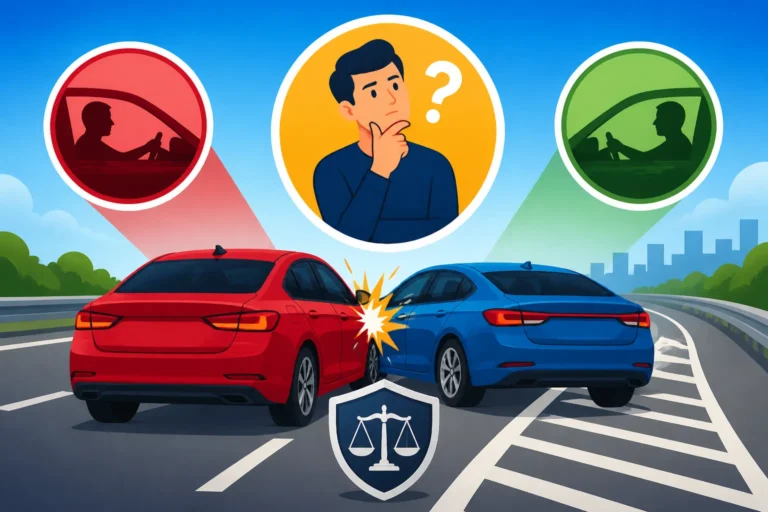
These types of accidents typically occur when vehicles are traveling in the same direction, often parallel to each other. Think about two cars driving side-by-side on a multi-lane highway, or perhaps one car attempting to pass another too closely. While the visual might seem straightforward, the details surrounding the point of impact, the movements leading up to it, and driver intentions are crucial in understanding what really happened. A common misconception is that all sideswipes are minor, but they can easily lead to serious injuries if a driver loses control after the initial contact.
Initial Steps After a Sideswipe Accident
The moments immediately following a sideswipe accident can be chaotic, but taking the right steps is paramount for your safety and for any potential claim. First and foremost, ensure everyone involved is safe and move vehicles to the shoulder if possible and safe to do so. Your next priority should be to call 911 if there are any injuries or if the vehicles are obstructing traffic. Even if the damage seems minor, a police report can be invaluable in establishing the facts.
Next, it's crucial to gather as much information as you can. This includes exchanging insurance and contact details with the other driver. Make sure to get their license plate number, driver's license number, and the make and model of their vehicle. If there are any witnesses, politely ask for their contact information, as their independent account can often clarify disputes over who was at fault in a sideswipe accident. Detailed documentation is your best friend during this stressful period.
California's Comparative Negligence System
California operates under a system known as "pure comparative negligence." This is a critical piece of information for anyone involved in a car accident in the Golden State, especially when fault isn't immediately clear, like in many sideswipe scenarios. Understanding this system is key to knowing what to expect from your claim.
How Pure Comparative Negligence Works
Unlike some states where even a tiny percentage of fault can completely bar you from recovering damages, California's pure comparative negligence system allows a driver to recover damages even if they are largely at fault for an accident. The core principle is that your compensation will be reduced by your percentage of fault. For instance, if a court or insurance adjuster determines that you were 20% responsible for a sideswipe accident, and your total damages (medical bills, lost wages, vehicle repair) amount to $10,000, you would only be able to recover $8,000.
This system ensures that each party is held accountable for their share of the blame, rather than placing all responsibility on one driver. It's a pragmatic approach that acknowledges that accidents rarely have a single, monolithic cause and often result from a confluence of factors. This means that even if you suspect you might share some blame, it's still worth pursuing a claim for the portion of damages attributable to the other driver's negligence. For a broader understanding of how this compares to other systems, you might find our guide on Comparative vs Contributory Negligence Explained helpful.
The Role of Evidence in Proving Fault
In a sideswipe accident, proving fault often comes down to compelling evidence. Without clear-cut proof, it can devolve into a "he said, she said" situation, which rarely benefits anyone. This is why meticulous documentation at the scene is so vital.
For example, photographs and videos taken with your phone can capture the position of the vehicles, the extent of the damage, road conditions, and any relevant traffic signs or lane markings. If you have a dashcam, footage can provide an objective, undeniable account of what happened leading up to, during, and after the impact. Witness statements are also incredibly powerful, as independent observers can corroborate one driver's story or contradict another's. Furthermore, the official police report, while not a definitive legal finding of fault, often contains an officer's assessment of the accident, which insurance companies heavily rely on when determining who is at fault. Without solid evidence, it becomes significantly harder to assert your claim, making it critical to know How to Prove the Other Driver Was at Fault.
Common Scenarios and Fault Determination in Sideswipes
Sideswipe accidents can manifest in various ways, but some scenarios are far more common than others. Understanding these typical situations can help you piece together what might have happened and how fault is likely to be assigned.
Lane Change Accidents
By far, the most frequent cause of sideswipe collisions on California's multi-lane roads is an improper or unsafe lane change. California Vehicle Code Section 22107 explicitly states that a driver must not move from one lane to another until it is "first ascertained that such movement can be made with reasonable safety." This places a significant duty of care on the driver initiating the lane change.
Typically, if a driver attempts to change lanes and strikes a vehicle already lawfully occupying that lane, the changing driver will be considered at fault. This is often due to failing to check blind spots, not signaling, or misjudging the speed and proximity of other vehicles. Imagine a scenario on I-5 in Orange County: a driver in the far-left lane decides to move right, but fails to see a smaller car already in their blind spot. The ensuing sideswipe would almost certainly place fault on the lane-changing driver. Even if the other driver was speeding, the primary fault usually lies with the one making the lane change. Our article on Who Is at Fault in a Lane-Change Accident? delves deeper into this common scenario.
Merging Accidents
Merging accidents share similarities with lane changes but often involve specific rules of the road. When entering a freeway or highway from an on-ramp, California law requires drivers to yield to traffic already on the main thoroughfare. The merging driver has the responsibility to ensure they can safely integrate into the flow of traffic.
However, drivers already on the freeway also have a duty to not impede traffic or act recklessly. While the merging driver typically bears the brunt of the fault in a sideswipe during a merge, there can be exceptions. If, for instance, a driver already on the freeway intentionally speeds up to prevent a merge, or fails to create a safe space when conditions allow, they might share some degree of fault. These situations are highly fact-dependent, often requiring careful examination of traffic flow, posted signs, and driver actions. For more nuanced information, consider reading Who Is at Fault in a Merging Accident?.
Shared Fault Scenarios
As mentioned with California's pure comparative negligence system, it's entirely possible for both drivers to share some degree of fault in a sideswipe accident. This can happen in various complex situations. For example, if one driver changes lanes unsafely, but the other driver was excessively speeding or driving distracted (perhaps texting), both actions contributed to the collision.
In such cases, an investigation would seek to assign a percentage of fault to each driver. If a driver changing lanes without signaling strikes a car that suddenly swerves into their path from another lane, the fault could be divided. The consequences of shared fault mean that any settlement or award you receive will be proportionally reduced. Understanding What Happens If You're Partially at Fault? is crucial, as even a small percentage of fault can impact your final compensation.
Here's a quick look at how fault often breaks down in common sideswipe situations in California:
Scenario Type Driver A (Changing/Merging) Duty Driver B (Stationary/Through Lane) Duty Typical Fault Allocation Notes Tired of explaining who is at fault after a sideswipe accident? It's a frustrating situation that often leaves drivers scratching their heads, especially when both parties feel they were in the right. This guide will walk you through California's specific rules and steps for determining who is at fault in a sideswipe accident, helping you understand your rights and responsibilities.
Understanding Sideswipe Accidents in California
Sideswipe collisions, where the sides of two vehicles traveling in the same direction make contact, are unfortunately a common occurrence on California's busy roadways, from the bustling highways around Sacramento to the scenic routes along the Pacific Coast Highway. These incidents can range from minor paint transfers to severe impacts that send vehicles out of control, making clear fault determination crucial for everyone involved.
What Defines a Sideswipe Collision?
A sideswipe accident is characterized by the impact occurring along the parallel sides of two vehicles. This isn't a head-on or a rear-end collision; it's a contact made while cars are essentially traveling alongside each other. Think of two cars in adjacent lanes, one drifting into the other, or two vehicles attempting to occupy the same space simultaneously. The crucial aspect is the lateral engagement, causing damage along the length of one or both vehicles.
These accidents can happen in various environments: on multi-lane freeways, during merging maneuvers, or even in parking lots. While some sideswipes might seem minor and only result in cosmetic damage, others can lead to serious structural damage, loss of control, and subsequent secondary collisions with other vehicles or stationary objects. The perception of minor damage can sometimes lead drivers to underreport the incident, which can complicate future claims, especially if delayed injuries surface.
Immediate Actions After a Sideswipe Accident
The moments immediately following any car accident are critical, and a sideswipe is no exception. First, ensure everyone's safety. If possible and safe, move your vehicle to the side of the road to prevent further incidents. Turn on your hazard lights. Your next step should be to call emergency services, particularly if there are injuries, significant vehicle damage, or if the vehicles are blocking traffic. Even if it seems minor, a police report can provide an objective account and official documentation of the scene, which is invaluable for insurance purposes.
While waiting for assistance, use your smartphone to document everything. Take photos and videos of the accident scene from multiple angles, capturing both vehicles, the surrounding environment, any road marks, and the final resting positions of the cars. Exchange contact and insurance information with the other driver, including names, phone numbers, insurance company and policy numbers, and vehicle details. Look for any witnesses and ask for their contact information; their unbiased perspective can be crucial in establishing fault. For a comprehensive guide on initial steps, refer to What to Do After a Car Accident: Step-by-Step (2027).
California's Pure Comparative Negligence Standard
Understanding how fault is legally handled in California is fundamental, particularly for sideswipe accidents where blame can often feel shared. California operates under a specific legal framework known as "pure comparative negligence." This system significantly impacts how damages are calculated and recovered, distinguishing it from many other states.
How Pure Comparative Negligence Impacts Your Claim
California's pure comparative negligence rule dictates that even if you are found to be partially at fault for an accident, you can still recover damages from the other at-fault driver. However, the amount you can recover will be reduced proportionally by your percentage of fault. For example, if you sustained $20,000 in damages (including vehicle repair costs, medical bills, and lost wages), but you are found to be 25% at fault for the sideswipe, you would only be able to recover $15,000 from the other party.
This system is designed to fairly distribute responsibility and ensure that no party is completely barred from recovery simply because they contributed, even slightly, to the accident. It prevents scenarios where a driver who is 1% at fault loses all rights to compensation, as might happen in a "contributory negligence" state. Instead, it allows for a more equitable division of financial responsibility, making it vital to accurately assess and assign fault percentages. This is a key factor in How Comparative Fault Reduces Your Settlement.
Gathering Evidence to Establish Fault
In the nuanced world of sideswipe accidents, solid evidence is your most powerful tool for establishing fault. Without it, your claim can quickly devolve into a "my word against theirs" battle, which rarely works in your favor. Insurance companies will meticulously analyze all available evidence to assign fault percentages.
Modern technology provides numerous ways to gather compelling evidence. Dashcam footage, for instance, offers an objective, real-time recording of the moments leading up to and during the collision, often providing irrefutable proof of who initiated the unsafe maneuver. Photographs of the damage, the final resting positions of the vehicles, skid marks, road debris, and the surrounding traffic signs or lane markers are also crucial. Witness statements, especially from neutral third parties, can corroborate your account or dispute the other driver's version of events. Even seemingly minor details, like the location of paint transfer on the vehicles, can help experts reconstruct the accident and pinpoint the exact sequence of events. Understanding How Fault Is Determined in a Car Accident emphasizes the importance of every piece of evidence.
Common Sideswipe Scenarios and Fault in California
Sideswipe accidents often follow predictable patterns, and California law provides guidance on how fault is generally assigned in these situations. Knowing these common scenarios can help you understand your position.
Lane Change Sideswipe Accidents
The vast majority of sideswipe accidents in California occur when one vehicle attempts to change lanes and collides with another vehicle already present in that lane. California Vehicle Code Section 22107 is quite clear: "No person shall turn a vehicle from a direct course or move right or left upon a roadway until such movement can be made with reasonable safety and then only after the giving of an appropriate signal in the manner provided in this chapter in the event any other vehicle may be affected by the movement."
This statute places the primary responsibility on the driver making the lane change. If you're changing lanes, you must ensure the lane is clear, check your blind spots, and use your turn signal. If you fail to do so and strike another vehicle that was lawfully in the lane, you will almost certainly be found at fault. Conversely, if you are the driver lawfully in your lane and another vehicle merges into you, the other driver is typically at fault. Even if you were driving slightly over the speed limit, the lane-changing driver's failure to ensure safety usually outweighs minor infractions by the other party.
Merging Sideswipe Accidents
Merging onto a freeway or highway from an on-ramp is another frequent cause of sideswipe collisions. California Vehicle Code Section 21804 requires that drivers entering a highway from an on-ramp yield the right-of-way to all vehicles approaching on the highway. This means the merging driver has the primary duty to ensure they can safely enter traffic without disrupting its flow.
While the merging driver bears the initial responsibility, drivers already on the freeway also have a duty to drive reasonably and avoid collisions. If a freeway driver deliberately speeds up to prevent a merge, or acts aggressively to block another vehicle, they could potentially share some fault. However, in most merging sideswipe incidents, especially if there's no evidence of reckless behavior from the freeway driver, the merging driver is deemed at fault for failing to yield. This scenario is closely related to lane changes but has specific yielding rules that often make fault determination clearer.
Drifting or Swerving Sideswipes
Sometimes, a sideswipe accident isn't about changing lanes or merging, but about a driver unintentionally drifting or swerving out of their lane. This could be due to distracted driving (texting, looking away), fatigue, impairment (drugs or alcohol), or even a medical emergency. In these cases, the driver who crosses into another lane, causing the sideswipe, is almost always at fault.
Proving this type of fault often relies heavily on witness statements, dashcam footage, and the police report, which might note signs of impairment or distracted behavior. For example, if a driver on a straight stretch of Highway 101 suddenly veers into the adjacent lane and scrapes another car, the swerving driver is negligent. The challenge lies in proving that the drift was unintentional or due to negligence rather than an unavoidable circumstance, such as being forced over by another phantom vehicle.
Protecting Your Position After a Sideswipe
After a sideswipe accident, emotions can run high, and you might feel overwhelmed. However, taking specific, deliberate steps can significantly protect your rights and improve the outcome of any potential claim.
Documenting the Scene and Your Injuries
Your actions immediately following a sideswipe accident are critical for any insurance claim or legal action. As discussed, photographs and video are paramount. Document the damage to both vehicles, their positions on the road, skid marks, road conditions, traffic signals, and any relevant landmarks. If your vehicle has a dashcam, secure that footage immediately.
Equally important is documenting any injuries, even if they seem minor at first. Adrenaline can mask pain, and some serious injuries, like whiplash or concussions, might not manifest fully until hours or even days later. Seek medical attention promptly, even if it's just a visit to an urgent care clinic. Explain to the medical professional that you were in a car accident and detail all your symptoms, no matter how insignificant they seem. This creates an official record linking your injuries directly to the accident, which is crucial for proving damages. Our article on Why You Should See a Doctor After a Car Accident provides more insight.
Interacting with Insurance Companies
Dealing with insurance companies can be a complex and often intimidating process. It's important to understand your rights and responsibilities. After reporting the accident to your own insurance company, you will likely be contacted by the other driver's insurance adjuster. Be cautious about what you say. While you should provide factual details of the accident, avoid speculating about fault or making definitive statements like "I'm fine" or "It was just a little fender bender." Remember, California is a pure comparative negligence state, and anything you say can be used to assign you a higher percentage of fault.
It's generally advisable to decline giving a recorded statement to the other driver's insurance company without first consulting with legal counsel. These statements are primarily used to find inconsistencies or elicit admissions of fault. Provide basic information, but stick to the facts you know for certain. For guidance on navigating this process, read How to File a Car Accident Insurance Claim. Be mindful of What Is an Admission of Fault (and How to Avoid It)?? to protect your claim.
Disclaimer
Please remember that this article provides general information and insights into sideswipe accidents in California and should not be considered legal advice. Every car accident case is unique, and the specifics of your situation will determine the outcome. For personalized guidance and to understand your rights, it is always recommended to consult with a qualified legal professional.