Broken Bones and Fractures in Car Accidents
Getting into a car accident is a truly terrifying experience, and in the immediate aftermath, your mind is racing. You're trying to process what just happened, check on loved ones, and assess the damage to your vehicle. Often, the adrenaline masks the true extent of your injuries, leaving you wondering if that deep ache is just a bruise or something far more serious. This comprehensive guide is here to walk you through everything you need to know about broken bones and fractures sustained in car accidents, from recognizing the signs to navigating the complex path to recovery and seeking the compensation you deserve.
Common Types of Broken Bones in Car Accidents
Car accidents can subject your body to immense forces, leading to a wide range of fractures. It’s not just about the big, obvious breaks; sometimes, the most debilitating injuries are less visible but just as severe. Understanding the common types of fractures can help you recognize potential issues.
Upper Body Fractures from Impact and Restraint
The upper body, including your arms, shoulders, ribs, and collarbone, is particularly vulnerable in a car crash. When you brace for impact, your hands and arms instinctively go forward, often leading to fractures if they strike the dashboard, steering wheel, or door frame. The sheer force of impact can also cause injuries even with safety devices.
Think about a common scenario: a head-on collision. Your seatbelt locks, doing its job to keep you from being ejected, but that sudden, violent restraint can put incredible stress on your chest and shoulders. We frequently see fractured clavicles (collarbones) when the seatbelt crosses the shoulder, or even sternum fractures from direct impact against the belt or airbag. Rib fractures are also incredibly common, often caused by the force of the seatbelt or direct impact against the steering wheel. While a single broken rib might seem minor, multiple rib fractures can lead to serious respiratory issues and internal organ damage. Beyond the torso, arm bones like the humerus, radius, and ulna can fracture from being extended during impact or from being crushed. Wrists and hands, too, are susceptible to breaks when drivers grip the wheel tightly or passengers brace themselves. These seemingly smaller breaks can be profoundly disruptive, making daily tasks incredibly difficult.
Lower Body Fractures from Crushing and Twisting Forces
Your legs and feet are also highly exposed in a vehicle collision, particularly in front-end or side-impact crashes. The dashboard, firewall, and pedals can become crushing hazards, leading to severe and complex lower body fractures. The impact can drive your knees into the dashboard, fracturing the patella (kneecap) or pushing the femur (thigh bone) upward into the hip socket, resulting in a hip fracture.
Tibia and fibula fractures, the two bones in your lower leg, are incredibly common. These can occur from direct impact, like a vehicle intrusion into the footwell, or from twisting motions if your foot is trapped beneath the pedals. Ankle and foot fractures are also frequent, often from your foot being jammed or crushed. Imagine a side-impact collision where the door crumples inward, directly impacting a passenger's leg – the result can be multiple complex fractures that require extensive surgery and a long recovery. These types of injuries can profoundly affect your mobility and ability to bear weight, leading to a lengthy and challenging rehabilitation process.
Spinal, Skull, and Facial Fractures
While less common than limb fractures, injuries to the spine, skull, and facial bones are often the most severe and life-altering. The sudden, violent deceleration or impact can cause your head and neck to whip back and forth, leading to compression fractures or other types of vertebral fractures in your spine. These are serious, as they can result in nerve damage, paralysis, and chronic pain. Similarly, a direct blow to the head, whether from hitting the dashboard, windshield, or side window, can cause skull fractures. Depending on the location and severity, these can lead to traumatic brain injuries, requiring immediate medical intervention and potentially lifelong care. You can read more about "Traumatic Brain Injury TBI From a Car Accident" in our detailed guide.
Facial fractures, affecting bones like the nose, cheekbones (zygomatic), or jaw (mandible), often result from contact with the steering wheel, dashboard, or deployed airbags. While airbags are designed to save lives, their explosive deployment can, in some cases, cause significant facial trauma, including fractures. These injuries not only bring considerable pain and disfigurement but can also impair basic functions like eating, speaking, and breathing, often necessitating reconstructive surgery and specialized dental care. The psychological impact of facial fractures, especially, can be profound and long-lasting.
Recognizing Symptoms and Getting a Diagnosis
After a car accident, it's easy to dismiss aches and pains as mere soreness, especially with adrenaline coursing through your veins. However, recognizing the signs of a fracture, whether immediate or delayed, and seeking prompt medical attention are crucial for both your health and any potential legal claim.
Immediate and Delayed Symptoms of Fractures
The immediate aftermath of a car accident is often a blur of emotions and physical sensations. Many people experience a rush of adrenaline that can mask significant pain and injury, making it hard to tell what's truly wrong. While some fractures, like an obvious deformity of a limb, are immediately apparent, others can be more subtle. Acute, sharp pain, swelling, and bruising around the injured area are classic signs. You might also notice an inability to move the injured part, or feel a grinding sensation (crepitus) if the bone fragments are rubbing together.
However, it's vital to understand that not all symptoms appear right away. You might feel "fine" at the scene, only for severe pain, stiffness, or swelling to develop hours or even days later. This phenomenon of "Delayed Injury Symptoms After a Car Accident" is incredibly common, particularly with hairline fractures, stress fractures, or less obvious breaks like those in the ribs or feet. Sometimes, what you initially write off as a bad sprain could actually be a fracture that needs immediate attention. Ignoring these delayed symptoms can lead to more serious complications, including improper healing, chronic pain, and permanent disability. Always err on the side of caution and assume that any persistent or worsening discomfort warrants professional medical evaluation.
The Indispensable Role of Medical Evaluation and Imaging
Given the potential for delayed or masked symptoms, seeking a thorough medical evaluation after any car accident is non-negotiable, even if you feel okay. This isn't just about your health; it's also about creating an official record of your injuries. A visit to the emergency room or urgent care clinic is usually the first step, followed by appointments with your primary care physician or specialists like orthopedists. These professionals are trained to identify the subtle signs of fractures and order the appropriate diagnostic tests.
X-rays are typically the first line of defense, providing clear images of bone structures and easily revealing most fractures. However, not all fractures are visible on a standard X-ray, especially hairline breaks, certain spinal fractures, or soft tissue injuries that accompany a fracture. In such cases, your doctor might order more advanced imaging, such as a CT scan (Computed Tomography) for more detailed cross-sectional views of bones, or an MRI (Magnetic Resonance Imaging) to visualize soft tissues like ligaments, tendons, and cartilage, which can also be damaged alongside a fracture. For instance, a complex pelvic fracture might require a CT scan for proper surgical planning, while an MRI would be crucial to assess any nerve damage stemming from a spinal fracture. Don't skip these evaluations; they are critical for accurate diagnosis and effective treatment. Our guide, "Why You Should See a Doctor After a Car Accident", dives deeper into this crucial step.
Documenting Your Injuries: Your Evidence Trail
From a claims perspective, your medical records are the bedrock of your case. Without clear, consistent documentation of your injuries, it becomes incredibly difficult to prove the extent of the harm you've suffered due to the accident. Every doctor's visit, every diagnostic test, every prescribed medication, and every therapy session creates a vital link in the chain of evidence. This is precisely "How to Prove Injuries in a Car Accident Claim".
Start by keeping a meticulous record of all your medical appointments, contact information for your doctors, and any instructions or advice you receive. Ensure that your medical providers are thoroughly documenting your complaints, the mechanism of injury (how the accident happened), and their findings. Ask for copies of all imaging reports and results. A detailed timeline of your symptoms, pain levels, and how the injury impacts your daily life can also be incredibly valuable. This isn't about being overly dramatic; it's about providing a factual, chronological account of your recovery journey. The more thoroughly your injuries are documented by medical professionals, the stronger your argument will be when dealing with insurance adjusters or, if necessary, in court.
Treatment Options and Recovery for Fractures
A broken bone is a serious injury, and the path to recovery can be long and challenging. The type of treatment you receive will depend heavily on the nature and severity of your fracture, as well as its location. Regardless of the specifics, patience, diligence, and adherence to medical advice are paramount.
Initial Medical Interventions and Stabilization
When you first arrive at an emergency room with a suspected fracture, the immediate goals are to stabilize the injury, manage pain, and prevent further damage. This often begins with pain medication to alleviate the intense discomfort that typically accompanies a broken bone. Doctors will carefully assess the injury, often checking for open wounds (indicating a compound fracture), nerve damage, or compromised blood flow to the affected limb.
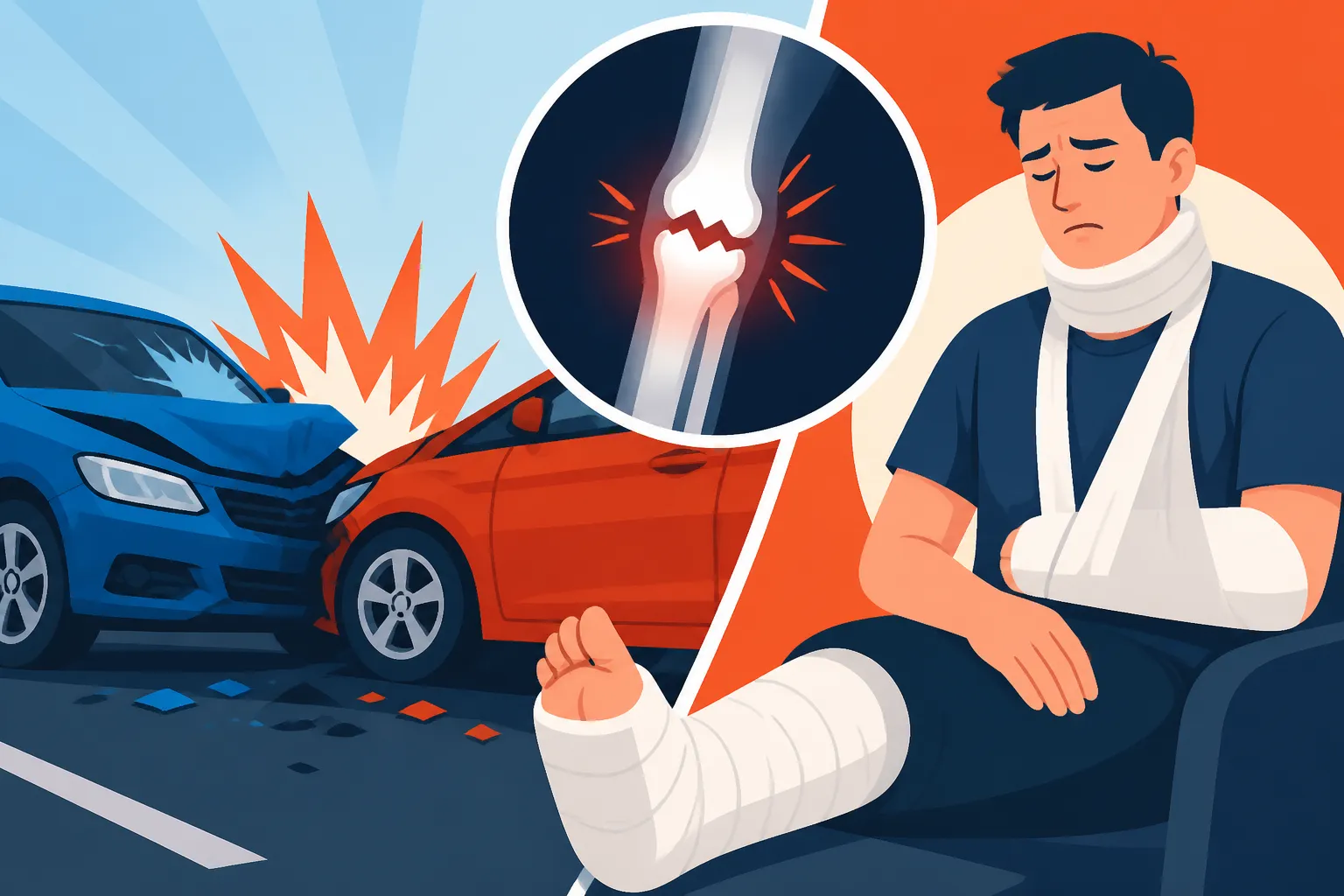
Once the initial assessment is complete and imaging confirms a fracture, the medical team will focus on stabilization. This usually involves "reducing" the fracture, which means manipulating the bone fragments back into their proper alignment. This can be a painful process, often done under local or regional anesthesia. After reduction, the bone is immobilized using a cast, splint, or brace. These devices prevent movement, allowing the bone to heal correctly. For instance, a simple wrist fracture might be stabilized with a plaster cast, while a more complex ankle fracture could require a walking boot. The duration of immobilization varies greatly, from a few weeks for minor breaks to several months for more severe or weight-bearing fractures.
Surgical and Non-Surgical Approaches to Healing
Not all fractures require surgery, but for many, it's a critical step toward proper healing and restoring function. Non-surgical treatment typically involves closed reduction and immobilization, where the bone is reset externally and then kept still in a cast or brace. This approach is common for stable fractures where the bone fragments haven't significantly shifted out of place, such as certain wrist or ankle fractures.
However, for complex fractures—like compound fractures (where the bone breaks through the skin), comminuted fractures (where the bone shatters into multiple pieces), or unstable fractures that cannot be held in place with a cast—surgery becomes necessary. Orthopedic surgeons perform procedures like open reduction internal fixation (ORIF), where an incision is made, the bone fragments are realigned, and then secured with plates, screws, rods, or pins. Another option might be external fixation, where pins are placed into the bone through the skin and then connected to an external frame, often used for severe open fractures or when swelling is too great for immediate internal fixation. The choice between surgical and non-surgical approaches depends on many factors, including the type of fracture, your age and overall health, and the potential for long-term complications. The decision is always made with the aim of achieving the best possible functional outcome.
Rehabilitation and the Journey to Maximum Medical Improvement
Healing a broken bone extends far beyond the removal of a cast. The immobilization period, while essential for bone healing, often leads to muscle atrophy, joint stiffness, and reduced range of motion. This is where rehabilitation, typically through physical therapy, becomes indispensable. Physical therapists design personalized exercise programs to gradually restore strength, flexibility, and function to the injured limb. They might use techniques like massage, heat/cold therapy, electrical stimulation, and specific exercises to help you regain your mobility.
The recovery process can be lengthy and demanding, requiring dedication and perseverance. For some, occupational therapy might also be necessary, especially for upper body fractures, to help them relearn daily tasks and fine motor skills. Throughout this process, your doctors will monitor your progress until you reach what is known as "What Is Maximum Medical Improvement MMI". MMI is the point at which your condition has stabilized and is not expected to improve further, even with continued treatment. Reaching MMI doesn't necessarily mean you are fully recovered or free of pain; it simply means your medical condition has plateaued. This milestone is crucial for evaluating the long-term impact of your injuries and assessing the full extent of your damages for a car accident claim.
Valuing Your Fracture Claim After an Accident
Suffering a broken bone in a car accident isn't just physically painful; it creates a cascade of financial and emotional burdens. When it comes to your car accident claim, understanding how these injuries are valued is key to ensuring you receive fair compensation.
Calculating Economic Damages: Tangible Losses
Economic damages are the quantifiable financial losses you incur directly as a result of your broken bone injury. These are often the easiest to calculate because they come with receipts, bills, and pay stubs. The most significant component is typically medical expenses, which can be staggering. This includes not only emergency room visits, diagnostic tests like X-rays and MRIs, and the cost of casts or splints, but also surgeon's fees, hospital stays, follow-up appointments with orthopedic specialists, medications, and extensive physical or occupational therapy. If your fracture required surgery, especially with plates and screws, you might also have future medical expenses for their removal or for managing potential complications down the line.
Beyond medical bills, lost wages are a major economic damage. A broken arm or leg can prevent you from working for weeks or even months. You'll need to account for all lost income during your recovery period. For those with severe fractures that lead to permanent impairment or the inability to return to their previous occupation, there's also the claim for "Lost Earning Capacity vs Lost Wages". This accounts for the reduction in your potential future earnings over your lifetime due to your injury. Don't forget other out-of-pocket expenses like transportation to medical appointments, childcare if you're incapacitated, or modifications to your home or vehicle to accommodate your injury. Every single dollar you spent or lost because of the accident contributes to your economic damages.
Quantifying Non-Economic Damages: Intangible Suffering
While economic damages are straightforward to calculate, non-economic damages are much more subjective but no less real. These compensate you for the intangible losses that profoundly impact your quality of life. The most significant of these is "pain and suffering," which encompasses the physical pain you endured from the moment of impact through recovery and any chronic discomfort you might continue to experience.
But pain and suffering extend beyond just physical agony. It includes emotional distress, anxiety, and depression that often accompany a serious injury and the trauma of an accident. Imagine the frustration of not being able to perform simple daily tasks, the emotional toll of dependency on others, or the fear of re-injury. There's also loss of enjoyment of life – the inability to participate in hobbies, sports, or family activities you once loved. If you were an avid hiker and now a fractured ankle prevents you from enjoying the trails, that's a loss that deserves compensation. Insurance companies often use a multiplier method, where your economic damages are multiplied by a factor (usually between 1.5 and 5, or even higher for severe injuries) to arrive at a value for your pain and suffering. Our detailed article on "Pain and Suffering How It's Calculated" offers more insight into this complex calculation.
Factors Influencing Your Settlement Value
Every fracture claim is unique, and the ultimate settlement value is influenced by a multitude of factors. The severity and permanence of your fracture are paramount. A simple hairline fracture that heals perfectly in six weeks will naturally yield a lower settlement than a comminuted femur fracture requiring multiple surgeries and leaving you with chronic pain and a limp. The specific bone broken also matters; a broken finger, while painful, generally has less impact on daily life than a broken hip or spine.
The impact on your daily life, your ability to work, and your recreational activities also plays a huge role. Were you a construction worker who can no longer perform heavy lifting, or a pianist whose hand fracture ended their career? These scenarios lead to vastly different settlement amounts. Your age is another factor; a younger person with a lifelong disability often receives more compensation for future losses than an older person with the same injury. The at-fault driver's insurance policy limits are also a practical consideration – you can generally only recover up to the limits of their coverage, unless you have uninsured/underinsured motorist coverage or pursue a personal lawsuit. For a comprehensive overview, consult our guide, "How Much Is My Car Accident Settlement Worth? Complete Guide (2026)".
Navigating the Claims Process with a Fracture
Dealing with a broken bone is tough enough on its own. Layering the complexities of an insurance claim on top can feel completely overwhelming. However, understanding the process and knowing who to turn to can make a significant difference.
Dealing with Insurance Companies and Their Adjusters
After a car accident, you'll inevitably be in contact with insurance companies – both your own and the at-fault driver's. It's crucial to remember that while insurance companies are there to process claims, their primary goal is to minimize payouts. The adjuster assigned to your case, while seemingly friendly, is ultimately working to protect the company's bottom line. They are not on your side in the way your medical team or an attorney would be.
You might receive calls requesting a recorded statement about the accident and your injuries. While you're generally required to cooperate with your own insurance company, be extremely cautious about giving a recorded statement to the at-fault driver's insurer. It's often best to decline until you've spoken with a legal professional. Anything you say can be used against you to devalue or deny your claim. They might ask seemingly innocuous questions about your pre-existing health conditions or the extent of your pain, trying to find ways to argue that your injuries aren't as severe or weren't solely caused by the accident. Our detailed piece on "Dealing With Insurance Adjusters After a Car Accident" and "Do You Have to Give a Recorded Statement?" can help you navigate these tricky conversations. Always provide facts, not opinions, and never admit fault, even if you think you might have been partly to blame.
The Indispensable Role of Legal Representation
When you're dealing with a serious injury like a broken bone, especially one that requires surgery or leads to long-term disability, attempting to handle the insurance claim on your own can be a costly mistake. This is precisely "When to Hire a Car Accident Lawyer". An experienced car accident attorney brings a wealth of knowledge and resources to your case. They understand personal injury law, the tactics insurance companies employ, and how to accurately value your claim, including all economic and non-economic damages.
A lawyer will handle all communications with the insurance adjusters, gather evidence, obtain your medical records, and negotiate on your behalf. If a fair settlement cannot be reached, they are prepared to file a lawsuit and represent you in court. They can also ensure that all deadlines, such as the statute of limitations for filing a claim, are met. In essence, a lawyer acts as your advocate, protecting your rights and fighting for the maximum compensation possible, allowing you to focus on your recovery. Most car accident attorneys work on a contingency fee basis, meaning you don't pay anything upfront, and they only get paid if they win your case.
Building a Strong Case for Compensation
To secure fair compensation for your broken bone, you need to build a rock-solid case supported by compelling evidence. This starts with comprehensive medical documentation. Every diagnostic image (X-rays, CTs, MRIs) clearly showing the fracture, all doctor's notes, treatment plans, physical therapy records, and medication prescriptions are vital. These records establish the nature and severity of your injury and link it directly to the car accident.
Beyond medical proof, you'll need evidence of your financial losses, including pay stubs, employment records to prove lost wages, and receipts for all accident-related expenses. Expert testimony can also be crucial in complex cases. This might include an orthopedic surgeon explaining the long-term prognosis of your fracture, a vocational expert assessing your lost earning capacity, or an economist calculating future medical costs. Witness statements, police reports, photographs of the accident scene and vehicle damage, and even a personal journal detailing your daily pain and limitations all contribute to a robust case that clearly demonstrates the full impact of your broken bone injury.
Long-Term Outlook and Potential Complications
While many fractures heal completely with proper care, it’s not uncommon for broken bones from car accidents to lead to lingering issues. Understanding these potential long-term complications is important for managing your health and accurately assessing your claim.
Chronic Pain and Functional Limitations
Unfortunately, for a significant number of individuals, a broken bone isn't a "one and done" injury. Even after the bone has visibly healed, many patients contend with "Chronic Pain After a Car Accident". This persistent discomfort can range from a dull ache to sharp, intermittent pain, often exacerbated by certain movements, weather changes, or prolonged activity. For example, a severe ankle fracture might lead to post-traumatic arthritis, causing ongoing pain and stiffness years after the initial injury. Similarly, nerve damage sustained during the accident or even during fracture repair can lead to neuropathic pain that is notoriously difficult to treat.
Beyond pain, functional limitations are a common long-term consequence. You might experience a reduced range of motion in a joint near the fracture, persistent weakness in the affected limb, or difficulties with coordination. A fractured wrist, for instance, might never regain its original dexterity, impacting hobbies, work, and daily tasks like typing or cooking. These limitations can significantly diminish your quality of life, affect your ability to perform your job, and make once-simple activities challenging or impossible. For children, a fracture in a growth plate could lead to limb length discrepancies, requiring future interventions.
Psychological and Emotional Impact of Trauma
The physical trauma of a broken bone is often accompanied by profound psychological and emotional distress. The sheer shock of the accident itself, coupled with the pain of the injury, the disruption to your life, and the uncertainty of recovery, can take a heavy toll on your mental well-being. It's not uncommon for accident victims to develop "PTSD and Emotional Distress After a Car Accident". Symptoms might include flashbacks, nightmares, anxiety when driving or riding in a car, heightened irritability, or emotional numbness.
Beyond PTSD, many individuals grapple with anxiety about their recovery, fear of re-injury, or depression stemming from their limitations and loss of independence. The inability to work, engage in social activities, or care for family can lead to feelings of helplessness, isolation, and despair. For instance, a person who prided themselves on their physical fitness might feel a deep sense of loss and grief over their diminished capacity after a severe leg fracture. These psychological injuries are just as valid as physical ones and require careful diagnosis and treatment, often involving therapy, counseling, or medication. Ignoring them can severely hinder your overall recovery and impact your long-term mental health.
Financial Strain and Future Care Needs
The long-term impact of a broken bone isn't just physical or emotional; it can also create significant financial strain, even after your initial medical bills are paid. Chronic pain or functional limitations might require ongoing medical care, including periodic physical therapy, pain management injections, or even future surgeries years down the line. These future medical expenses must be accounted for in your car accident claim.
If your injury has permanently affected your ability to work at your previous capacity, you might face a significant reduction in your lifelong earning potential. This loss of earning capacity can impact your financial security and retirement plans. Furthermore, some individuals might require adaptive equipment, home modifications, or ongoing assistance with daily tasks, all of which come with substantial costs. The cumulative financial burden of long-term care, lost income, and diminished quality of life can be immense. Accurately assessing these future needs requires careful consideration and often the input of medical and vocational experts to ensure that your settlement adequately covers all foreseeable expenses and losses.
| Fracture Type | Common Car Accident Cause | Typical Symptoms | Common Treatment | Potential Long-Term Complications |
|---|---|---|---|---|
| Clavicle Fracture | Seatbelt impact, direct shoulder impact | Sharp pain, swelling, inability to lift arm, shoulder drooping | Arm sling, pain medication, surgery (severe cases) | Stiffness, chronic pain, nerve damage |
| Rib Fracture | Seatbelt impact, steering wheel impact, side impact | Severe pain with breathing/coughing, tenderness, bruising | Pain management, rest, monitoring for lung complications | Chronic pain, respiratory issues, lung complications |
| Femur Fracture | Dashboard impact, crushing leg injury, direct side impact | Intense pain, inability to bear weight, visible deformity | Surgery (rod/plates), traction, prolonged non-weight bearing | Limb length discrepancy, arthritis, chronic pain |
| Tibia/Fibula | Crushing leg injury, twisting motion, direct impact | Severe pain, swelling, deformity, inability to walk | Casting, surgery (plates/screws), physical therapy | Arthritis, non-union, chronic swelling, nerve damage |
| Spinal (Vertebra) | Extreme flexion/extension, compression, direct impact | Back pain, numbness/tingling, weakness, paralysis | Bracing, pain management, surgery (fusion/stabilization) | Chronic pain, nerve damage, limited mobility, paralysis |
| Wrist Fracture | Bracing for impact, steering wheel impact | Pain, swelling, deformity, inability to move wrist | Casting, splinting, surgery (pins/plates) | Stiffness, arthritis, nerve pain, reduced grip strength |
Disclaimer
Please remember that the information provided in this article is intended for general informational purposes only and does not constitute legal or medical advice. Every car accident and personal injury case is unique. You should consult with a qualified medical professional for diagnosis and treatment of any injuries and an experienced personal injury attorney for advice regarding your specific legal situation.