Who Is at Fault in a Lane-Change Accident?
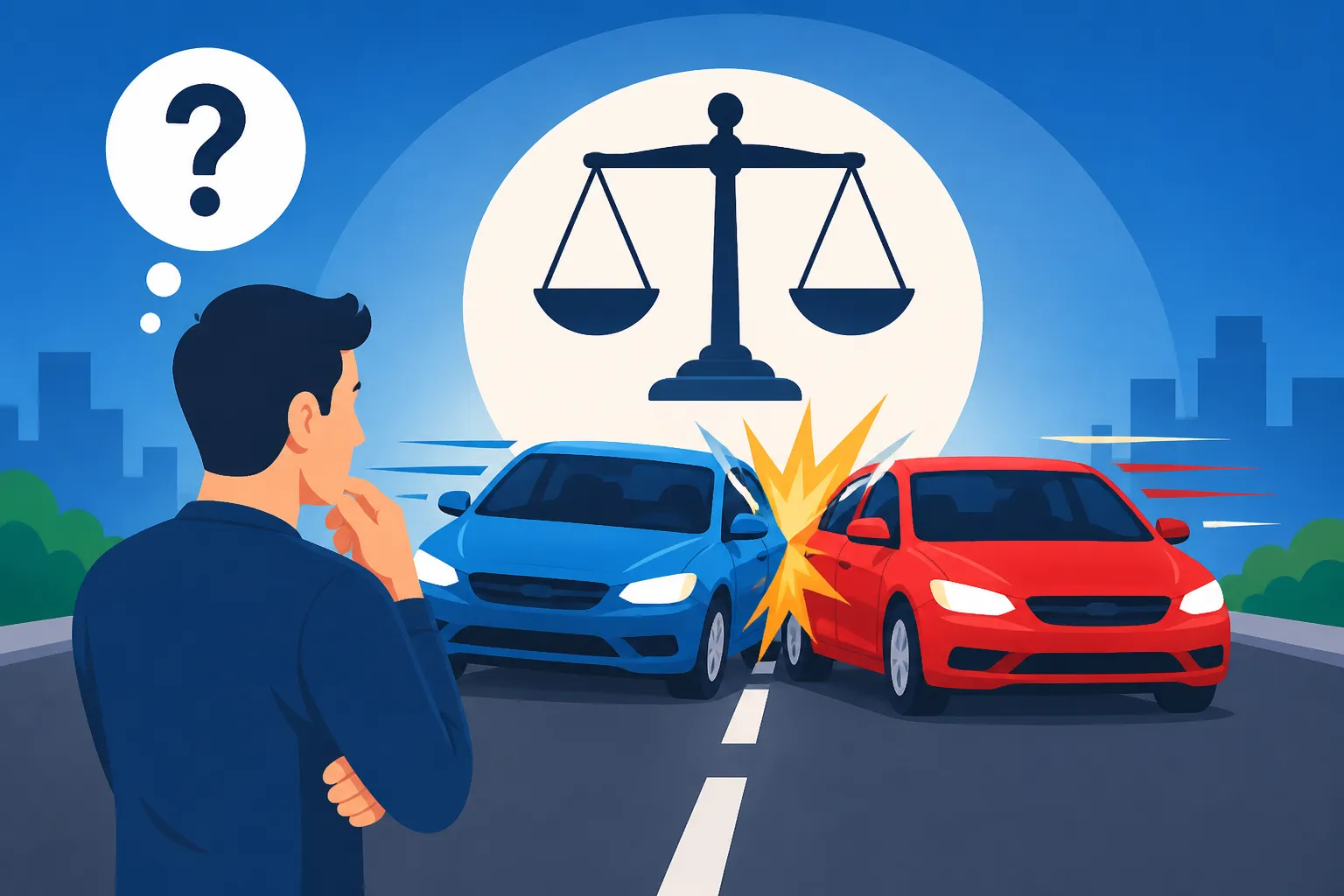
We've all been there: driving along, minding our own business, when suddenly, a car veers into our lane without warning, or maybe we're the one trying to merge, feeling the pressure of traffic. Lane-change accidents are notoriously frustrating because it often feels like one driver is clearly in the wrong, yet proving it can be a monumental challenge. This comprehensive guide will meticulously break down how fault is typically determined in these tricky collisions, what evidence really matters, and what steps you can take to protect yourself.
Understanding Lane-Change Accidents
Lane-change accidents are among the most common types of collisions on our roads, and they happen in a blink. One moment you're cruising, the next there's a sickening crunch of metal, a sudden jerk, and the immediate panic of a crash. These incidents often involve drivers misjudging distances, failing to check blind spots, or simply not paying enough attention to their surroundings. The complexity often arises from the perception of each driver, where everyone feels they were in the right, leading to a tangled mess of accusations and blame.
Common Scenarios Leading to Lane-Change Crashes
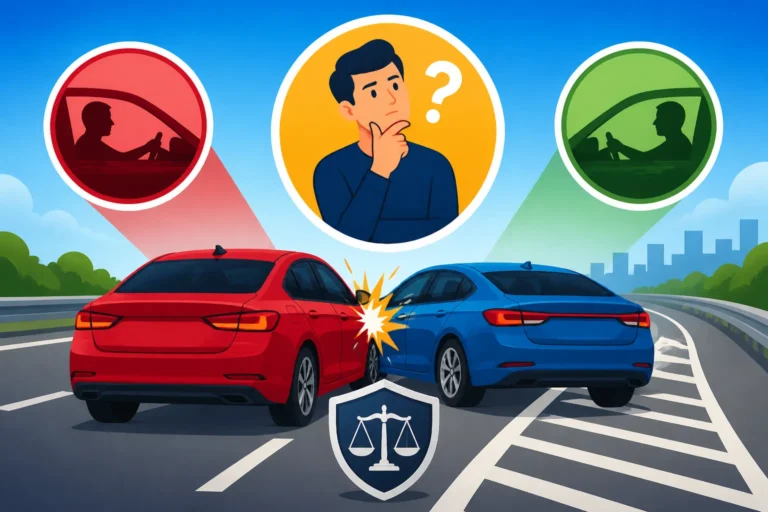
You might picture a car simply swerving without a signal, but the reality is often more nuanced. A classic scenario involves a driver attempting to move from the left lane to the right, only to collide with a vehicle already occupying that lane, or a driver in the right lane accelerating to prevent another car from merging. Sometimes, it's a multi-lane maneuver, where a driver attempts to cross two lanes at once, causing a chain reaction.
Consider the bustling freeways of Los Angeles, for instance. During rush hour, drivers are often aggressive, trying to squeeze into openings that aren't truly there. This can lead to sideswipes, where two vehicles traveling in the same direction collide side-by-side as one attempts to change lanes. Another frequent scenario is when a driver misjudges the speed of an approaching vehicle when trying to merge onto a highway, leading to a high-speed collision. It's a testament to how quickly things can go wrong when drivers aren't practicing defensive driving and adhering to traffic laws.
The Immediate Aftermath: Confusion and Blame
In the chaotic moments immediately following a lane-change accident, adrenaline runs high, and confusion reigns. Drivers involved often have vastly different recollections of what transpired. The driver who was changing lanes might insist they signaled, while the other driver might vehemently deny seeing any signal at all. This instant disparity in perception is precisely why determining fault becomes such a convoluted process.
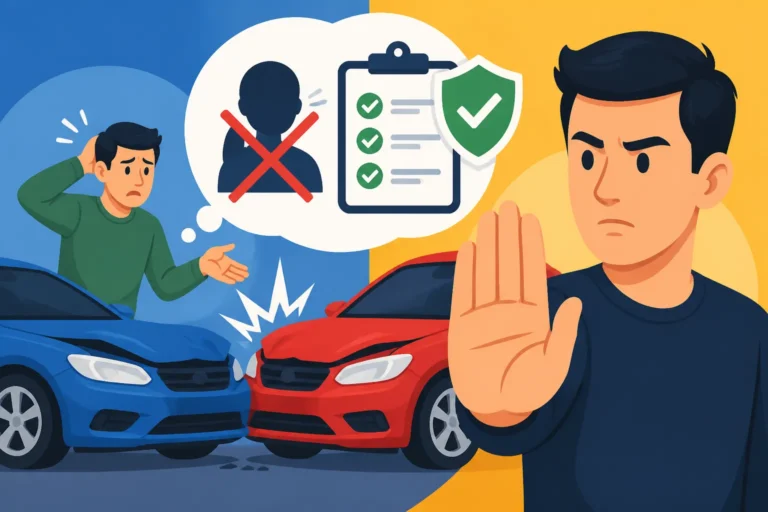
The natural human inclination is to protect oneself and assign blame to the other party. This can lead to heated exchanges at the scene, which, while understandable emotionally, can actually complicate matters further. It's crucial to remember that what you say at the scene can be used by insurance companies to interpret fault, which is why it's generally advised to stick to factual information exchange and avoid admitting fault or making speculative statements. For more on how these early steps impact your claim, check out our guide on what to do after a car accident: step-by-step (2026).
Key Factors in Determining Fault for Lane-Change Accidents
Determining fault isn't just about who feels they're right; it's about piecing together a factual narrative supported by evidence and understanding traffic laws. This often requires a detailed investigation that goes beyond initial impressions and delves into the specific actions of each driver leading up to the crash.
Traffic Laws and the Duty to Drive Safely
Every state has specific traffic laws governing lane changes, and they all boil down to a fundamental principle: the changing driver has a duty to do so safely and without impeding other traffic. In most places, like California or New York, the law explicitly states that a driver must ascertain that the movement can be made with reasonable safety before changing lanes. This means checking mirrors, checking blind spots, and using turn signals well in advance. Failure to signal, for example, is a common violation that can strongly indicate fault.
Even if you signal, if you cut off another driver or merge into a space that isn't large enough, you're still likely to be deemed at fault. The other driver also has a duty to drive safely, but typically, the primary responsibility for a safe lane change falls on the driver making the maneuver. If you're involved in a collision and believe the other driver was primarily responsible, understanding How to Prove the Other Driver Was at Fault is invaluable.
Evidence Collection at the Scene
The moments directly following an accident are critical for gathering evidence that can later prove invaluable. It's not just about getting the other driver's insurance information; it's about documenting the scene comprehensively. This includes taking photos of the vehicles involved, focusing on the points of impact, and capturing the surrounding environment like road markings, skid marks, and traffic signs. Don't forget to photograph any debris on the road and the general position of the vehicles relative to each other and the lanes.
For example, if you were hit by a car merging into your lane, a photo showing their front bumper clearly impacting your rear quarter panel, while your vehicle is perfectly within its lane lines, can be a powerful piece of evidence. If possible, a brief video walking around the scene can also capture details you might miss in still photos. This meticulous approach to documentation can make a significant difference when insurance companies or legal teams begin their investigations. Our article on What Information to Exchange After a Car Accident offers more guidance on this crucial step.
The Role of Blind Spots and Mirrors
Ah, the infamous blind spot. Every driver knows about it, yet it remains a primary culprit in many lane-change accidents. The reality is, even with perfectly adjusted mirrors, there are areas around your vehicle that simply aren't visible without a physical head check. Drivers who rely solely on their side mirrors or rearview mirror often miss a vehicle lurking in that unseen zone.
When a collision occurs because one driver failed to check their blind spot, that driver is almost always considered at fault. This is part of the "duty to drive safely" mentioned earlier. Even if the other driver was speeding, the primary responsibility for a safe lane change still rests with the driver making the maneuver. Modern vehicles with blind spot monitoring systems certainly help, but they don't negate the driver's ultimate responsibility to confirm the lane is clear before moving over. These systems are assistive, not autonomous.
Common Causes and Indicators of Fault
Unpacking the "why" behind a lane-change accident is crucial for assigning fault. Often, it comes down to one or more specific actions (or inactions) by a driver.
Unsafe Lane Changes and Improper Signaling
This is the bread and butter of lane-change accident fault. An unsafe lane change occurs when a driver moves into another lane without sufficient space, or at a speed that is incompatible with the flow of traffic in the new lane. It's more than just a quick flick of the wrist; a safe lane change requires judgment and foresight. This can include cutting off another vehicle, forcing them to brake suddenly, or even swerving to avoid a collision that you initiated.
Improper signaling, or outright failing to signal, is a glaring indicator of fault. State laws usually mandate signaling for a specific distance (e.g., 100 feet in many jurisdictions) before changing lanes. This is to give other drivers ample warning to adjust their speed or position. If you can prove the other driver failed to signal, perhaps through dashcam footage or witness testimony, it significantly strengthens your case that they were negligent. Conversely, if you failed to signal and caused an accident, you'll likely bear most of the fault.
Speeding, Distraction, and Aggressive Driving
While the primary fault often lies with the lane-changing driver, other factors can absolutely contribute, and even shift, the blame. Speeding, for instance, can exacerbate the danger of a lane change. If a driver attempts to change lanes into an opening, but the car in that lane is traveling significantly over the speed limit, the closing distance can be far shorter than anticipated, making a collision unavoidable. While the lane changer still has a duty of care, the speeding driver's excessive speed could be seen as a contributing factor, potentially leading to What Happens If You're Partially at Fault?.
Distracted driving, like texting or talking on a phone, is another huge culprit. A distracted driver might miss seeing a car in their blind spot, or fail to notice another vehicle trying to merge safely. Similarly, aggressive driving, such as tailgating or road rage, can lead to dangerous lane changes or prevent safe merging, escalating minor traffic situations into serious accidents. In such cases, the aggressive driver's actions might be a significant factor in determining overall fault.
Contributing Factors from the "Non-Changing" Driver
It's tempting to think that if you're not the one changing lanes, you're automatically in the clear. However, this isn't always the case. The driver not changing lanes also has a responsibility to drive safely and avoid accidents if possible. For example, if a car is attempting to merge onto a busy highway from an on-ramp, and the driver already on the highway intentionally speeds up to block them or refuses to adjust their speed to allow a safe merge, they could be assigned some degree of comparative fault.
Another scenario involves the "non-changing" driver being distracted or driving recklessly themselves. If you're driving down the highway in Dallas, Texas, and a car attempts to merge, but you're looking at your phone and don't react, your distraction could be a contributing factor. While the merging driver typically bears the primary responsibility, the principles of comparative negligence mean that fault isn't always 100% one-sided. We delve deeper into this concept in our article on Comparative vs Contributory Negligence Explained.
How Insurance Companies and Authorities Assess Fault
Once the initial dust settles and evidence is gathered, the formal process of fault determination begins. This is where the police and, more importantly, insurance companies, step in to interpret the facts.
Police Reports and Officer Observations
When police respond to a lane-change accident, their primary role is to secure the scene, ensure safety, and document basic facts. They'll talk to drivers and witnesses, look at the position of the vehicles, and note any obvious traffic violations. The resulting police report can be a very influential piece of evidence, often containing the officer's initial assessment of fault or issuing citations. For instance, if an officer cites one driver for an unsafe lane change (California Vehicle Code 22107, for example), that citation strongly points towards their fault.
However, it's critical to understand that a police report isn't the final word on fault, especially for insurance companies or in a courtroom setting. Officers are not always accident reconstruction experts, and their report is often based on limited information gathered at the scene. While it carries weight, especially when backed by objective observations like skid marks or vehicle damage, it can be contested. Our resource, Police Reports and Car Accident Fault, provides a more detailed explanation.
Insurance Adjuster Investigations and Statements
After you've notified your insurance company and potentially the other driver's insurer, claims adjusters will take over. These adjusters are experienced in investigating accidents and determining liability. They will collect all available evidence, including police reports, photos, witness statements, and most importantly, your recorded statement and the other driver's statement. They'll also analyze the damage to both vehicles to deduce the angle and force of impact, which can often tell a story about how the accident happened.
Adjusters are trained to look for inconsistencies in statements and evaluate who violated which traffic laws. They might even use accident reconstruction specialists for complex cases. It's during this phase that the "he said, she said" of the accident gets thoroughly vetted against physical evidence. This is why being honest, consistent, and providing as much objective evidence as possible is paramount. For a full understanding of this process, see How Insurance Companies Determine Who Is at Fault.
Witnesses, Dash Cams, and Other Crucial Evidence
In the absence of a clear-cut scenario, witnesses and technology can be game-changers. An independent witness who saw the entire incident unfold can provide unbiased testimony that corroborates one driver's account over another. Their statement, particularly if it's detailed and consistent, can sway the fault determination. This is why it's always wise to ask for witness contact information at the scene if anyone saw what happened.
Dash cam footage is increasingly becoming the gold standard of evidence. A clear recording of the moments leading up to and including the accident can instantly resolve disputes over signaling, lane positioning, and aggressive maneuvers. For instance, if a dash cam shows a car explicitly cutting into your lane without warning, or shows you signaling well in advance of your own safe lane change, it's indisputable. Similarly, traffic camera footage from nearby intersections or businesses might also capture valuable angles. Without such objective evidence, lane-change accidents often become highly disputed claims.
Navigating Partial Fault and Legal Implications
It's not uncommon for fault in a lane-change accident to be shared between both drivers. This concept, known as comparative negligence, is incredibly important to understand, as it directly impacts your ability to recover damages.
Understanding Comparative Negligence
Most states in the U.S. operate under some form of comparative negligence. This legal principle allows for fault to be assigned as a percentage to each party involved in an accident. For example, if you were changing lanes and hit another car, but that car was speeding significantly, an investigation might determine you were 70% at fault for the unsafe lane change, and the other driver was 30% at fault for their excessive speed.
The implications of this percentage vary by state. Many states, like California, use a "pure comparative negligence" system, meaning you can recover damages even if you are mostly at fault, though your payout will be reduced by your percentage of fault. So, if your damages were $10,000 and you were 70% at fault, you could still recover $3,000 from the other driver's insurance. Other states follow a "modified comparative negligence" rule, where you can only recover if your fault is below a certain threshold (either 50% or 51%). If you exceed that percentage, you recover nothing. Understanding the specific laws in your state is critical.
What Happens If You're Partially at Fault?
If you are found to be partially at fault in a lane-change accident, it means your claim for damages will likely be reduced. For example, let's say you were hit by a vehicle changing lanes, but you failed to yield when they had already partially entered your lane, and you were determined to be 20% at fault. If your total damages (medical bills, lost wages, vehicle repair) amount to $15,000, the other driver's insurance would only be obligated to pay 80% of that, which is $12,000.
This is where negotiations with insurance companies become complex. They will always try to assign you a higher percentage of fault to minimize their payout. This is why having strong evidence and potentially legal representation is so important. An experienced car accident attorney can argue against an inflated fault percentage and ensure you receive fair compensation based on the true circumstances of the collision. It's a common fear to wonder Can You Still Get Paid If You're Partly at Fault?, and the answer is often yes, depending on your state's laws.
| Evidence Type | Impact on Fault Determination | Example Scenario |
|---|---|---|
| Police Report | Highly influential, especially if it includes citations or an officer's opinion of fault based on on-scene observations (vehicle positions, debris, statements). Not always definitive, but a strong starting point. | Officer cites Driver A for "unsafe lane change" (e.g., California Vehicle Code 22107). This citation provides strong initial evidence that Driver A is at fault. |
| Dash Cam/Traffic Cam | Often definitive, providing objective, indisputable visual proof of vehicle movements, signaling, and impact. Can override conflicting witness statements. | Dash cam clearly shows Driver B (in the right lane) suddenly swerving into Driver A's lane without signaling, causing a collision. This footage makes Driver B's fault almost certain. |
| Witness Statements | Crucial for corroborating one party's story or providing an unbiased third-party account. The more detailed and consistent, the better. | A pedestrian clearly states they saw Driver C (attempting to merge) fail to look over their shoulder before veering into Driver D's lane, confirming Driver C's negligence. |
| Photos/Video (Scene) | Documents vehicle damage, final resting positions, road markings, skid marks, traffic signs, and road conditions. Helps reconstruct the accident. | Photos show Driver E's car squarely in the center of its lane, with the impact damage on its side, while Driver F's car has front-end damage from swerving into Driver E. This supports Driver E's claim of being struck by an encroaching vehicle. |
| Driver Statements | Essential for understanding each driver's perspective. Adjusters look for inconsistencies, admissions of fault (which should be avoided), and details about actions taken. | Driver G states they signaled and checked, but Driver H accelerated rapidly to prevent the merge. Driver H claims Driver G cut them off without warning. Adjusters will compare these statements against other evidence. |
| Vehicle Damage | The type, location, and extent of damage on each vehicle can indicate the angle of impact and which vehicle initiated contact, supporting or refuting driver statements. | Minor scrape and dent on the side of Driver J's car, consistent with a sideswipe from Driver K's front corner, where Driver K was changing lanes. This confirms Driver K's movement into Driver J's lane. |
Steps to Take After a Lane-Change Accident
The moments immediately following a car accident can be overwhelming, but taking the right steps can significantly impact the outcome of your claim. Especially with lane-change accidents, where fault can be heavily disputed, proactive measures are key.
Prioritizing Safety and Seeking Medical Attention
Your first priority, always and without exception, should be the safety and well-being of everyone involved. Even in a seemingly minor fender-bender, pull your vehicle to a safe location if possible, away from active traffic. Check on all occupants of your vehicle and any other vehicles involved. If anyone is injured, or if there's significant property damage, call 911 immediately. It's easy to dismiss aches and pains in the immediate aftermath, chalking it up to adrenaline, but even minor collisions can result in serious injuries, like whiplash or concussions, with delayed symptoms.
Even if you feel fine at the scene, seeking medical attention promptly is crucial. A doctor can identify hidden injuries that might not manifest for hours or even days. Furthermore, a medical record establishing your injuries soon after the accident creates an undeniable link between the collision and your physical harm, which is vital for any personal injury claim. Ignoring these steps could compromise both your health and your ability to claim compensation for Common Car Accident Injuries: Complete Guide (2027).
Documenting the Scene Thoroughly
As soon as it's safe, start documenting everything you can. This means taking pictures and videos from multiple angles: the damage to both vehicles, the positions of the cars, any skid marks, debris, traffic signs, and the overall road conditions. Note down the time of day, weather conditions, and any observations about the other driver (e.g., if they seemed distracted or impaired). Collect contact and insurance information from all drivers involved.
Don't forget to speak to any potential witnesses and get their contact information too. Their unbiased account can be gold. Remember to never admit fault at the scene, even if you feel bad. Simply state the facts as you remember them and cooperate with law enforcement. The more thorough your documentation, the stronger your position will be when it comes time for insurance adjusters to assess fault. Our guide on How Fault Works When Changing Lanes on the Highway elaborates on collecting relevant evidence for these specific types of incidents.
Dealing with Insurance and Legal Counsel
Once you've secured the scene and sought medical attention, it's time to deal with the administrative side of things. Notify your insurance company about the accident as soon as possible, even if you believe it wasn't your fault. This is a standard procedure outlined in most policies. Be prepared to give them a factual account of what happened, but remember you are not obligated to give a recorded statement to the other driver's insurance company without consulting with your own insurer or an attorney first.
If injuries are involved, or if fault is disputed, seriously consider consulting with a car accident lawyer. They can guide you through the complex claims process, protect your rights, and help you understand your options. A lawyer can gather additional evidence, negotiate with insurance companies on your behalf, and ensure you pursue all available compensation for your damages. For more information on when professional legal guidance is beneficial, read Do You Need a Lawyer for a Car Accident? (2026).
Disclaimer
Please remember that this article provides general information and insights into car accident claims. Every accident is unique, and the information presented here should not be taken as legal advice. Laws regarding fault and liability can vary significantly by state and specific circumstances. It is always recommended to consult with a qualified legal professional for advice tailored to your individual situation.