Comparative Negligence Laws in Missouri
Getting into a car accident is disorienting enough, but the stress really compounds when you start wondering who's actually at fault, especially if you think you might share some of the blame. It's a common fear: "If I'm partly at fault, does that mean I get nothing?" This guide is here to clear up exactly how comparative negligence laws work in Missouri, helping you understand your rights and the potential impact on any car accident claim you might pursue.
Understanding Comparative Negligence in Car Accidents
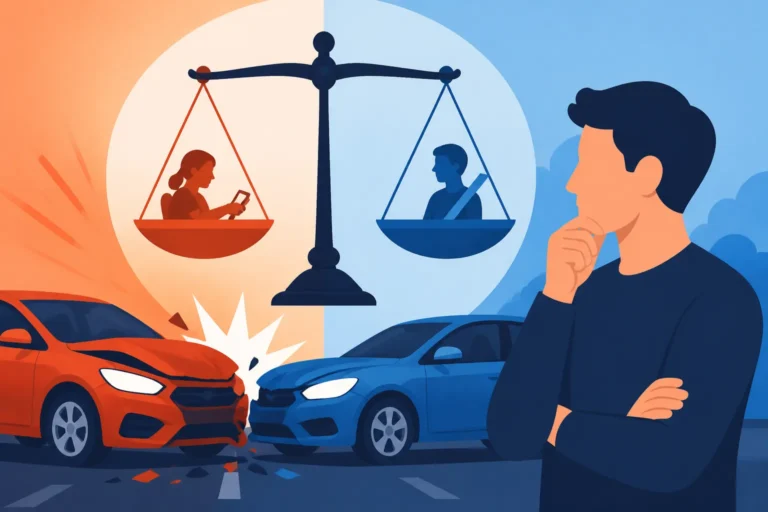
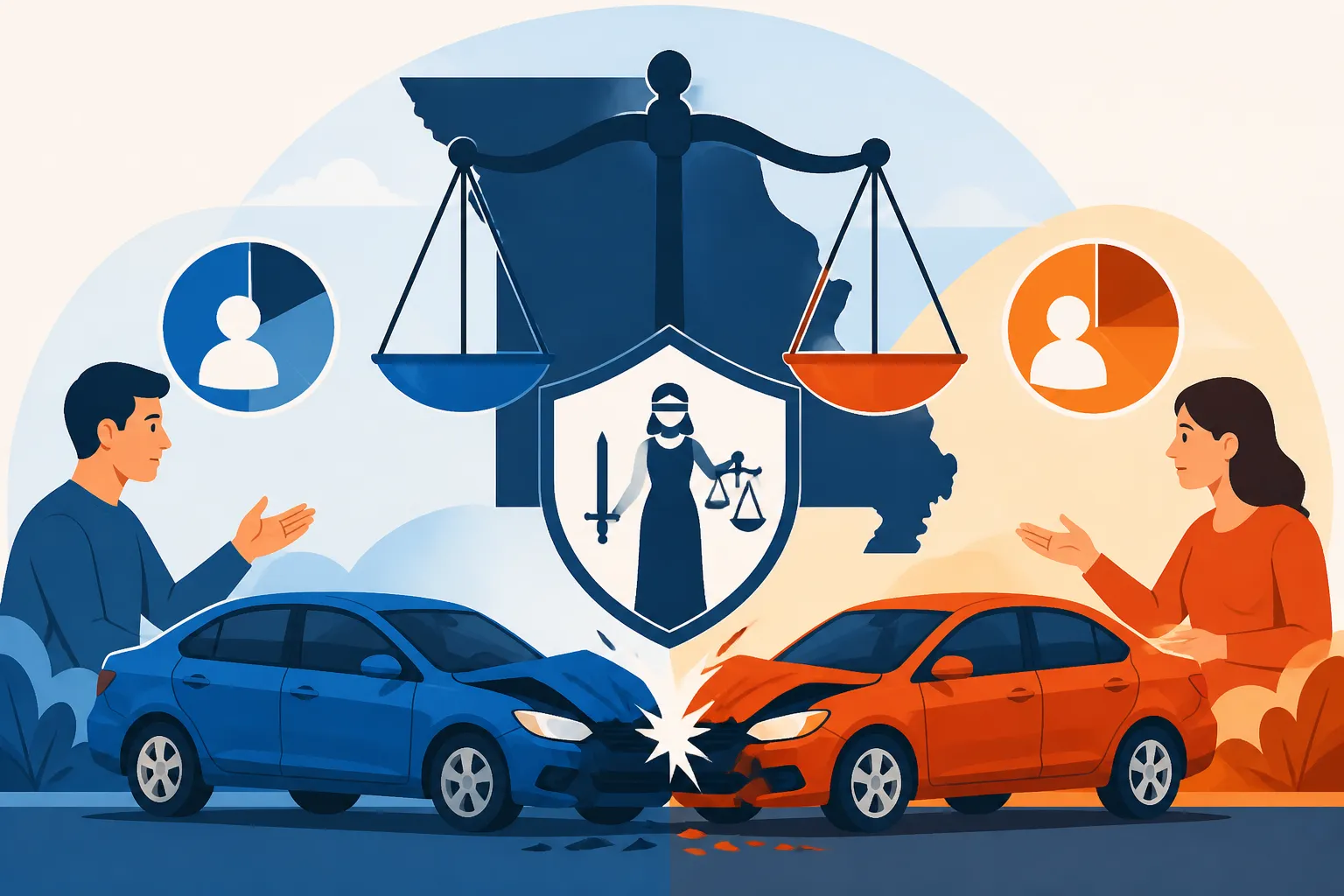
When two vehicles collide, it's rarely a black-and-white situation where one person is 100% to blame and the other is completely innocent. Often, there are shades of gray, and both drivers might have contributed to the accident in some way. This is where the concept of comparative negligence comes into play, a legal principle that aims to fairly distribute responsibility and damages when multiple parties are at fault. It's a system designed to move past the rigid "all or nothing" rules of old, allowing for a more equitable resolution for those involved.
What is Comparative Negligence?
At its heart, comparative negligence is about apportioning blame. Instead of declaring one party entirely at fault, a court or insurance company assigns a percentage of fault to each driver involved in an accident. This percentage then directly impacts the amount of compensation an injured party can recover. For example, if you sustained $10,000 in damages but were found 20% at fault for the accident, your recoverable damages would be reduced by that same 20%, leaving you with $8,000. It's a crucial system that ensures that even if you played a minor role in causing the crash, you might still be eligible for significant compensation. Understanding this can be a huge relief for many people who worry their minor misstep will cost them everything. To get a broader picture, our comprehensive guide on Who Is at Fault in a Car Accident? Complete Guide (2026) delves deeper into the general principles of fault determination.
This approach stands in stark contrast to the older, much harsher rule known as contributory negligence. In a state that follows pure contributory negligence, if you were found even 1% at fault for an accident, you would be completely barred from recovering any damages from the other driver, no matter how severe your injuries or how negligent the other driver was. It was a very unforgiving system that often left genuinely injured parties without any recourse. Thankfully, most states have moved away from this strict rule, embracing comparative negligence as a fairer way to handle these complex situations. Our article on Comparative vs Contributory Negligence Explained offers a more detailed look at the historical differences and why this shift was so important for accident victims.
The Two Main Types of Comparative Negligence
While comparative negligence is a general concept, there are actually two primary variations that states adopt, each with slightly different implications for your claim. It's important to know which one applies in your state, as it directly impacts your ability to recover damages and the strategy you'll need to employ. These variations dictate how much fault you can bear before your right to compensation is either reduced or completely eliminated.
The first type is pure comparative negligence. This system is the most forgiving. Under pure comparative negligence, you can recover damages even if you are found to be largely at fault for the accident. Your compensation is simply reduced by your percentage of fault. For example, if you are 90% at fault, you can still recover 10% of your damages from the other party. It’s a system designed to ensure that some level of recovery is almost always possible, provided the other party bears some fault. This means that even in scenarios where you feel heavily responsible, there might still be a path to getting some help with your medical bills and other losses.
The second type, and more common, is modified comparative negligence. This system introduces a threshold for fault. Typically, there are two versions: the "50% bar" rule and the "51% bar" rule.
- 50% Bar Rule: In states following this rule, if you are found to be 50% or more at fault for the accident, you cannot recover any damages from the other party. If you are 49% or less at fault, you can recover, but your damages will be reduced by your percentage of fault.
- 51% Bar Rule: Under this rule, you can recover damages as long as your fault is not greater than the other driver's. In other words, if you are 50% at fault, you can still recover 50% of your damages. If you are 51% or more at fault, you are barred from recovery.
These thresholds are critical because they define a tipping point where your claim either moves forward with reduced compensation or is dismissed entirely. Understanding which rule applies is paramount to managing your expectations and building a solid case.
Missouri's Specific Comparative Negligence Rules
When it comes to car accidents, knowing your state's specific laws is absolutely critical, and Missouri has a distinct approach to how fault is handled. Unlike many other states that use some form of modified comparative negligence, Missouri has chosen a different path, which can significantly impact victims' ability to seek compensation. This local nuance often surprises people who might be familiar with the rules in neighboring states, underscoring the importance of getting accurate, state-specific information.
Missouri is a Pure Comparative Negligence State
This is the big one: Missouri operates under a system of pure comparative negligence. What does that mean for you? It means that even if you are found to be largely responsible for causing the car accident, you are still legally entitled to recover damages from the other at-fault party, though your compensation will be reduced by your percentage of fault. There is no percentage threshold (like 50% or 51%) that completely bars your recovery, which is a huge distinction compared to many other states. This can be a significant advantage for individuals who may have made a minor error but were still severely injured due to another driver's negligence.
Let's put this into a real-world scenario. Imagine you were making a left turn at an intersection and, due to a momentary lapse, you didn't see an oncoming car that was slightly speeding. A collision occurs. After an investigation, a jury determines you were 70% at fault for failing to yield, but the other driver was 30% at fault for speeding. In a "50% bar" state, you would get nothing because your fault exceeded 50%. But in Missouri, because it's a pure comparative negligence state, you could still recover 30% of your total damages from the other driver. If your medical bills, lost wages, and pain and suffering amounted to $50,000, you would still be able to claim $15,000 (30% of $50,000). This provides a crucial safety net for accident victims, ensuring that some level of financial recovery is possible even when they share substantial blame. If you're wondering What Happens If You're Partially at Fault?, this is precisely the kind of scenario where Missouri's laws offer more recourse.
How Fault Is Determined in Missouri
Determining fault in a car accident in Missouri, as in any state, is a multifaceted process that involves collecting and analyzing a wide array of evidence. It's not usually decided on the spot, but rather through a careful investigation that piece together the events leading up to the crash. This process can be undertaken by law enforcement, insurance adjusters, and if necessary, legal teams or even a jury. Each piece of evidence plays a role in establishing who did what and, ultimately, who bears how much responsibility.
The initial steps often involve the collection of evidence at the scene. This typically begins with a police report, which will detail observations made by the responding officer, including statements from drivers and witnesses, diagrams of the accident scene, and citations issued (if any). While a police report doesn't definitively determine fault for insurance purposes, it provides a crucial, objective snapshot of the immediate aftermath. Beyond the police report, other vital pieces of evidence include photographs and videos taken at the scene, which can capture vehicle positions, road conditions, damage, and any visible injuries. Witness statements are also incredibly important, offering third-party perspectives on how the accident unfolded. For more detailed guidance on collecting evidence, refer to our article on How to Document a Car Accident Scene.
Once the initial evidence is gathered, insurance companies step in to conduct their own investigation. This often involves interviewing all parties involved, reviewing police reports, assessing vehicle damage, and sometimes even reconstructing the accident scene using expert analysis. Insurance adjusters are trained to look for details that can help them assign a percentage of fault to each driver. They might consider traffic laws violated, driving behavior (e.g., speeding, distracted driving), and environmental factors like weather or road conditions. Ultimately, if a case goes to trial, it will be a jury that assigns the percentages of fault to each party after hearing all the evidence and testimony. Our article on How Fault Is Determined in a Car Accident provides a broader overview of this investigative process.
Impact of Comparative Negligence on Your Missouri Car Accident Claim
Understanding that Missouri is a pure comparative negligence state is one thing, but knowing how that directly translates to your car accident claim and potential settlement is another. It fundamentally changes the way damages are calculated and how you'll need to approach negotiations with insurance companies. The goal isn't just to prove the other driver was at fault, but to minimize your own potential contribution to the accident, as every percentage point matters.
How Your Damages Are Reduced
The most direct and significant impact of Missouri's pure comparative negligence rule is how it affects the actual amount of money you can recover for your damages. Simply put, the percentage of fault assigned to you will directly reduce your total compensation. This reduction applies to all types of damages you might claim, including medical expenses, lost wages, property damage, and pain and suffering. It's a proportional reduction, meaning if you're found 25% at fault, your total awarded damages will be cut by 25%.
Let's illustrate this with a clear example. Suppose you were involved in an accident and suffered various injuries, leading to $20,000 in medical bills, $5,000 in lost income, and a reasonable claim for $25,000 in pain and suffering, totaling $50,000 in damages. If the investigation or a jury determines you were 20% responsible for the crash, your total recoverable damages would be reduced by 20%. So, instead of receiving $50,000, you would only be able to recover $40,000 (which is $50,000 – 20%). This reduction can have a substantial impact on your financial recovery, especially if you have significant medical expenses or long-term injuries. It's a critical aspect to grasp when estimating How Much Is My Car Accident Settlement Worth? (2026). The more fault you can assign to the other party, the more of your damages you can ultimately claim. Our article on How Comparative Fault Reduces Your Settlement offers further insights into this calculation.
The Importance of Evidence and Documentation
Given Missouri's pure comparative negligence system, meticulously collecting evidence and thoroughly documenting every aspect of your accident and injuries becomes even more critical. Since your recovery can be reduced by your percentage of fault, your primary goal is to minimize that percentage as much as possible. Robust evidence is your best defense against claims that you were more at fault than you actually were. Without strong documentation, it's often your word against theirs, and that's a tough position to be in.
Think about it: every piece of information you gather at the scene of the accident, every medical record you keep, every communication with your insurance company, it all contributes to painting a clearer picture of what happened. This includes photographs of vehicle damage, road conditions, traffic signs, and any visible injuries. Gathering contact information for witnesses who saw the collision can be invaluable, as their unbiased accounts can often corroborate your version of events. Furthermore, keeping detailed records of all your medical treatments, diagnoses, and expenses is crucial, as these prove the extent of your injuries and the costs you've incurred. A consistent paper trail leaves less room for doubt and makes it harder for others to shift blame onto you. Remember, the better your documentation, the stronger your position in proving the other driver's greater fault and protecting your rightful compensation. Our guide on What to Do After a Car Accident: Step-by-Step (2027) provides a checklist of immediate actions to take to ensure you gather crucial evidence.
Dealing with Insurance Companies
Navigating the aftermath of an accident often means dealing with insurance companies, and this is where Missouri's pure comparative negligence laws add another layer of complexity. Insurance adjusters are trained to minimize payouts, and in a pure comparative fault state, one of their key strategies will be to try and assign a higher percentage of fault to you. They know that every percentage point they can pin on you directly reduces the amount their company has to pay out. This isn't personal; it's simply how their business model works.
Because adjusters will actively seek to attribute some level of fault to you, it's vital to be cautious and strategic in your communications. They might ask leading questions or try to get you to admit to even minor missteps. For instance, an adjuster might ask, "Were you absolutely certain you had enough time to make that turn?" or "Could you have done anything differently to avoid the collision?" Answering these questions without careful thought can inadvertently increase your assigned fault. It's perfectly okay to state the facts as you know them without speculating or accepting blame. Remember, the initial assessment of fault by an insurance company is not the final word. You have the right to dispute their findings, and having strong evidence is your best tool. Many individuals find it beneficial to consult with a legal professional before giving any recorded statements or signing documents, as they can help protect your interests against these tactics. You can learn more about how to approach these conversations in our article on Dealing With Insurance Adjusters After a Car Accident. Additionally, our piece on How Insurance Companies Determine Who Is at Fault sheds light on their internal processes.
Navigating Challenges and Seeking Help
Even with a clear understanding of Missouri's comparative negligence laws, dealing with the aftermath of a car accident can be incredibly challenging. From disputing fault percentages to understanding legal jargon, the process is fraught with potential pitfalls. It's common to feel overwhelmed and unsure of your next steps, especially when your well-being and financial stability are on the line. But you don't have to face these challenges alone; there are resources and professionals available to help you navigate the complexities of your claim.
When the Other Driver Blames You
It's an incredibly frustrating experience when you're involved in an accident, believe the other driver was clearly at fault, only to have them turn around and point the finger at you. This scenario is unfortunately common, especially in states like Missouri where even minor fault on your part can reduce their payout. The other driver or their insurance company might vehemently deny responsibility, or worse, try to construct a narrative that shifts the lion's share of blame onto you. This can leave you feeling bewildered and unfairly targeted, adding immense emotional strain to an already difficult situation.
When the other driver tries to blame you, it's crucial to remain calm and avoid engaging in arguments or admissions of fault at the scene. Your priority should be to gather as much objective evidence as possible, as discussed earlier. This evidence will be your strongest ally against their accusations. If they persist in blaming you, or if their insurance company sends you a letter claiming you were at fault, do not take it lightly. This is often an attempt to intimidate you into accepting a lower settlement or dropping your claim altogether. It's important to remember that their claims are just that — claims. They still need to be substantiated with evidence. Our article on What Happens If the Other Driver Blames You? provides detailed steps on how to effectively counter such accusations and protect your position.
The Role of a Car Accident Lawyer
In the intricate landscape of pure comparative negligence, where every percentage point of fault can impact your financial recovery, having an experienced car accident lawyer by your side can be invaluable. This isn't just about fighting; it's about having an expert advocate who understands the nuances of Missouri law and can protect your rights when facing determined insurance companies. The complexities of evidence collection, fault determination, and damage calculation can quickly become overwhelming for someone who isn't familiar with the legal system.
A skilled lawyer can play a pivotal role in several ways. First, they can conduct a thorough, independent investigation into your accident, gathering evidence that you might not even know exists, such as traffic camera footage, black box data, or expert accident reconstruction analysis. They are adept at proving the other driver's negligence and minimizing any fault that might be unfairly attributed to you. Second, they act as a buffer between you and the insurance companies, handling all communications and negotiations. This means you won't have to worry about adjusters trying to trick you into statements that could hurt your claim. They know how to counter lowball offers and effectively negotiate for a fair settlement that fully accounts for all your damages, including future medical expenses and lost earning capacity. For many, the peace of mind and the potential for a significantly higher settlement make the decision to hire a lawyer an easy one. Our piece on Do You Need a Lawyer for a Car Accident? explores this question in depth, highlighting when legal representation is most beneficial.
Here's a quick comparison of how Missouri's pure comparative negligence system stacks up against the more common modified systems:
| Feature | Pure Comparative Negligence (Missouri) | Modified Comparative Negligence (50% Bar) | Modified Comparative Negligence (51% Bar) |
|---|---|---|---|
| Fault Threshold | No threshold | Cannot be 50% or more at fault | Cannot be 51% or more at fault |
| Recovery if 1% at Fault | Yes, 99% of damages | Yes, 99% of damages | Yes, 99% of damages |
| Recovery if 49% at Fault | Yes, 51% of damages | Yes, 51% of damages | Yes, 51% of damages |
| Recovery if 50% at Fault | Yes, 50% of damages | No recovery | Yes, 50% of damages |
| Recovery if 51% at Fault | Yes, 49% of damages | No recovery | No recovery |
| Recovery if 90% at Fault | Yes, 10% of damages | No recovery | No recovery |
Disclaimer
Please remember that this article provides general information and insights into car accident claims and comparative negligence laws in Missouri. It is not intended as legal advice. Every accident and claim is unique, and the specifics of your situation can significantly impact the outcome. For personalized advice regarding your car accident claim, it is always recommended to consult with a qualified legal professional in Missouri.